

Intel's Strategic AI Transformation
ED
Editorial
Cashu Finance·5 min read
TL;DR
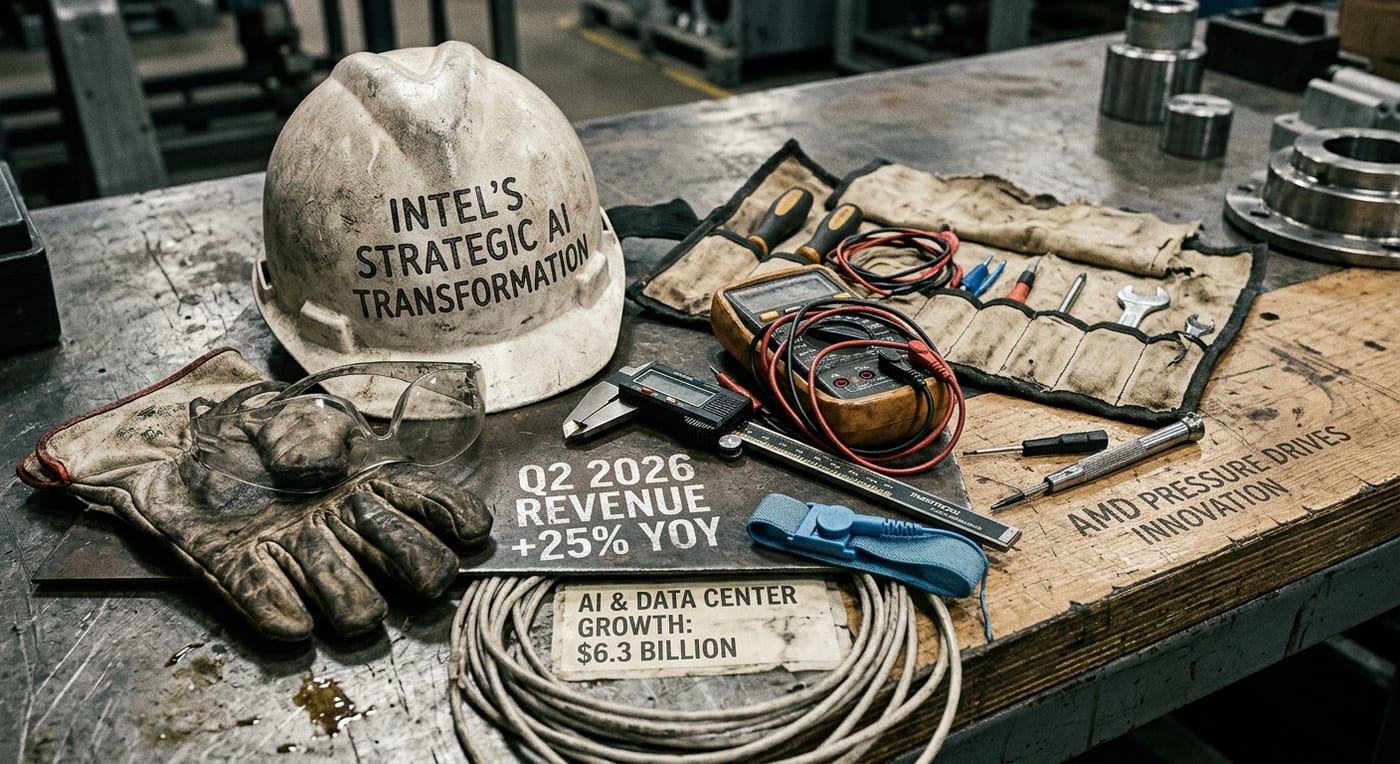
- Intel's Q2 2026 revenue increased by 25% year-over-year.
- AI and data center segments generated significant growth, contributing $6.3 billion.
- Competitive pressures from AMD highlight the need for continued innovation and strategic execution.
Intel Corp. (INTC) is currently navigating a remarkable evolution as it pivots deeply into the artificial intelligence (AI) segment, facing immense market pressures yet emerging as a formidable player in the semiconductor landscape. This transformation is not solely rooted in technological advancements but is also heavily impacted by competitive dynamics, supply chain challenges, and strategic partnerships that reshape its operational and financial health.
The Financial Surge
Intel's recent financial results reveal a significant turnaround, particularly in the second quarter of 2026. The company posted a total revenue of $16.1 billion, representing a commendable 25% increase compared to the same period last year. This resurgence can largely be attributed to its AI and data center segment, which saw an incredible 59% revenue growth, generating $6.3 billion. These impressive figures underscore Intel's pivot towards AI—a segment characterized by soaring demand and robust market conditions.
Moreover, this alignment with AI aligns with growing investor confidence. Intel's initiatives in this space show not only a readiness to adapt but also an understanding of the evolving technological landscape that forms the bedrock of contemporary computing. As Intel struggles to reclaim market leadership, its financial performance in the AI sector serves as a testament to its strategic adjustments.
Competing in a Challenging Marketplace
However, competition in the semiconductor space is fierce, notably from AMD, which has successfully captured more of the AI and data center market share. AMD's revenue in their AI segment outpaced Intel's, which raises questions about Intel’s capacity to win back lost ground. As of the latest reports, Intel's data center segment's revenue, while still strong, trails behind that of AMD, which recorded a staggering $6.7 billion in the same sector. This indicates that despite Intel's solid performance, the competitive pressure remains high, necessitating continuous innovation and enhanced service offerings.
Intel needs to accelerate the deployment of its advanced semiconductor technology and improve its foundry capabilities to regain its competitive edge over AMD and other emerging players. Further, as the AI segment revamps the technological panorama, strategic developments to support innovation, such as the Intel 14A manufacturing process, will be critical for Intel's operational recovery.
The Foundry as a Linchpin
Central to Intel's transformative strategy is its foundry business, which has shown encouraging trends despite posting losses. With their foundry division's revenue nearing $6 billion—predicted to increase significantly—Intel focuses on not just improving its internal semiconductor production but also attracting external clients for manufacturing services. Currently, external revenue remains relatively low, roughly $293 million, but with potential clients from the tech giants' league showing interest, a breakthrough could be on the horizon.
The ability to woo top-tier clients may hinge on Intel’s successful rollout of the upcoming 14A technology. If Intel can capture the attention of major customers by proving that it can rival TSMC's dominance in cutting-edge chip manufacturing, it stands a chance to reclaim its status in the market. Conversations transitioning from evaluating the technology to inquiring about capacity only bolster the optimistic outlook for Intel's foundry operations.
Embracing AI: A Timely Pivot
In light of the aforementioned competitive dynamics, Intel's timing in pivoting towards AI technologies is incredibly pertinent. The immediate demand for advanced AI capabilities suggests that companies like Intel, which are quick to align their offerings with market needs, can potentially soar. Strategic partnerships and collaborations may also augment Intel's AI positioning in the evolving landscape, allowing it to tap into new competencies and resource pools.
The company’s foray into strategic alliances plays a vital role in enhancing its product solutions and expanding its market reach. Staying aligned with industry leaders indicates recognition of the importance of networking and cooperative innovations in today's tech ecosystem. One partnership that stands out is Intel's collaborations aimed at integrating AI into their product lines, which is a strong catalyst for growth as seen in previous financial reports highlighting the surge in their AI revenue.
Looking Ahead: Investor Sentiment and Future Growth
As Intel braces for its upcoming earnings report in October, projections point toward continuing revenue growth that could reach upwards of $16.8 billion. This is a sign of sustained investor confidence as recovery trends continue to develop. However, operational challenges remain, especially concerning keeping pace with demand and managing production capacity.
The environment poses both challenges and opportunities. Intel's recent stock performance, closely tied to the developments in its AI business, suggests a narrative of recovery. Stocks of Intel have surged by more than 220% in 2026, despite the competitive threats posed by companies like AMD. Investors are evidently optimistic about Intel's direction, but the premium valuation reflects a critical need for the company to execute on its promises effectively.
In summary, Intel's commitment to transforming its business model around AI technologies positions it for future growth. However, sustaining this transformation amidst fierce competition requires not just technological advancement but also strategic execution. As we move ahead in 2026, Intel's ability to convert its plans into actionable results will define its success in reclaiming its industry dominance. The same pressure is reflected in recent reporting on the issue, which helps explain why the company's pricing decisions remain under scrutiny.