

Innventure's Challenges Unfold Amid Class Action Lawsuits
ED
Editorial
Cashu Finance·5 min read
TL;DR
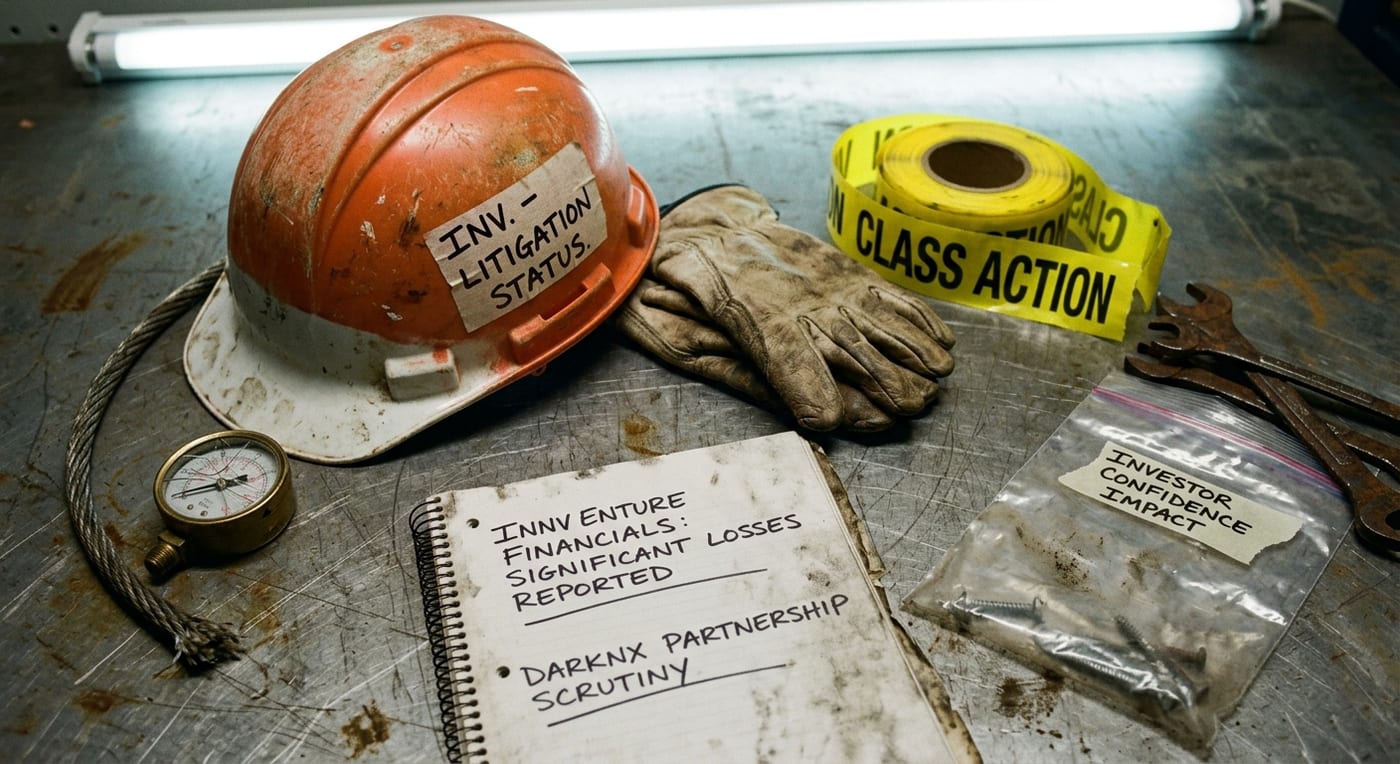
- Innventure, Inc. faces multiple class action lawsuits.
- Significant financial losses reported, raising concerns about future stability.
- DarkNX partnership comes under intense scrutiny, impacting investor confidence.
Innventure, Inc. (INV) is currently navigating a turbulent phase in its corporate journey, facing multiple class action lawsuits and significant scrutiny from investors and regulatory bodies alike. The core issues stem from allegations of misleading information linked to its partnerships and projected revenues, particularly concerning a key arrangement with a company named DarkNX. This article aims to dissect the ongoing challenges Innventure is experiencing, delve into the implications of the class action lawsuits, and analyze the potential consequences for its corporate strategy and stock performance.
The DarkNX Partnership: A Central Issue
At the heart of Innventure's current troubles is its dubious collaboration with DarkNX, which was meant to lead to the development of a state-of-the-art AI data center in Ontario. Announced in November 2025, this partnership was touted as a transformative opportunity for Innventure, leveraging its subsidiary Accelsius's NeuCool technology—a specialized solution aimed at enhancing data center cooling efficiency. However, allegations emerged that called into question the legitimacy of this partnership. Specifically, a forensic research firm named Morpheus Research published a report indicating there was 'zero evidence' supporting the existence or viability of the DarkNX project. This report has been a pivotal factor triggering the decline in investor confidence and Innventure's stock price.
Further compounding the situation, Innventure's stock price plummeted by 55% on August 14, 2026, after the company announced the removal of the DarkNX project from its 2026 forecasts. This announcement was underscored by the disclosure that the deployment site referenced in the original agreements was no longer available. The subsequent suspension of revenue guidance cast a shadow over the already ambitious financial targets Innventure had set—primarily the expectation of achieving cash-flow positivity by year-end 2026.
Class Action Lawsuits: Investor Repercussions
As a result of the aforementioned developments, several class action lawsuits have emerged against Innventure and its leadership. Law firms such as Bronstein, Gewirtz & Grossman, and Hagens Berman have begun investigating claims that Innventure breached federal securities laws. These lawsuits argue that the company engaged in deceptive practices by making materially false statements and failing to disclose essential facts regarding its DarkNX engagements and revenue forecasts. For instance, between November 17, 2025, and August 13, 2026, investor confidence was systematically eroded as the perceived viability of Innventure’s business model came under intense scrutiny.
The fallout from these allegations isn't just a temporary setback; it poses long-lasting implications for Innventure’s business strategy. Investors who believe they suffered losses can participate in the class action as lead plaintiffs, seeking to recover their investments based on the claims that Innventure’s management provided overly optimistic financial projections that lacked a solid foundation.
Financial Performance and Market Reactions
Financially, the situation for Innventure looks grim. In its Q2 2026 report, the company revealed a staggering net loss of $34.9 million, compared to $27.8 million in the previous quarter. Even more concerning was the adjusted EBITDA loss, which widened from $18.4 million to $22.6 million. Analysts and investors are increasingly apprehensive about Innventure's ability to recover and meet its financial commitments. The dramatic change came after the company suspended its 2026 revenue and cash flow forecasts, which were predicated on the now-discredited collaboration with DarkNX.
According to various reports, including one by SueWallSt, Innventure had previously asserted that the Accelsius subsidiary was on track for a transformative revenue stream, projecting upwards of $100 million in annualized revenue by the end of 2026. Those claims now seem increasingly implausible as the DarkNX project’s viability has all but been obliterated by the mounting evidence against it.
Investor Sentiment and Future Directions
As the situation unfolds, investor sentiment towards Innventure has turned decidedly negative. The company's stock has suffered significant declines, raising alarm bells about its overall business model and strategic partnerships. Investors are not only concerned about immediate financial losses but also about the potential for long-term damage to Innventure’s reputation in the market. The allegations of deceptive practices could deter future investments, affecting Innventure's operational capacities and partnerships.
Regulatory bodies are also likely to keep a close watch on Innventure as it navigates these legal challenges. The potential for increased regulatory scrutiny could further complicate things, creating additional hurdles the company may need to overcome.
Summary and Closing Thoughts
As of now, Innventure, Inc. finds itself at a crossroads, with its future operations and financial health at risk due to the fallout from the DarkNX partnership and the surrounding legal ramifications. With class action lawsuits looming and investors facing potential losses, the company must act decisively to restore confidence among its stakeholders while navigating through the legal and financial turmoil. The significant challenges Innventure is currently grappling with underscore the importance of transparent and reliable communication with shareholders, especially in an era where investor trust is paramount.
The entire landscape in which Innventure operates will be significantly influenced by how it responds to these challenges. All eyes will be on the firm as it works to address the allegations, refocus its business strategy, and potentially pivot away from partnerships that could expose it to further scrutiny. The same pressure is reflected in recent reporting on the issue, which helps explain why the company's pricing decisions remain under scrutiny.