

IBM Faces Critical Challenges in Tech Shift
Cashu Finance·6 min read
TL;DR
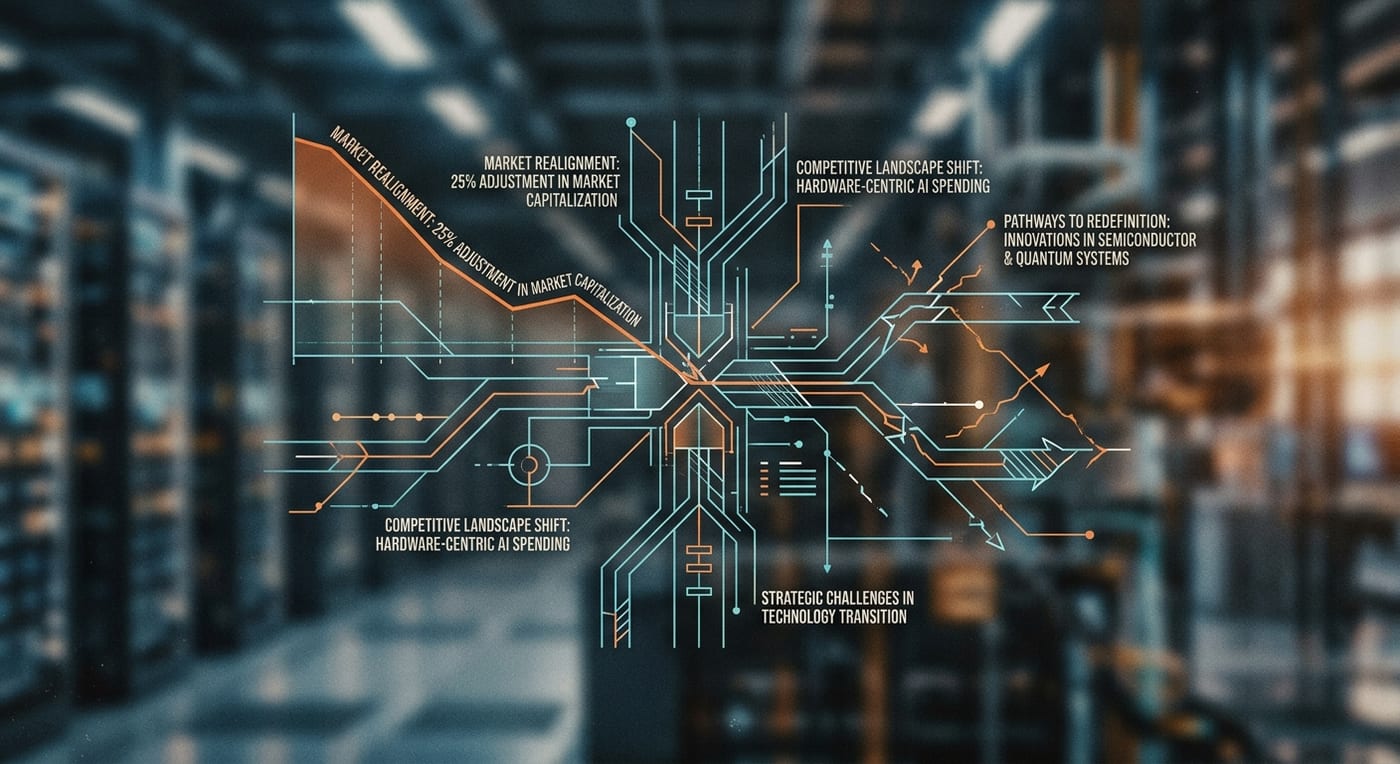
- IBM's stock dropped 25% following a disappointing earnings report.
- The company faces increased competition as AI spending shifts towards hardware.
- Innovations in semiconductor and quantum computing may redefine IBM's market position.
International Business Machines Corporation (IBM) is currently navigating through turbulent waters, marked by significant shifts in technology spending and fierce competition from peers. The company’s challenges were deeply underscored by a recent earnings warning that led to a plummet of its stock by 25%, erasing over $68 billion from its market capitalization in a single day. This article delves into IBM's recent financial struggles, the impact of changing customer priorities, and the company's outlook in the face of a rapidly evolving technological landscape.
The abrupt decline in IBM's stock was an alarming signal to investors. On July 14, 2026, CEO Arvind Krishna revealed that IBM's second-quarter revenue growth was a mere 1%, drastically missing the expectations set earlier in the year. This underwhelming performance was largely attributed to a significant shortfall in the IBM Z product line, a crucial part of its hardware offering that is renowned for reliability and processing power. The disappointing results raised questions about whether IBM had sufficiently adapted to the changing needs of its customers, particularly in the face of intensified AI infrastructure spending.
The Shift to AI Infrastructure Spending
The recent landscape of technology spending reflects a marked transition towards artificial intelligence capabilities, with many firms now prioritizing investments in memory, storage, and server infrastructure ahead of IBM's software offerings. This shift is not just relegated to IBM but reflects a broader industry trend in which enterprise customers are compelled to secure supply-constrained hardware and AI resources in anticipation of further price hikes. This has left IBM in a precarious position as it attempts to navigate a market where its traditional strengths are being challenged.