

Honda's Strategic Transition and Challenges Ahead
Cashu Finance·5 min read
TL;DR
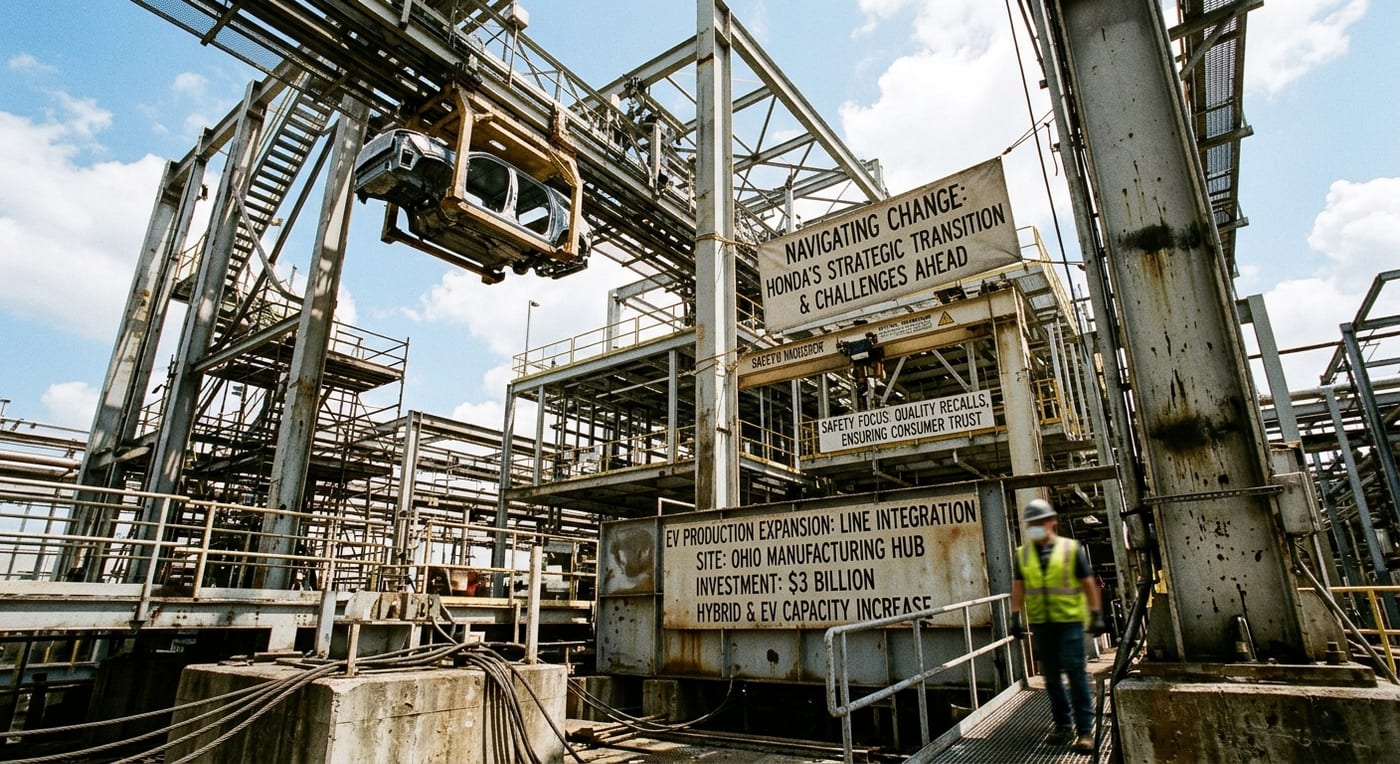
- Honda invests $3 billion in an Ohio manufacturing plant to boost hybrid and EV production.
- Ongoing recalls of 880,000 vehicles raise significant safety concerns impacting consumer trust.
- The company's pivot towards hybrids amidst slow EV adoption signals a strategic recalibration in the automotive landscape.
Honda Motor Co., Ltd. (HMC) is currently navigating complex challenges that intertwine its ambitious production plans with significant safety issues and evolving electric vehicle (EV) strategies. As the company gears up to invest $3 billion in a new manufacturing facility in Ohio, its attention is also drawn to addressing substantial recalls that have affected consumer trust and impacted its overall market position. This article delves into Honda's strategic decisions, production expansions, and the underlying safety concerns that continue to shape its operational landscape.
Expanding Manufacturing Capacity
Honda's investment in a new plant in Ohio illustrates its commitment to increasing production capabilities. The facility, planned to produce up to 240,000 vehicles annually and employ over 2,000 people, will begin operations in 2029. This significant investment aims to bolster Honda’s production of hybrids, gasoline vehicles, and fully electric vehicles (EVs), enabling flexibility to adapt to changing consumer demands. That backdrop echoes earlier coverage of the issue, especially around how pricing, strategy, and demand feed into the current story.
Hybrid Focus Amidst EV Challenges
The automotive market is undergoing a gradual transition towards electrification, but Honda’s response has been a pronounced pivot towards hybrid technologies. With plans to launch 15 new hybrid models for Honda and Acura by 2030, Honda is betting on hybrids to capture market share without immediately relying on the current pace of EV adoption. Recognizing that the explosive growth of fully electric vehicles has yet to fully materialize, Honda's strategy incorporates the production of hybrid vehicles as a bridging solution for consumers hesitant to adopt EVs.