

HDFC Bank's Governance Crises Deepen
Cashu Finance·4 min read
TL;DR
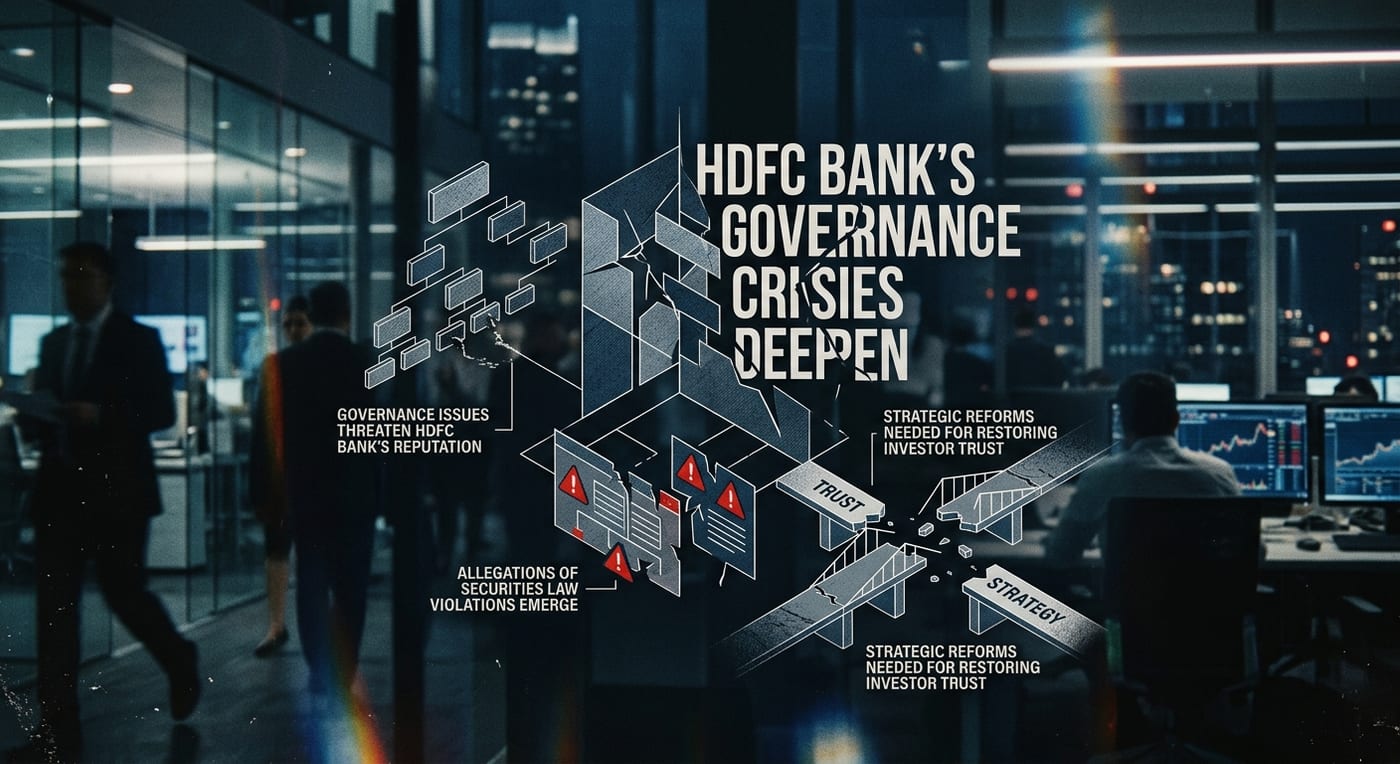
- Governance issues threaten HDFC Bank's reputation.
- Allegations of securities law violations emerge.
- Strategic reforms needed for restoring investor trust.
HDFC Bank Limited (HDB) finds itself engulfed in significant governance and legal challenges that are threatening to undermine its esteemed position within the banking sector. Following its merger with Housing Development Finance Corporation (HDFC), which elevated it to the world’s fourth-largest bank, HDB is currently embroiled in serious allegations of securities fraud and governance deficiencies that have caused upheaval in investor confidence.
These turmoil-filled developments have prompted urgent calls for HDFC Bank to enhance its corporate governance and transparency measures. The resignation of Atanu Chakraborty as part-time chairman has raised eyebrows, as he cited ethical discrepancies within the organization in his departure letter. This incident underscores the ongoing concerns regarding HDFC Bank's internal controls and operational integrity, pushing investors to question the current management’s ability to steer the bank through these turbulent waters.
As the only major bank in India to be publicly scrutinized at this level, the ramifications of these governance challenges extend deeply into HDFC Bank's market strategies and investor relations. Stakeholders are contemplating the impact of these issues on HDFC Bank's growth trajectory, particularly as the bank attempts to leverage its merger with HDFC.
A Crisis of Governance
HDFC Bank has come under severe scrutiny not just for its operational capacities but also for its executive decisions. Allegations surfacing that HDFC secretly funneled payments to state firms to induce deposits have spotlighted the bank’s governance practices. This situation intensifies with claims that HDFC disguised substantial deposits as marketing expenses, violating regulations set by the Reserve Bank of India (RBI).