

Genenta's Strategic Expansion in Aerospace Sector
ED
Editorial
Cashu Finance·5 min read
TL;DR
- Genenta Science is evolving into Saentra Forge focusing on national security.
- Sòphia High Tech reports significant growth with advanced manufacturing.
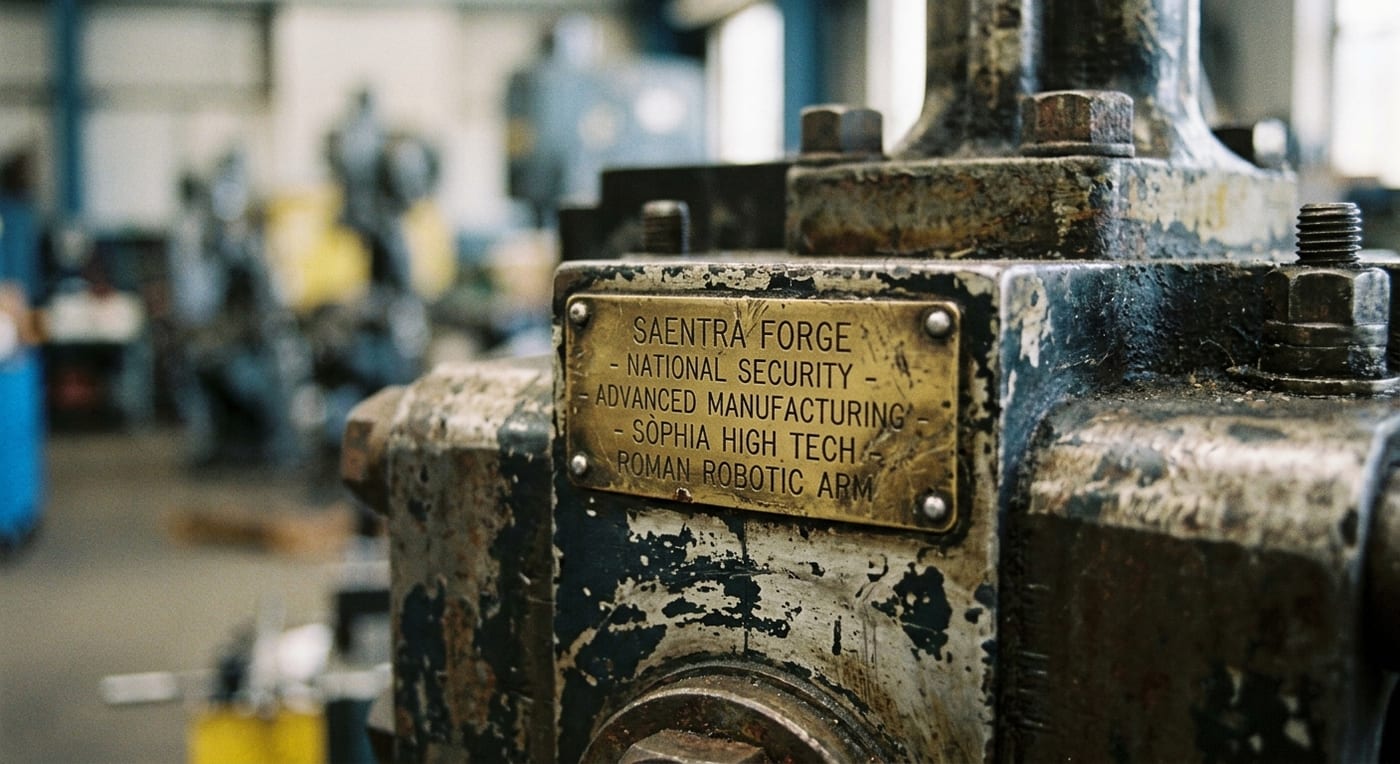
- The ROMAN robotic arm showcases Genenta’s commitment to innovation.
Genenta Science S.p.A. (GNTA) is drawing attention as the latest developments come into focus. Genenta Science S.p.A. (GNTA) is strategically evolving into Saentra Forge, positioning itself as a consolidator in sectors essential for national security, notably aerospace and biotechnology. This shift is underscored by its backing of Sòphia High Tech, a company that has recently reported remarkable growth and achievements in the aerospace field. Sòphia High Tech's unveiling of the ROMAN robotic arm emphasizes Genenta's commitment to precision engineering and innovation in high-tech sectors.
In the past fiscal year, Sòphia High Tech exhibited a significant performance boost, showcasing the viability and potential of Genenta's investment strategy. This newfound focus on advanced manufacturing encompasses not only their historical strengths in biotechnology and genomics but now extends firmly into industrial sectors that promise growth opportunities aligned with the national interest.
Transformation into Saentra Forge
The transformation of Genenta into Saentra Forge spotlights the company’s broader ambition to become a strategic player in multiple high-growth markets. As detailed in recent announcements, this pivot aims to encompass areas such as cybersecurity, defense, and aerospace/biosecurity, all integral components of Italy's national security landscape.
The strategic choice to back Sòphia High Tech stems from a desire to create synergy across these high-tech sectors. Emerging technologies at Sòphia HT, including precision robotics and advanced manufacturing techniques, can propel Genenta into a leading position within aerospace and defense. This transition relays a clear message: Genenta is not merely a biotech firm but is evolving to embrace a multi-faceted industrial identity.
Sòphia High Tech's Financial Performance
Recently, Sòphia High Tech reported substantial growth for the fiscal year 2025, with sales soaring by 29.3% to €7.17 million, and total production value climbing to €8.47 million—a 34.7% increase. High EBITDA growth of 68.1% further indicates that the operational efficiencies and market demand have coalesced positively for the company. As mentioned in the fiscal overview, Sòphia HT’s Board of Directors articulated a clear growth trajectory, emphasizing both top-line increment and improved profitability metrics.
Incorporating advanced manufacturing methods such as metal 3D printing and CNC precision machining, Sòphia HT distinguishes itself in the aerospace sector. With projects completed for esteemed organizations like ESA and Thales Alenia Space, Sòphia HT is realizing its potential as an innovative player backed by Genenta. Such performance is encouraging for Genenta investors, as a robust subsidiary can contribute substantially to the parent company’s bottom line.
The Introduction of ROMAN
The recent introduction of the ROMAN robotic arm highlights the innovative capabilities of Sòphia HT and reinforces Genenta’s strategic direction. ROMAN was developed for operations within a nuclear fusion environment, pushing the boundaries of what is achievable with robotic systems. By using cutting-edge technology and precision engineering typically reserved for aerospace, this new development illustrates Sòphia's commitment to addressing complex challenges in high-stakes environments. This aligns with Genenta’s ambition to leverage advanced engineering in diverse applications beyond its initial biotech focus.
Pierluigi Paracchi, CEO of Genenta Science, remarked on the milestones achieved through collaborative efforts in technology development, indicating that transitioning core competencies from aerospace to critical energy infrastructure can reinforce the company’s value proposition in national security technologies. The future implications of having a sophisticated product like ROMAN operating in challenging conditions further validate this strategy.
With a successful launch of such technologies, Genenta's equity stake in Sòphia provides it not only financial returns but also position as a leader in innovation within the aerospace domain. Genenta’s long-term vision thus embraces an interlinked future where biotechnology and aerospace technologies converge.
Implications for Investors
Investing in Genenta at this critical juncture may allow stakeholders to benefit from the multifaceted growth strategies encompassing both cutting-edge technology and traditional biotech. As Genenta continues to unveil its strategy for Saentra Forge, the emphasis on a robust industrial base provides assurance to investors looking for stability in what has been a tumultuous market environment.
By maintaining strong governance and aligning engineering leadership with financial expertise, the Board of Directors of Sòphia HT is poised to exploit new market opportunities. The anticipated increase in Genenta’s ownership stake in Sòphia HT to 51% could further consolidate its position within these high-demand sectors.
Conclusion
Genenta Science S.p.A. (GNTA) is clearly on a transformative path, one that sees it reimagining its identity as a comprehensive player in the aerospace and defense markets through strategic investments in companies like Sòphia High Tech. The financial successes reported by Sòphia HT underline the growing importance of such transitions in building a resilient, future-proof industrial infrastructure. The focus on technologies that serve critical national interests, coupled with impressive financial growth, sets the stage for Genenta to advance its standing in multiple high-value industries. The same pressure is reflected in recent reporting on the issue, which helps explain why the company's pricing decisions remain under scrutiny.