

GameStop: Adapting in a Changing Market
ED
Editorial
Cashu Finance·5 min read
TL;DR
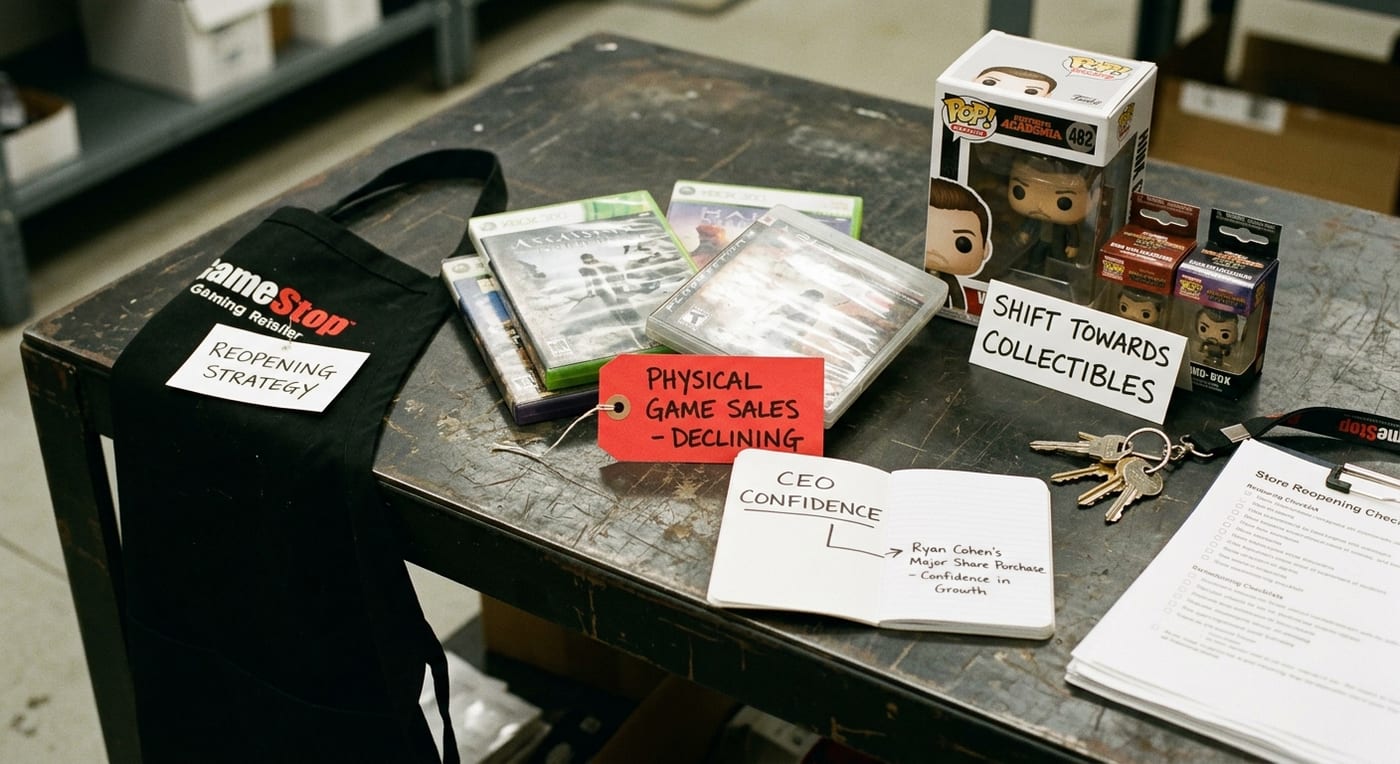
- GameStop is reopening select stores as part of a revival strategy.
- CEO Ryan Cohen's major share purchase highlights confidence in future growth.
- The company is shifting towards collectibles amidst declining physical game sales.
GameStop Corp. ( GME) is facing a pivotal moment in its corporate journey as it navigates the turbulent waters of an evolving gaming landscape. Once primarily known as a retailer of physical video games, GameStop is making notable shifts to adapt to modern consumer preferences and technology trends, particularly the ongoing transition toward digital gaming and collectibles. This article explores the significant actions GameStop is taking to reshape its business model, the implications of these changes on its market position, and what the future may look like for this iconic brand.
Reopening and Reinvention
Amidst a challenging retail environment, GameStop has announced the reopening of select store locations that had initially closed due to strategic cost-cutting measures. Effective September 11, GameStop is bringing back several of its stores, starting with at least one location in Brooklyn, Ohio. This move indicates a potential strategy to revitalize its retail footprint while also possibly benefitting from recent insider investments that reflect confidence in the company’s future.
Notably, on September 10, GameStop's CEO Ryan Cohen purchased 1 million shares of the company, amounting to approximately $20.4 million. This significant insider buying is often interpreted as a positive signal by investors, suggesting that Cohen believes in the company’s potential for recovery and growth. With the share purchase taking place at a weighted average price of about $20.38, the timing coincides interestingly with the company's efforts to redefine its market strategies. As Cohen focuses on the recovery of physical retail alongside changes in product offerings, the ongoing dynamics in GameStop's business model warrant close attention.
The Shift Towards Collectibles
As the gaming industry trends towards digital solutions, GameStop is diversifying its revenue sources to include a strong emphasis on collectibles. During its most recent financial quarter, collectibles—encompassing trading cards and related items—accounted for over 45% of the company's net sales. This focus is a substantial increase from roughly 29% in the previous fiscal year. GameStop's ability to adapt to these trends is critical, especially in light of the broader industry shift towards digital game sales, where its historical reliance on physical software sales is becoming a liability.
GameStop's evolving product mix reflects a broader trend seen in the article titled GameStop Faces Major Challenges Amid Shift to Digital Gaming and Decline in Physical Sales. As reported, the company experienced a stark $729.3 million drop in software sales, with a 27.5% decrease year-over-year. The urgency to adapt is evident, prompting GameStop to explore acquisitions and strengthen its collectibles division, a path that appears to be resonating with consumers who are increasingly gravitating towards nostalgia and unique items in gaming culture.
Competitive Landscape and Strategic Timing
The competitive landscape of gaming has never been more intense, particularly as companies respond to shifting consumer expectations and innovations. This dynamic is further complicated by external factors such as Sony's recent announcement of phasing out physical PlayStation game discs by 2028, a decision marking a historical shift that emphasizes digital integration over traditional sales. Such moves not only challenge old-market paradigms for companies like GameStop but also accelerate the urgency for them to innovate and evolve their business models.
In this context, GameStop’s strategic timing with the reopening of select stores and a focus on collectibles suggests an adaptive strategy that seeks to leverage emergent trends in the market to maintain relevance. With more gamers considering the overall experience rather than just initial hardware costs, GameStop is positioned to align itself with consumer preferences that favor immersive and collectible aspects of gaming. The recent promotional strategies such as the GameStop Launches $420.69 Trade-In Promotion to Boost Customer Engagement and Stock Performance, which cleverly incorporate popular culture into customer engagement tactics, illustrate the company's ongoing commitment to innovation.
Financial Health and Future Outlook
Despite the challenges posed by market conditions, GameStop has demonstrated resilience. The company continues to operate with a market capitalization of approximately $11 billion, backed by a trailing twelve-month revenue of $3.6 billion and a net income that recently jumped by 77% in the second quarter. Analysts suggest that Cohen's substantial share purchases, reflecting significant insider confidence, may be a precursor to positive market movements. The combination of an expanding collectibles segment and attempts at optimizing its brick-and-mortar presence signals a calculated approach toward financial sustainability.
As GameStop continues to diverge from its traditional gaming sales model, evolving its strategy to focus on collectibles amid a digital gaming landscape, investors and analysts alike will be watching its next moves closely. Should the company successfully cultivate its new revenue streams and align with shifting consumer preferences, it could reinforce its position within the competitive gaming market.
Conclusion
In conclusion, GameStop Corp. stands at a transformative juncture, balancing its storied past with the necessity of embracing change. Through significant store reopenings, a strategic pivot to collectibles, and inspired leadership under Ryan Cohen, the company's future may be better positioned than many anticipate. As it ventures forth, the infusion of seasoned insider perspectives alongside customer engagement initiatives may well be the key to unlocking renewed growth and sustainable success in a digital-first world. The same pressure is reflected in recent reporting on the issue, which helps explain why the company's pricing decisions remain under scrutiny.