

FuelCell Energy's Dual Challenge: Growth and Scrutiny
ED
Editorial
Cashu Finance·4 min read
TL;DR
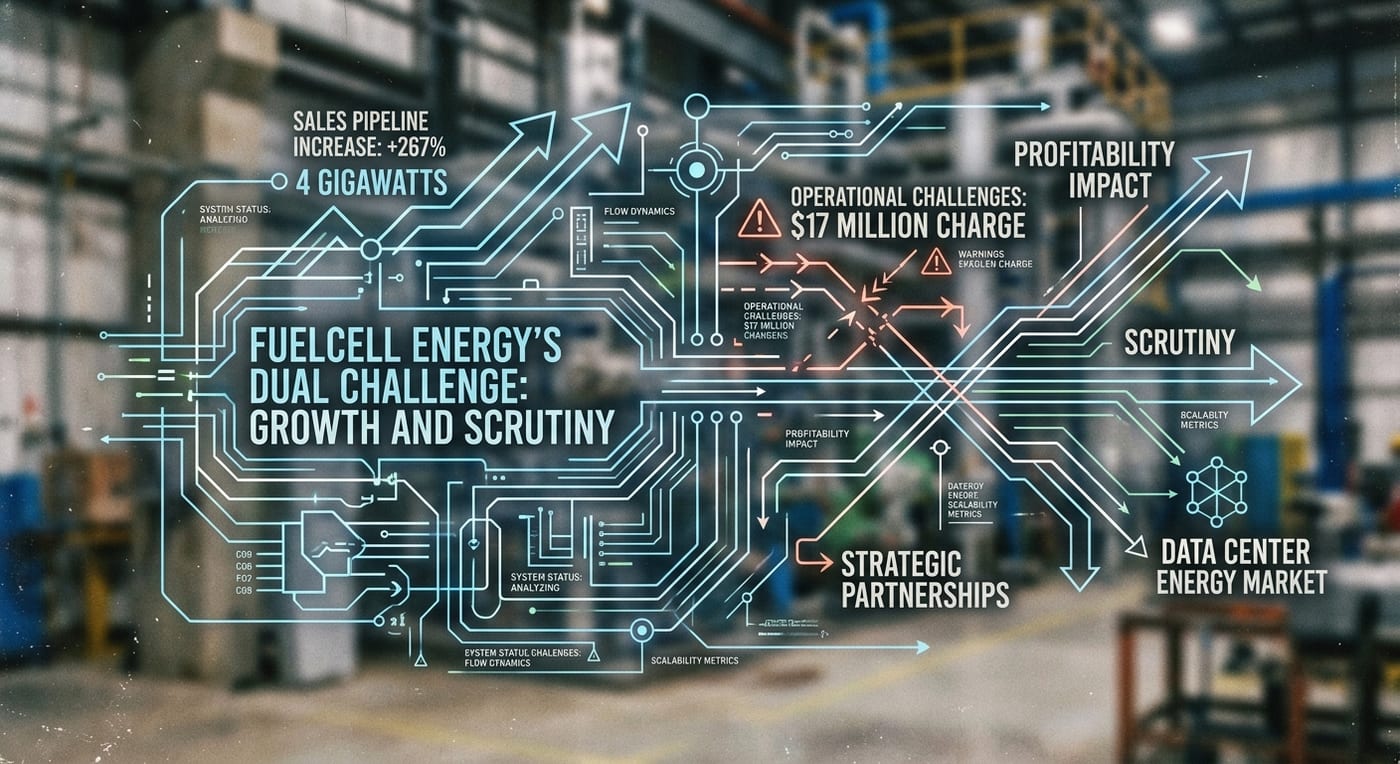
- FuelCell Energy posts a 267% increase in its sales pipeline to 4 gigawatts.
- The company faces serious operational challenges, including a $17 million charge impacting profitability.
- Strategic partnerships aim to underpin growth within the data center energy market.
FuelCell Energy, Inc. (FCEL) is drawing attention as the latest developments come into focus. FuelCell Energy has been making significant strides in the clean energy sector, notably in powering data centers where demand for sustainable energy solutions is escalating. The company's sales pipeline, which primarily targets this segment, highlights its commitment to addressing increased energy needs sparked by advancements in technology, particularly in artificial intelligence and cloud services.
Sales Pipeline Surge
As outlined in recent reports, FuelCell Energy's sales pipeline surged by 267%, growing to an impressive four gigawatts. This growth primarily stems from the company's strategic focus on the data center market, which now constitutes about 90% of its total pipeline. This strategy not only aligns with industry trends but also places FCEL in a favorable position as corporations increasingly look for reliable energy sources amid mounting regulatory pressures to transition to clean energy.
However, despite this encouraging sales growth, FCEL is simultaneously facing significant operational difficulties. Discrepancies within its manufacturing processes have led to increased costs and dissatisfaction among investors, particularly in the wake of a $17 million charge associated with its Capital Equipment Purchase Agreement (CEPA) with Fit Energy.
Operational Challenges and Legal Scrutiny
FuelCell Energy's disappointing financial results have attracted legal scrutiny, as a class action lawsuit filed on behalf of investors alleges that the company had misrepresented its manufacturing capacities. The lawsuit addresses claims that FCEL's manufacturing operations were inadequate to meet the commitments specified in its agreement with Fit Energy, resulting in unexpected shutdowns and higher production costs. These operational setbacks paired with financial losses have severely impacted stock performance, with shares dropping as much as 15.69% following announcements regarding its third-quarter fiscal results.
These challenges are reflective of the broader issues that FCEL is facing as it attempts to scale operations to meet rising demand. According to a prior analysis, FuelCell Energy's operational hurdles, including significant gross losses and ongoing production shortfalls, have raised questions about the sustainability of its growth strategy. Investors must consider how the company's ambitious plans are undercut by these elements FuelCell Energy's Strategic Expansion and Challenges.
In the face of increasing scrutiny, FuelCell Energy's management has emphasized their commitment to overcoming these obstacles. The company's CFO has stated that they remain focused on optimizing their production capacity to fulfill contractual obligations and improve margins.
Strategic Partnerships for Future Growth
A silver lining for FuelCell Energy lies in its strategic partnerships, particularly its agreement with Fit Energy for the manufacture and delivery of carbonate fuel cell block systems. This partnership is pivotal for addressing the burgeoning need for clean, baseload energy solutions, especially tailored for data centers. Fit Energy's commitment to provide 380 megawatts of power under this strategic deal underlines both potential growth pathways and the mounting pressure for FCEL to execute its operational framework more effectively.
Strategically, FuelCell is also enhancing its service offerings and exploring new innovative technologies to provide even more efficient energy solutions, as discussed in a recent article about the firm’s clean energy strategy FuelCell Energy's Ambitious Clean Energy Strategy.
These initiatives demonstrate FuelCell Energy's resolve to balance ambitious growth trajectories with the necessary operational rigor to mitigate financial setbacks.
Investor Outlook and Future Prospects
As we look to the future, FuelCell Energy's ability to turn its strategic advantage into sustained profitability hinges on its responses to current operational challenges and legal scrutiny. Investor sentiment remains bearish given recent financial performance, and the company will have to assure stakeholders through improved transparency and effective risk management strategies. Importantly, the upcoming legal developments, including deadlines for class action suits, may also weigh on the company's stock stability in the near term.
In conclusion, FuelCell Energy's current landscape is a complex tapestry of exciting growth potential set against operational inefficiencies and legal challenges. As FCEL forges ahead, it must capitalize on its innovations while ensuring that its operational practices align with industry standards and investor expectations. The same pressure is reflected in recent reporting on the issue, which helps explain why the company's pricing decisions remain under scrutiny.