

FuelCell Energy's Ambitious Clean Energy Strategy
ED
Editorial
Cashu Finance·5 min read
TL;DR
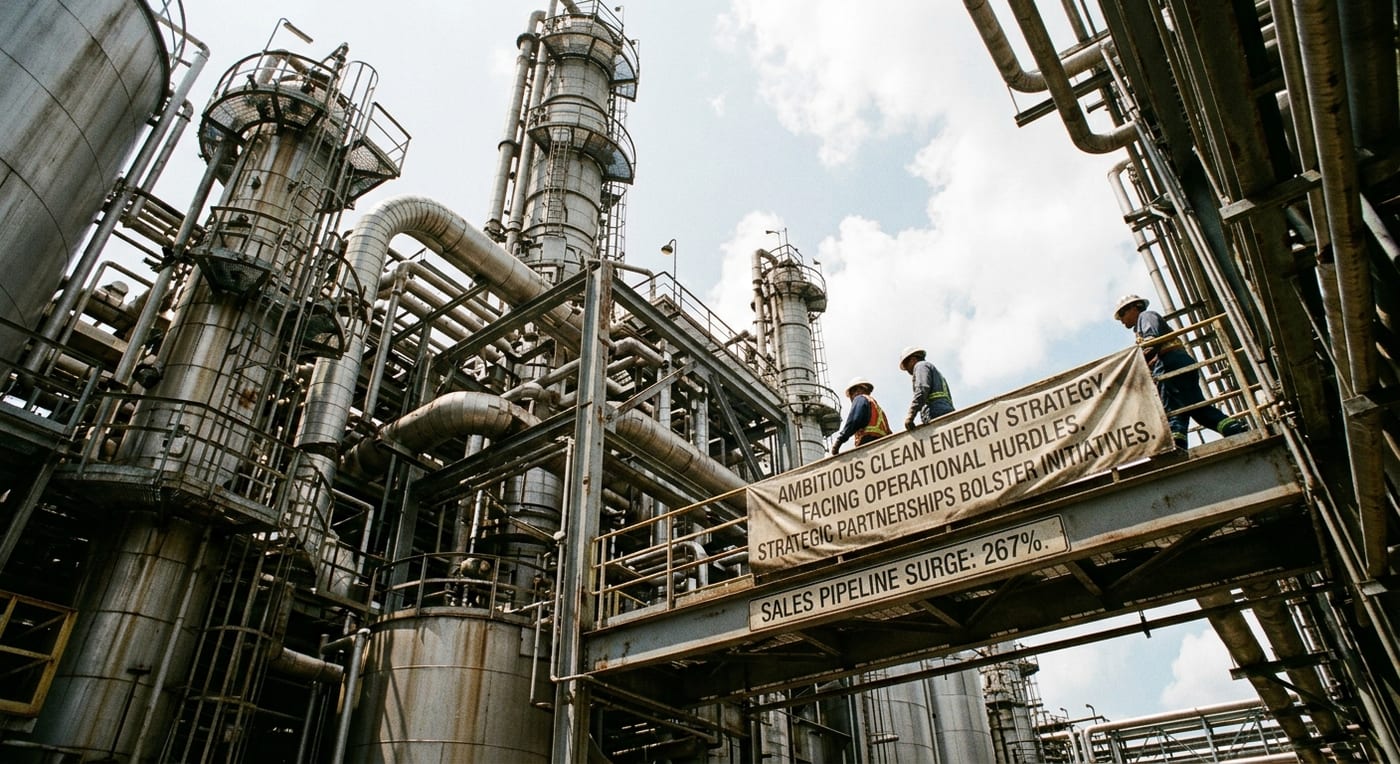
- FuelCell sees a 267% surge in its sales pipeline.
- The company faces significant operational hurdles and legal scrutiny.
- Strategic partnerships bolster its clean energy initiatives.
FuelCell Energy, Inc. (FCEL) is drawing attention as the latest developments come into focus. FuelCell Energy, Inc. (FCEL) is navigating a transforming landscape in the clean energy sector, focusing heavily on data centers, where demand for reliable and sustainable energy sources is surging. With a reported 267% increase in its sales pipeline, the company is positioning itself as a significant player in fulfilling the growing energy demands of the digital economy. This article examines FuelCell's strategic initiatives, operational challenges, and future outlook in light of its financial performance and market positioning.
Pivotal Growth in Sales Pipeline
FuelCell Energy has reported a phenomenal 267% increase in its sales pipeline, now standing at approximately 4 gigawatts. This remarkable growth has been largely attributed to the company's strategic pivot towards the data center sector, which comprises nearly 90% of its pipeline. As demand for reliable and clean energy solutions intensifies, especially due to the escalation of artificial intelligence and cloud computing, FuelCell is tailoring its offerings to meet these pressing market needs. The company's commitment to sustainability ensures that it is not just responding to current trends but is actively leading the charge towards a carbon-free energy future.
The launch of the 12.5-megawatt "Energy Block" product specifically targeted for data centers underscores this strategic direction. As reported in a previous article on FuelCell's data center expansion, this new offering aligns perfectly with the rising electricity needs tied to the modern digital infrastructure, making it a formidable asset in the competitive landscape of clean energy solutions.
Navigating Operational Challenges
Despite the ambitious growth prospects, FuelCell has faced significant operational challenges. The financial report for fiscal third quarter 2026 revealed a net loss of $45.3 million, driven significantly by a gross loss attributed to their production constraints related to a strategic agreement with Fit Energy, aimed at delivering carbonate fuel cell block systems.
The company recorded approximately $24.5 million in gross losses, as highlighted during an earnings call where CFO Michael S. Bishop noted that $17 million worth of charges were specifically linked to costs exceeding the contract pricing established under their agreement with Fit Energy. These challenges reveal the precarious balance that FuelCell must maintain as it scales its production capacity to meet contractual obligations while adhering to sustainable practices. As seen in other related contexts, utility firms often grapple with the cost of transitioning to greener technologies, a landscape where FuelCell must tread carefully to ensure it does not overextend itself financially.
Legal Scrutiny and Class Action Lawsuits
Recent developments have escalated regulatory scrutiny over FuelCell. A class-action lawsuit has been filed, alleging misleading statements about the company’s manufacturing capacities and its ability to meet production demands outlined in the Capital Equipment Purchase Agreement (CEPA) with Fit Energy. The suit claims that key executives did not disclose critical operational realities that could significantly affect shareholder interests. In the lawsuit, plaintiffs are urging investors who suffered losses during the class period from June 24, 2026, to September 1, 2026, to take action before the November 10, 2026, deadline to join the case.
The developments surrounding these lawsuits pose significant challenges for FuelCell as it seeks to maintain investor confidence and navigate its growth strategy amid ongoing operational setbacks. The turbulence in FuelCell’s stock prices, influenced heavily by these legal actions, is a stark reminder of the risks associated with aggressive growth plans. The corporate governance aspects that arise from such scrutiny will remain a focal point for investors and analysts alike.
Strategic Partnerships and Future Outlook
FuelCell's recent initiatives include securing a $49 million financing package from the Export-Import Bank of the United States aimed at supporting innovative clean energy solutions. This funding was structured under EXIM's loan guarantee program and signifies government confidence in FuelCell's potential for growth and innovation in clean energy technologies. The infusion of capital will be crucial as the company aims to expand its product offerings and bolster its market capabilities, especially in the flourishing data center sector.
Additionally, FuelCell's partnership with Fit Energy to deliver 380 megawatts of clean on-site power is a significant step towards meeting the increasing demand for eco-friendly energy solutions. This collaboration reinforces FuelCell’s commitment to sustainable practices while capitalizing on the market's urgent need for durable power solutions.
Conclusion: The Road Ahead for FuelCell Energy
In summary, FuelCell Energy, Inc. (FCEL) is at a crossroads, balancing remarkable growth opportunities against substantial operational challenges. As the company embarks on an ambitious journey towards establishing itself as a leader in sustainable energy, it must navigate the complexities of scaling operations while ensuring financial stability. With a strong focus on data centers and innovative product offerings, FuelCell's future prospects hinge on its ability to address its current challenges head-on while maintaining a clear, responsible approach to growth. The road ahead is fraught with potential obstacles, but its proactive strategies may well lead to its ascendance in the competitive landscape of clean energy. The same pressure is reflected in recent reporting on the issue, which helps explain why the company's pricing decisions remain under scrutiny.