

Ford's Strategic Shift to Electric Vehicles
ED
Editorial
Cashu Finance·4 min read
TL;DR
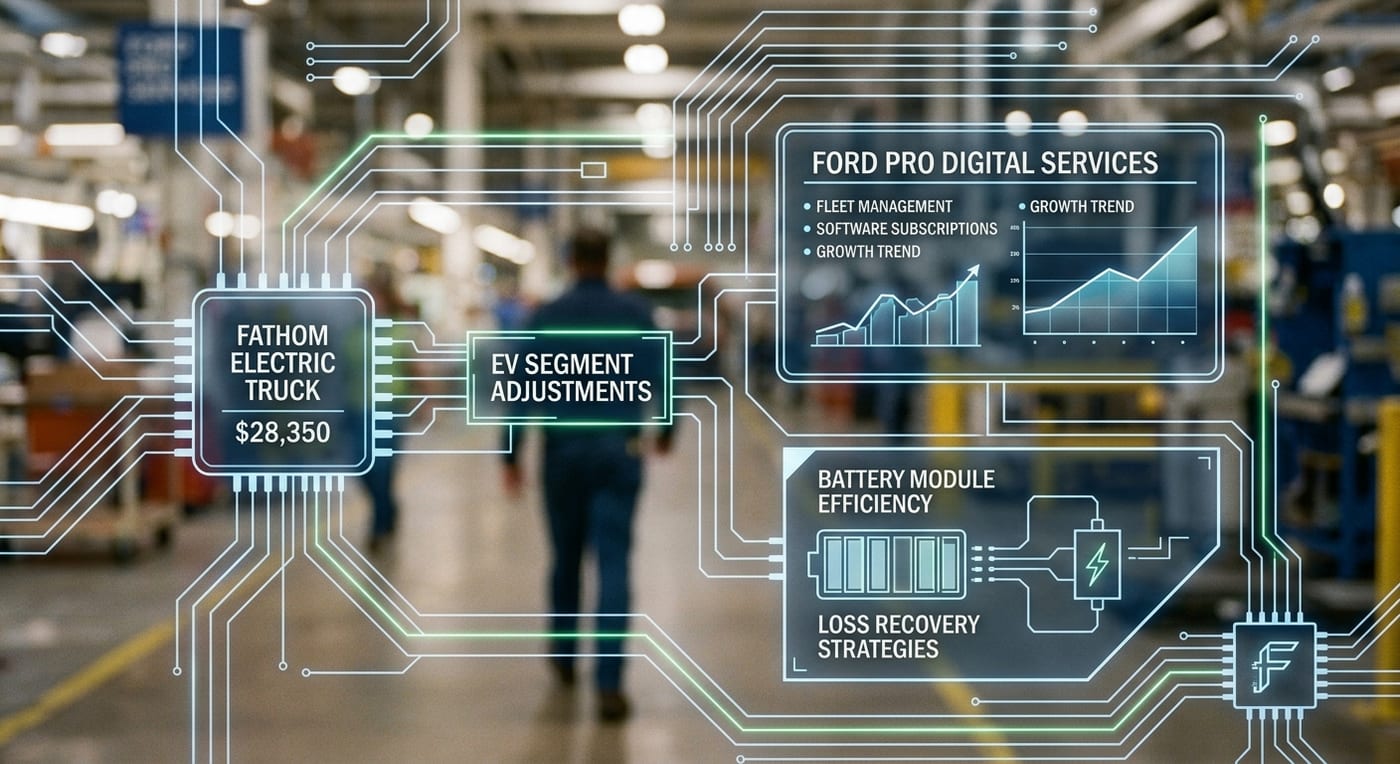
- Ford launches the Fathom electric truck priced at $28,350.
- The company focuses on enhancing digital service offerings through Ford Pro.
- Strategic adjustments are made following significant losses in the EV segment.
In recent years, the automotive industry has experienced a seismic shift, with the electrification of vehicles taking center stage. Ford’s foray into this landscape embodies a mix of innovation and strategic repositioning. The Fathom electric truck represents the company's commitment to affordability and quality, two crucial factors that significantly influence the purchasing decisions of consumers today.
The Launch of the Fathom Electric Truck
Ford’s introduction of the Fathom electric truck is a strategic move designed to capture a larger share of the electric pickup market. With this vehicle, Ford aims to cater to a demographic that seeks cost-effective electric options amid rising fuel costs. The calculated pricing strategy at $28,350 targets budget-conscious consumers, signifying Ford's understanding of current market dynamics.
Beyond pricing, the Fathom’s development emphasizes quality and user experience. Ford is banking on incremental improvements in assembly technology and quality standards that not only bolster consumer trust but also enhance overall vehicle performance. This aligns with Ford's operational adjustments as it pivots towards modern production methodologies geared towards quality assurance.
Ford's Competitive Landscape
As Ford presses on with its electrification goals, it finds itself in a bustling competitive landscape populated by traditional automotive giants and emerging EV startups like Tesla. However, Ford's legacy and established brand loyalty provide a solid foundation on which to build its EV market share. Competitors like General Motors (GM) have seen substantial gains from digital services, which promise higher margins compared to traditional automotive revenue. Ford is similarly focused on enhancing its digital offerings through its commercial division, Ford Pro, which has demonstrated significant growth in subscriptions.
In this context, Ford's strong emphasis on integrating telematics and maintenance features into its commercial service offerings is a smart adaptation to the changing marketplace. This aligns with insights presented in an earlier article discussing the evolving digital monetization strategies of both Ford and GM: 2 Revolutionary Developments That Should Change Your Investing Thesis on Ford and General Motors.
Ford's management recognizes that building a robust digital infrastructure is crucial for sustaining competitive advantage. The push towards monetizing digital services across its vehicle lineup signifies Ford's ambition to evolve beyond being merely an automaker to a technology-infused mobility service provider.
Economic Challenges and Strategic Adjustments
However, reaching these ambitious goals has not been without significant challenges. The automotive market is historically tough, and Ford has found itself grappling with tumultuous financial conditions. The company reported substantial losses in its EV segment, which amounted to approximately $15 billion from 2023 through 2025. Such figures starkly highlight the difficulty of navigating consumer preferences that are shifting towards electric technologies that promise efficiency and sustainability.
Despite these losses, Ford's decision to scale back its EV ambitions—while also cutting ties with costly battery partnerships—suggests a risk-averse pivot that reflects broader industry concerns. Indeed, Ford is not alone in facing these struggles; many automakers are reassessing their strategies to better align with market realities, recognizing that consumer demand for EVs, while strong, requires adaptation and innovative solutions.
Future Outlook and Market Positioning
The future of Ford hinges on its ability to maintain financial health while pursuing its electrification strategy. Market analysts observe that Ford’s stock valuation, despite recent declines, remains relatively attractive. The automaker’s stock is trading at a forward price-to-earnings ratio of 7, suggesting potential for recovery if operational efficiencies and sales strategies succeed.
As Ford continues to invest in the Fathom electric truck and other EV initiatives, investors are eager to see how these models perform in the marketplace. With an expanding portfolio designed to include budget-friendly electric options, Ford's strategy could well place it in a fruitful position as consumer preferences continue to lean towards sustainable technologies.
Conclusion: Embracing a New Era
In conclusion, Ford Motor Company is at a crossroads, where its strategic pivot towards electric vehicles is a response to both consumer demands and market pressures. By focusing on affordability through the Fathom electric truck and enhancing digital monetization strategies, Ford is positioning itself not just to survive but to thrive within an evolving automotive landscape. As the market continues to evolve, Ford’s successful navigation of these challenges will prove critical to its long-term success. The same pressure is reflected in recent reporting on the issue, which helps explain why the company's pricing decisions remain under scrutiny.