

Ford's Forward Momentum in Electric Vehicles
ED
Editorial
Cashu Finance·5 min read
TL;DR
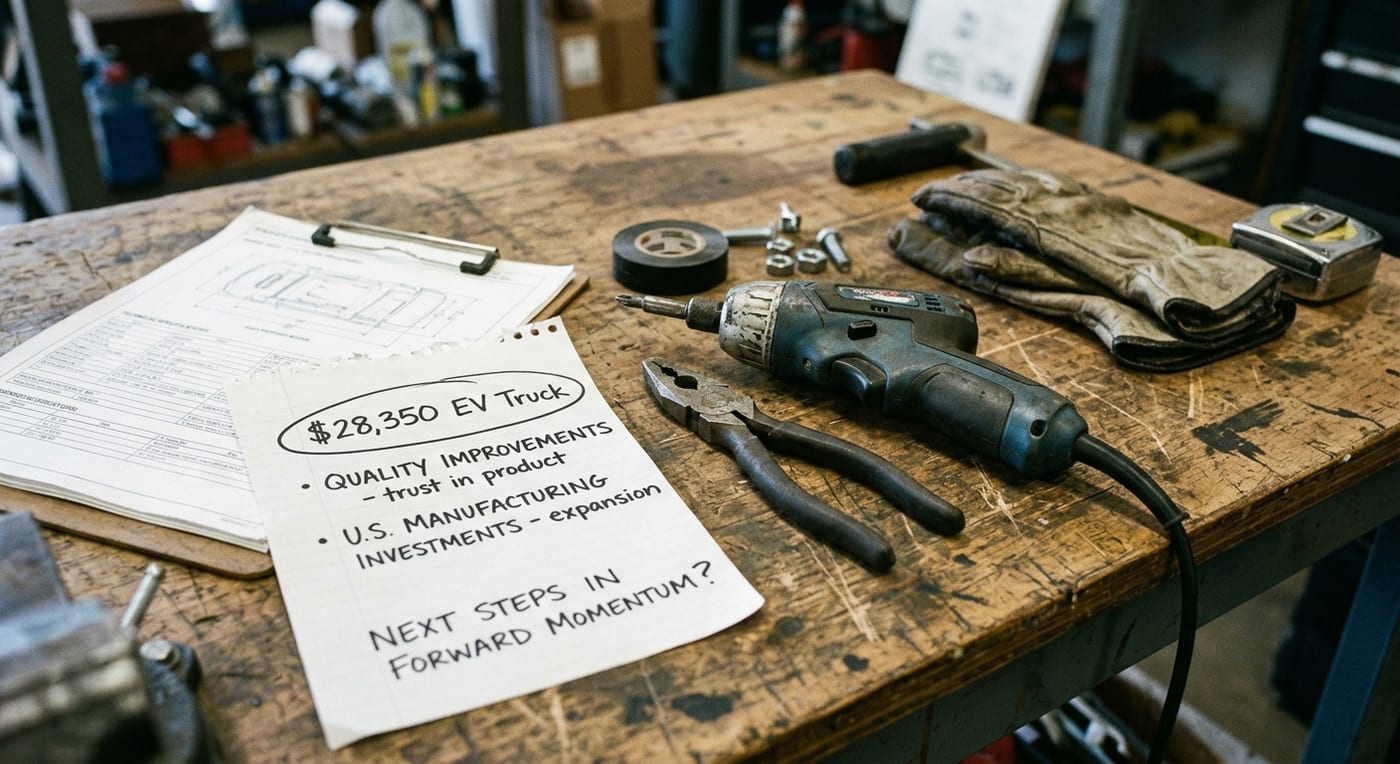
- Ford launches the Fathom electric truck at $28,350.
- Significant quality improvements enhance consumer trust.
- Major investments in U.S. manufacturing support electrification efforts.
Ford Motor Company F is navigating through a transformative phase as it seeks to solidify its position in the competitive electric vehicle (EV) market. With new initiatives, including the introduction of the budget-friendly Fathom electric truck, Ford is strategically aligning itself to meet the evolving demands of consumers while overcoming the challenges associated with transitioning to electrification. That backdrop echoes earlier coverage of the issue, especially around how pricing, strategy, and demand feed into the current story.
The electric vehicle landscape is rapidly evolving, and Ford's leadership is keenly aware of the necessity for innovation and adaptability. The company’s ambitious plan to launch the Fathom electric truck, priced competitively at $28,350, positions it as a viable option for cost-conscious consumers seeking affordable alternatives in the growing EV landscape. By capitalizing on this emerging market, Ford aims to broaden its consumer base and solidify its foothold against competitors like Tesla and General Motors.
Ford's strategy also emphasizes significant improvements in vehicle quality, attributed to recent initiatives to elevate its manufacturing processes and bolster consumer confidence. These improvements have been recognized, with Ford ranking as the top mass-market brand in the J.D. Power Initial Quality survey. Enhancements in quality not only cater to current consumer demands but create a foundation for enduring trust and loyalty.
Strategic Moves Toward Electrification
As part of its commitment to electrification, Ford is doubling down on investments in infrastructure that supports the production of its new electric models. One of the most significant announcements is the $2 billion investment in transforming the Louisville Assembly Plant to accommodate the Fathom truck’s production. This transformative effort emphasizes Ford's intent to bolster domestic manufacturing capabilities while ensuring that its production processes are as sustainable and efficient as possible.
The Kentucky Truck Plant, another pivotal site, is also poised for enhancements. A recent announcement highlighted a further $1 billion investment aimed at establishing a state-of-the-art paint shop that emphasizes environmental sustainability. This strategic focus reflects Ford's commitment to maintaining a robust manufacturing presence in the United States while transitioning towards electric vehicle production.
Additionally, the successful integration of the Universal EV Production System into the Louisville facility serves as a testament to Ford's innovative approach in adapting its operations to support its electrification strategy. This initiative not only ensures that Ford remains competitive in the EV market but also streamlines production methods, facilitating quicker responses to market demands.
Navigating Challenges and Global Competition
Despite these ambitious plans, Ford faces numerous challenges in its transition to electrification and ensuring market relevance amid fierce competition. Recently, Ford came under scrutiny from the federal government for its partnership with Chinese battery manufacturer CATL, raising concerns about national security and reliance on foreign technologies. CEO Jim Farley has publicly countered these claims, arguing that misunderstandings exist regarding Ford's partnerships and asserting the company's ongoing commitment to American manufacturing.
The competitive landscape is further influenced by the actions of rivals such as General Motors, which is actively developing its own domestic battery supply chain. GM's efforts to reduce reliance on Chinese materials suggest a strategic pivot that Ford must take note of as it advances its electrification agenda. In tandem, Ford's partnerships and potential joint ventures with foreign entities illustrate a complex balancing act between leveraging global expertise and supporting domestic manufacturing goals.
The Role of Innovation in Ford's Strategy
Innovation shines brightly in Ford's strategic framework, extending beyond vehicle production to encompass energy solutions and mobility systems. Ford's significant strides into the energy storage market complement its electric vehicle growth and demonstrate a diversification of its revenue streams. The collaboration with startups and investment in battery technologies reflect a proactive stance on fostering advancements that align with sustainable transportation initiatives.
In the backdrop, Ford's aggressive pivot towards using its Chinese operations as an export hub signifies a nuanced approach to remaining operationally efficient while tapping into global market opportunities. By refining its export strategy, Ford has shown resilience in overcoming financial setbacks within the Chinese market, aiming to utilize its production capacities to bolster its global offerings.
Conclusion: A Vision for the Future
Ford Motor Company is at the cusp of a revolutionary shift, characterized by its strategic maneuvering towards electrification, robust quality enhancements, and careful navigation through domestic and global competition. With the launch of the affordable Fathom electric truck on the horizon, Ford is poised to capture the growing segment of eco-conscious consumers who prioritize cost-effectiveness and quality in their automotive choices. This transformative journey marks not just an evolution in Ford's business model but reinforces its long-standing legacy as a formidable player in the automotive sector.
As the industry continues to grapple with supply chain concerns and rapid technological changes, Ford's commitment to enhancing manufacturing processes, investing in innovative solutions, and fostering strategic partnerships present a forward-thinking narrative that could redefine its future. Only time will tell how successful Ford's efforts will translate into market performance, yet its current trajectory suggests a relentless pursuit of excellence that could secure its competitive edge.
For more insights on how Ford's electrification strategy aligns with broader industry trends and its implications for future performance, check out this source article on Ford's plans: Ford Motor vs. General Motors: Which Automotive Stock Is a Better Buy in 2026?