

Ford's Electrifying Future and Quality Focus
ED
Editorial
Cashu Finance·5 min read
TL;DR
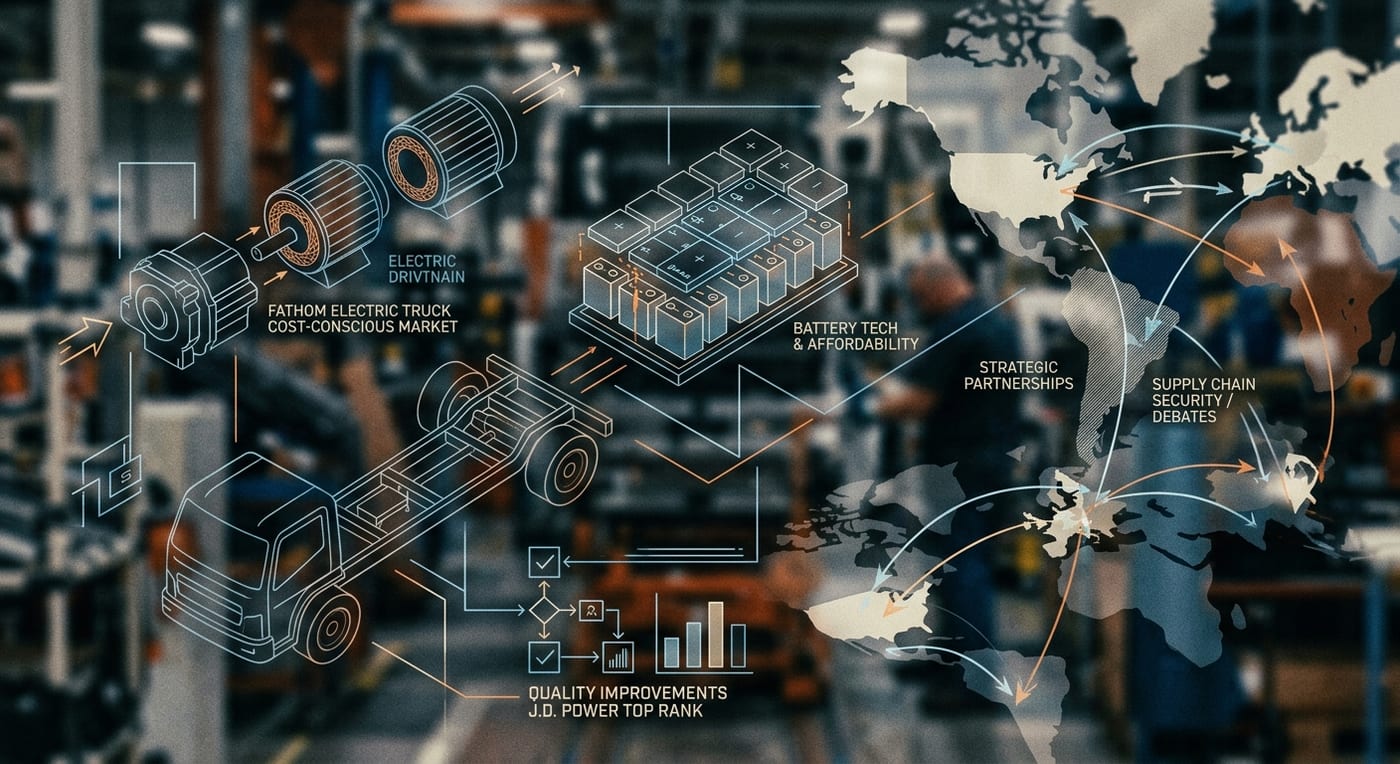
- Ford reveals Fathom electric truck to attract cost-conscious consumers.
- Quality improvements earn Ford top rank in J.D. Power survey.
- Strategic concerns arise over ties with Chinese partners amidst national security debates.
Ford Motor Company (F) stands at a pivotal moment in its long and storied history, as it embraces a significant transformation that intertwines its electric vehicle (EV) strategy with a renewed focus on vehicle quality. With new products on the horizon, including the budget-friendly Fathom electric truck, the company's future is becoming not only more electrified but also more resilient amid intense competition and evolving consumer expectations.
Electrification: A Forward Path
Ford Motor Company's commitment to electrification is underscored by its recent announcement regarding the Fathom electric truck. Priced to attract budget-conscious consumers, this vehicle aims to break down barriers to EV adoption that are often linked to cost. Introducing the Fathom at a competitive starting price of $28,350 positions Ford uniquely to engage customers looking for affordable alternatives in the growing electric pickup segment.
This strategic focus aligns closely with an industry push towards sustainable transportation solutions and reflects Ford's broader goal of achieving greater market penetration amidst the fierce competition posed by established brands like Tesla. As Ford cleverly tries to consolidate its position in the EV market, it also faces significant challenges, including ongoing quality concerns in some of its longstanding products that could overshadow its electrification ambitions.
Quality Improvements on the Rise
Ford's renewed emphasis on quality has not gone unnoticed. The company has been recognized as the top mass-market brand in vehicle quality according to the J.D. Power 2026 U.S. Initial Quality Study. This accolade is a significant turnaround for the iconic brand, which has grappled with historical quality challenges. Reporting only 152 problems per 100 vehicles significantly improves Ford's reputation, making it competitive against other automakers while enhancing consumer trust and brand loyalty.
The commitment to quality dovetails with the launch of the Fathom truck; as Ford aims to captivate a new customer base, maintaining high standards remains a subject of utmost importance. For context, Ford's challenges with older models have included recalls that have tested consumer confidence. However, the new focus on both electrification and quality could help the automotive giant rebuild its image and strengthen profit margins moving forward.
National Security and Strategic Concerns
Despite its forward trajectory, Ford's strategic alliances, particularly with companies in China, have drawn scrutiny from U.S. government officials. Transportation Secretary Sean Duffy recently expressed substantial concerns regarding Ford's partnerships with Chinese firms, particularly battery provider CATL. As Ford plans to utilize these technologies, there’s a growing apprehension that these collaborations could compromise American manufacturing integrity and national security.
The Department of Transportation's letter to Ford's CEO Jim Farley highlighted the risks associated with relying on technologies from foreign adversaries, indicating that such dependencies might not only affect business strategies but could also diminish Ford's reputation as a pillar of American manufacturing. The implications of this political climate add layers of complexity to Ford's electrification strategy, impacting how potential partnerships and expansions are viewed by consumers and investors. Ford’s future direction might be tested by the need to balance international partnerships against growing nationalism in manufacturing and technology.
Navigating Market Cycles and Competition
Additionally, the landscape in which Ford operates is characterized by cyclical demand. Notably, the automotive market has seen stagnant growth, with car sales reminiscent of figures from four decades ago. The recent economic conditions, coupled with the rising prices of raw materials for electric vehicle production, translate to constant pressure on Ford’s profit margins. Analysts have echoed the sentiment that Ford must balance ongoing capital expenditures with profitability, as the mass-market auto industry does not typically provide the growth margins available in tech-driven sectors.
Ford’s plan to expand its electric vehicle lineup aligns with broader trends toward energy storage solutions. The impending launch of its energy division, designed to provide battery storage systems to commercial and industrial customers, positions Ford to capture growth from the rising data center industry. These initiatives help bridge traditional automotive revenues with emerging sectors but face scrutiny regarding their scalability and profitability.
Conclusion: Looking Ahead
As Ford Motor Company steps into this new decade, its efforts at transforming its product lineup through electrification and quality enhancements are commendable. Yet, the implications of foreign partnerships pose both a challenge and an opportunity. By carefully navigating the complexities of international ties while placing emphasis on domestic manufacturing and quality, Ford can work toward solidifying its reputation and financial stability.
In summary, Ford is strategically positioning itself at the heart of the electrification trend, all while grappling with external pressures and internal quality demands. Investors and consumers alike will be watching closely to determine how well Ford can execute on this dual focus: to electrify its lineup while simultaneously ensuring that quality remains uncompromised. The same pressure is reflected in recent reporting on the issue, which helps explain why the company's pricing decisions remain under scrutiny.