

Ford's Bold Step into Electric Trucks
ED
Editorial
Cashu Finance·4 min read
TL;DR
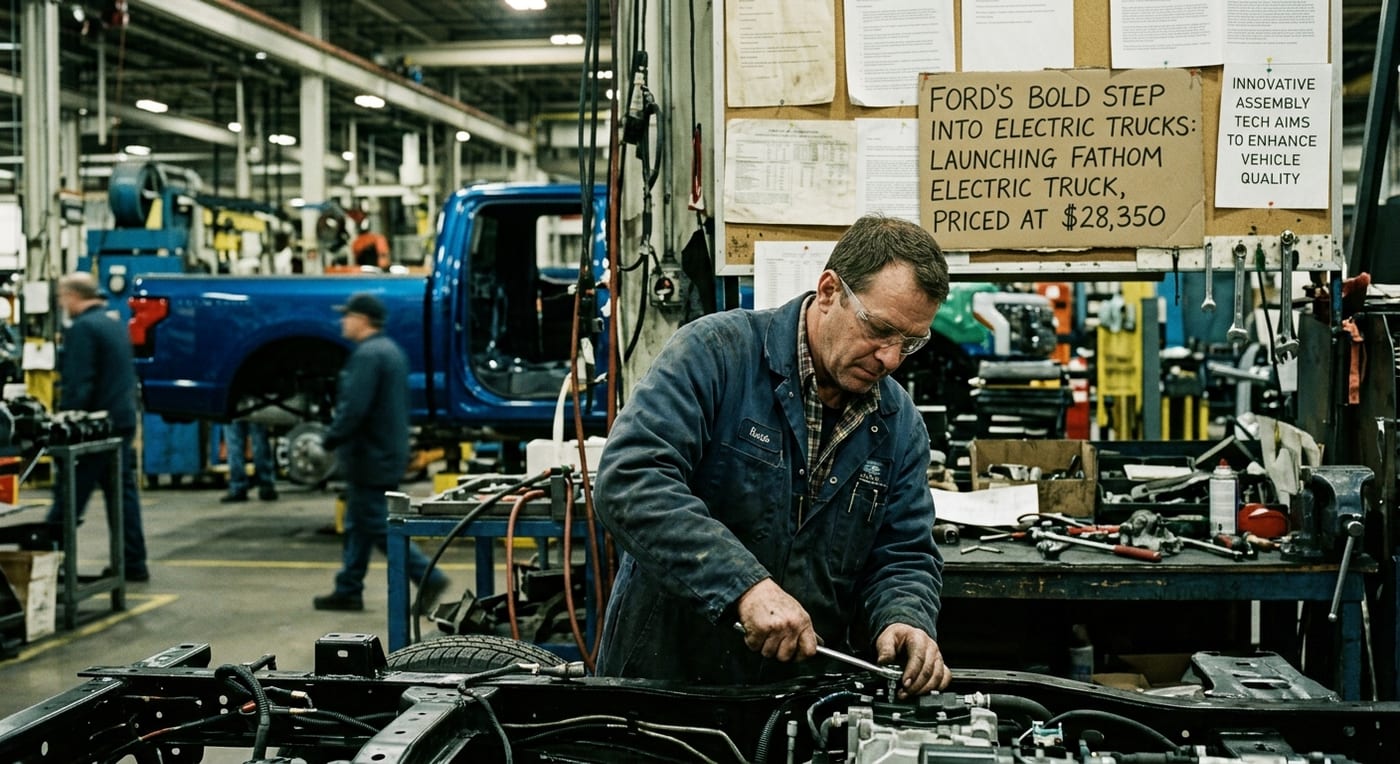
- Ford launches Fathom electric truck priced at $28,350.
- Innovative assembly technology aims to enhance vehicle quality.
- The competitive landscape pushes Ford toward strategic operational improvements.
Introduction
Ford Motor Company (F) is navigating a transformative phase as it pivots towards electric vehicles (EVs), aiming to enhance its position in a rapidly evolving automotive landscape. The recent launch of the Fathom electric truck, priced at an accessible $28,350, represents a critical component of Ford's strategy to capture cost-conscious consumers amidst the increasing popularity of EVs. This article delves into the underlying strategies, competitive landscape, operational challenges, and financial performance that characterize this pivotal moment for Ford.
The Significance of the Fathom Electric Truck
Central to Ford's electrification ambitions, the Fathom electric truck aims to redefine the company's standing in the growing electric pickup market. As the first vehicle built on Ford's upcoming Universal Electric Vehicle (UEV) platform, the Fathom comes with a significant focus on affordability and utility. With environmental concerns at an all-time high and rising fuel prices, many consumers are looking for cost-effective alternatives to traditional pickups. Ford seeks to capitalize on this trend by appealing to budget-conscious drivers with the Fathom.
In a competitive automotive landscape, Ford is up against not only traditional rivals like General Motors but also innovative challengers such as Tesla. This scenario creates a pressing need for Ford to offer compelling pricing and quality enhancements. The Fathom's competitive pricing is designed to draw customers away from rival models, particularly in the electric truck category. By setting its price at $28,350, Ford hopes to seize a sizeable share of a burgeoning market that is increasingly welcoming electric options.
Operational Innovations Underpinning the Fathom
Ford's operational innovations are particularly noteworthy. CEO Jim Farley recently highlighted that the UEV platform will utilize the vehicle's onboard computer for self-diagnosis during the assembly process, enhancing quality control measures. This method allows the truck to verify assembly connections before it even reaches the customer, which could significantly reduce the number of defects and recalls—a welcome change for a company that had previously faced scrutiny for high recall rates.
The internal verification process is a game-changer, moving away from traditional inspections to a more automated, efficient approach. The Fathom, for instance, boasts 20% fewer parts and 25% fewer fasteners than earlier models, further streamlining the manufacturing process. This re-engineering of the assembly line is expected to contribute positively to Ford's operational efficiency and cost management efforts.
Challenges and Competitive Landscape
Despite the promising developments, Ford faces several challenges. Transitioning to electric vehicles demands not only considerable capital investment but also adept management of supply chain risks. A significant concern among automakers is the procurement and pricing of critical raw materials such as lithium and cobalt, which are essential for battery production. Any fluctuations in the availability or price of these materials could potentially impact Ford’s margins on EVs.
Moreover, Ford must tackle competition from companies like Stellantis, which has also made inroads into electric vehicles. Understanding the current market conditions and aligning its pricing and product strategy effectively will be crucial. Even though Ford has robust commercial segments that consistently drive revenue, the pressure to maintain a profitable trajectory while scaling its electric vehicle operations cannot be underestimated.
Financial Outlook and Strategic Positioning
As Ford forges ahead, financial estimates indicate a mixed performance in recent quarters. In fiscal year 2025, Ford reported revenue of approximately $187.3 billion with a net loss of around $8.2 billion. The shifting marketplace has led to a negative net margin reflecting the challenges segment. However, the U.S.-based vehicle manufacturing improvements alongside the Fathom launch may offer a pathway to enhanced profitability.
Additionally, the Ford Pro division—focused on commercial customers—remains a bright spark in the company’s performance, contributing solid sales numbers even amidst the electric transition. The resilience shown by this segment indicates Ford's strategic positioning is on track, and should balance out some of the pressures faced in the consumer EV realm.
Looking Ahead: Ford's Strategic Vision
The Fathom truck is just the beginning of Ford's extensive plans to expand its electric offerings. The anticipated advancements in their Universal Electric Vehicle platform signal a broader strategy that hinges on operational efficiencies and product accessibility. Furthermore, partnerships with tech firms and battery manufacturers will likely enhance Ford’s capabilities as it transitions into this new era.
Ford's focus on quality improvements and technological advancements aims to create trust among consumers. The company’s sustained commitment to innovation, addressing key operational challenges, and understanding market dynamics will shape its competitive advantage in the rapidly changing landscape of the automotive industry. As Ford continues to unveil electric models while strengthening its core brand, investors should closely monitor how effectively these strategies unfold in the forthcoming quarters. The same pressure is reflected in recent reporting on the issue, which helps explain why the company's pricing decisions remain under scrutiny.