

Ford's Bold Move Into Electric Trucks
ED
Editorial
Cashu Finance·5 min read
TL;DR
- Ford launches the Fathom electric truck at a competitive price.
- Significant quality improvements recognized by J.D. Power.
- Investor sentiment remains cautiously optimistic amid challenges.
A Strategic Shift Towards Electrification
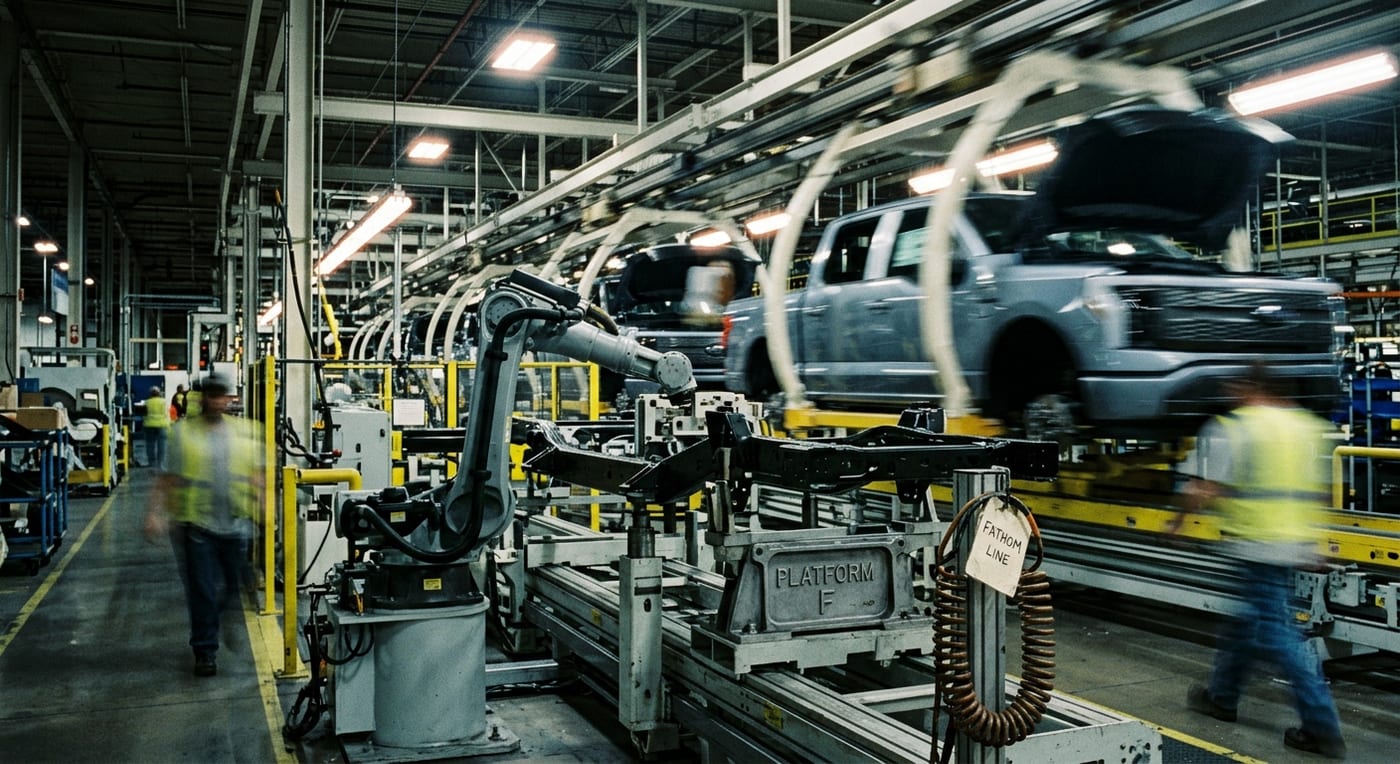
Ford's latest efforts highlight a decisive pivot toward electrification, underscored by the introduction of the Fathom truck, which will begin at a price point of $28,350. This pricing strategy aims to attract budget-conscious consumers who are interested in the growing EV market. The Fathom is expected to start shipping to customers in 2027, and its successful launch is crucial for the automaker's long-term profitability goals.
The vehicle will utilize Ford's new Universal Electric Vehicle (UEV) platform, a centerpiece of its strategy intended to cut costs and enhance efficiency in production. According to Ford representatives, they are optimistic that this platform will lead to profitability within a year of launch, emphasizing their commitment to competing with established leaders in the EV sector.
As emphasized in previous coverage, this shift is not merely about producing electric vehicles but also about redefining Ford's brand in the market. Their new platform aims to make EVs competitively priced compared to traditional gasoline vehicles. This aligns with Ford's broader goal of increasing its presence in the electric truck market and potentially recapturing consumers who have gravitated towards competitors like Tesla. The introduction of the Fathom signals a critical step in Ford's larger strategy to recover from previous financial losses and meet consumer demand for more sustainable and affordable vehicle options.
Quality as a Cornerstone
In conjunction with its electrification efforts, Ford has taken significant steps to improve vehicle quality, which plays a critical role in building customer trust. In the recent J.D. Power 2026 U.S. Initial Quality Study, Ford was recognized as the top mass-market brand, reporting only 152 problems per 100 vehicles, which is an impressive turnaround for a brand historically associated with quality control issues. This enhancement in quality is essential not only for customer satisfaction but also for Ford's overall profitability as it looks to attract and retain a loyal customer base amidst growing competition.
This focus on quality is echoed in another article highlighting Ford’s transformation journey wherein the company showcased its commitment to providing top-tier vehicles. By emphasizing both quality and electrification, Ford aims to appeal not just to environmentally conscious consumers but also to those who prioritize reliability and performance, making it well-equipped to challenge existing market players.
Challenges and Industry Dynamics
Despite these promising developments, Ford is not without its challenges. The automotive industry faces headwinds such as supply chain constraints, regulatory hurdles, and intensified competition in the EV arena. For instance, the company is currently addressing issues related to recalls and safety that could potentially hinder its recovery and tarnish its newfound reputation for quality.
Moreover, the steep competition from both traditional automakers and emerging Chinese EV manufacturers imposes pressure on Ford to continuously evolve its offerings and pricing strategies to stay competitive. In its latest earnings report, Ford acknowledged a decline in revenue due to "lower wholesale volumes and supply constraints," which emphasizes the importance of effectively managing production and market demand as new vehicles, such as the Fathom, approach launch.
CEO Jim Farley highlighted a cautious optimism about Ford’s future, illustrating how the company is striving to adapt to these challenges while enhancing its operational discipline.
Investor Sentiment and Outlook
As Ford navigates this transformative landscape, investor sentiment remains cautiously optimistic. The dividend yield currently hovers around 4.25%, making Ford an appealing choice for income-focused investors. With the stock price reflecting a market capitalization of approximately $56 billion and attractive valuation metrics, Ford's potential for recovery appears promising, provided it can successfully execute its electrification strategy and maintain quality standards.
Additionally, strategies to boost profitability and margins will be monitored closely by investors. Ford's partnerships and technology investments in areas such as autonomous driving and electrification are also viewed positively as they could yield long-term returns. Nevertheless, potential risks exist, including union negotiations and market volatility, which serve as reminders of the challenges inherent in the automotive industry.
In conclusion, Ford Motor Company (F) is at a crucial juncture in its history, striving for a new identity through quality enhancement and electric vehicle offerings, particularly with the forthcoming Fathom pickup truck. The outcomes of these initiatives will be vital in determining Ford’s ability to reclaim its place in a rapidly evolving automotive landscape and establish a sustainable, profitable future amidst intense competition. The same pressure is reflected in recent reporting on the issue, which helps explain why the company's pricing decisions remain under scrutiny.