

Delta Air Lines: Resilience Amid Rising Costs
ED
Editorial
Cashu Finance·5 min read
TL;DR
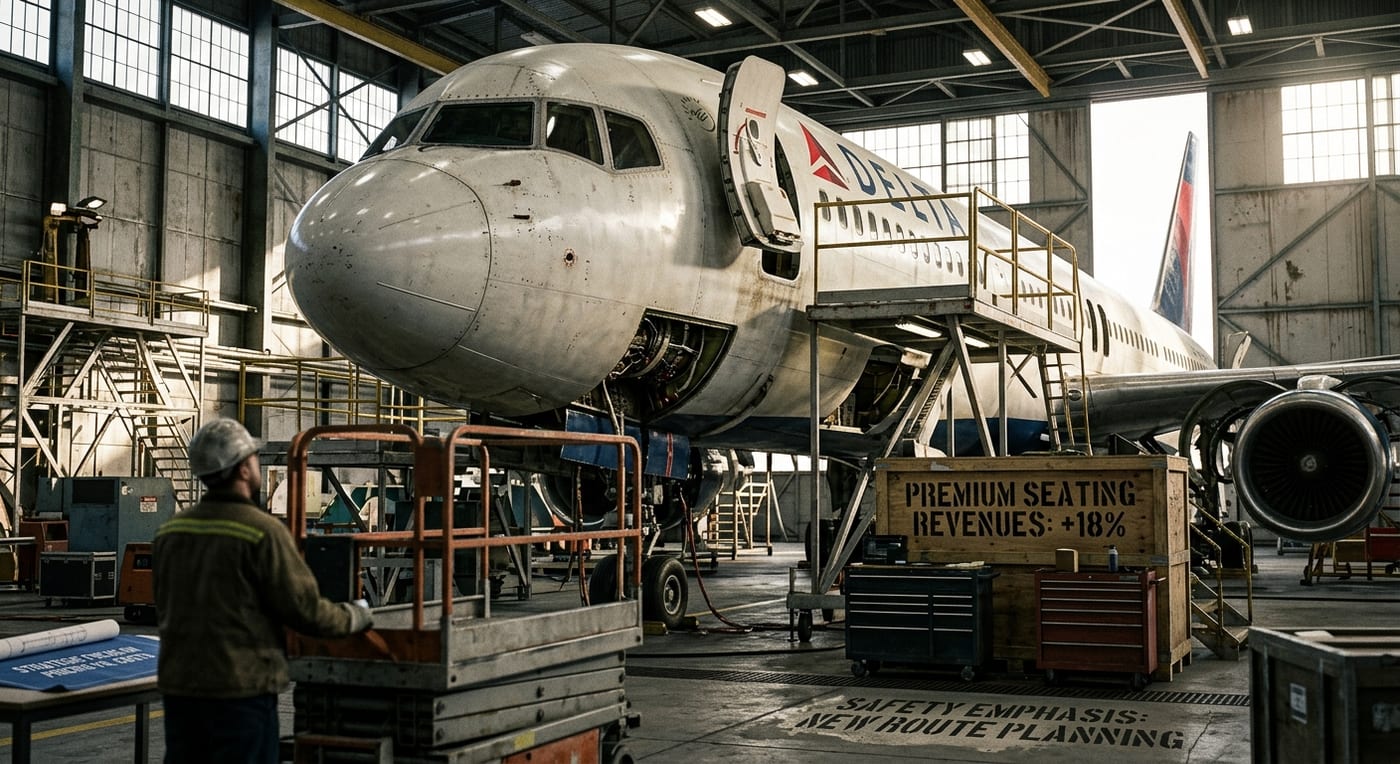
- Delta's premium seating revenues surge by 18%.
- Strategic focus on pricing to combat rising operational costs.
- Strong emphasis on safety as new routes are planned.
Delta Air Lines, Inc. (DAL) is drawing attention as the latest developments come into focus. Delta Air Lines, Inc. (DAL) is navigating a challenging landscape marked by rising operational costs, especially in fuel, while showing resilience through strategic pricing and premium offerings. As analysts and the airline's management focus on upcoming earnings reports, Delta continues to implement strategies that balance high travel demand and operational efficiency against external pressures.
Strong Demand and Premium Revenue Growth
Despite slashing its profit forecast due to soaring fuel costs and recent earnings misses, Delta Air Lines has demonstrated its ability to adapt. According to CNBC's Jim Cramer, Delta's recent performance reflects a robust operational model that has allowed it to offset a significant portion of these increased costs. Cramer highlighted the airline's substantial revenue growth from premium seating, which increased by 18%, exceeding main cabin revenues. This trend suggests a healthy and sticky demand for premium air travel, reinforcing Delta's efforts to cater to higher-paying customers.
Delta's strategy to expand its premium capacity is coming to fruition as the airline fills a greater share of its premium seats while also charging higher fares. Such growth in premium travel highlights Delta's strategic adjustments in pricing and service offerings, aiding the airline's financial resilience.
Strategic Pricing as a Core Focus
Ed Bastian, Delta's CEO, has indicated that pricing power remains a crucial component of the airline's strategy. Even with rising costs, Delta's ability to maintain high airfare levels illustrates its strong market position. Enhancements in the pricing model have made it challenging for lower-cost carriers to compete, allowing Delta to command higher prices without significantly deterring customers. This strategic pricing framework is an evolution of Delta's approach, making it less susceptible to cyclical market shifts.
Moreover, Bastian has indicated that Delta's revenue from partnerships—such as with American Express—has also seen significant boosts, further diversifying its income streams beyond traditional ticket sales. This innovative fare structure is foundational to Delta's ongoing efforts to create a resilient business model in a volatile economic environment.
The necessity of maintaining robust revenue models is further underscored by the parallel findings from previous coverage, which articulated how pricing adjustments aimed at addressing rising costs are directly tied to Delta’s financial health. The integration of these strategies has proven essential in navigating the complex landscape of the airline industry.
Rising Fuel Costs and Future Demand
Fuel costs have surged dramatically for Delta, increasing by 60% year-over-year due to geopolitical tensions, primarily driven by the ongoing conflict in Iran. Despite the financial strain associated with these soaring costs—estimated to result in a $2 billion hit to the airline—Delta remains optimistic about future profitability. Bastian pointed out that an uptick in flight supply could stabilize or even reduce ticket prices, suggesting a balancing act between maintaining operational efficiency and catering to consumer demand.
The airline's proactive approach to increasing its capacity is clearly aligned with management's focus on improving operational efficiencies. Investment in aviation infrastructure to alleviate air traffic congestion is pivotal here, as Bastian advocates for reducing bottlenecks that impact Delta's growth potential. This emphasis on infrastructure improvements not only addresses current challenges but also sets the stage for long-term strategic positioning.
Commitment to Safety and Operational Excellence
Safety remains a top priority for Delta Air Lines, especially as it contemplates launching new routes amid escalating global tensions and potential risks. As disclosed by CEO Ed Bastian, Delta is closely monitoring developments concerning safety before launching its Atlanta to Riyadh flight, reflecting the airline’s commitment to prioritizing passenger and crew safety above all else.
This commitment to safety aligns with the broader strategic outlook shared by Delta, where enhancing operational excellence is seen as vital. The implementation of advanced technologies and adherence to Federal Aviation Administration (FAA) regulations enhance the airline's safety protocols while simultaneously boosting operational capacity. In this context, the recent discussions about the use of technology in air traffic management highlight the critical intersection of safety and efficiency in Delta's operational strategies.
Future Outlook and Competitive Positioning
As Delta approaches its earnings report amid a confluence of rising costs and potential opportunities, the plane of thought shared by analysts remains cautiously optimistic. The airline industry's dynamics have shifted, making pricing power a significant lever for Delta. Jim Cramer’s insights echo this sentiment, suggesting that Delta is in a transition phase toward becoming a more robust business model that continually adapts to market changes.
Cramer predicts that once crude oil prices decrease—potentially with the resolution of geopolitical conflicts—Delta is poised to capitalize on this shift. The airline's strategic emphasis on premium services, diversified revenue streams, and operational efficiency marks a notable evolution from its past—a transformation that not only positions Delta for recovery but also for sustainable growth.
In closing, Delta Air Lines' agility in tackling rising fuel costs through robust pricing strategies and a commitment to premium services sets a strong foundation for its ongoing success. As the airline moves forward, its ability to maintain operational resilience amid external challenges will likely influence its trajectory in a highly competitive airline landscape.