

Delta Air Lines: Navigating Challenges and Innovations
ED
Editorial
Cashu Finance·4 min read
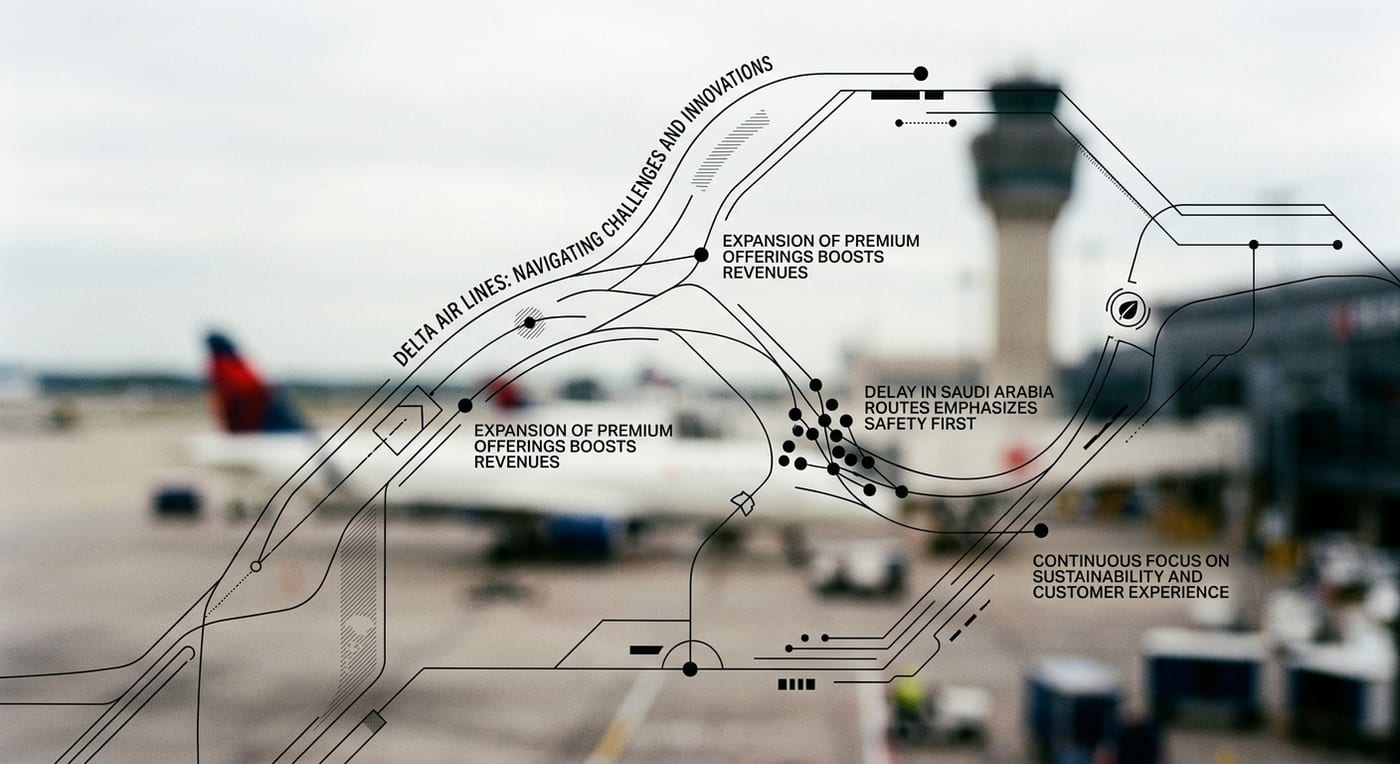
TL;DR
- Delta's expansion of premium offerings boosts revenues.
- Delay in Saudi Arabia routes emphasizes safety first.
- Continuous focus on sustainability and customer experience.
Delta Air Lines, Inc. (DAL) is drawing attention as the latest developments come into focus. Delta Air Lines, Inc. (DAL) is facing a dynamic and challenging landscape as it tackles rising operational costs while simultaneously striving to enhance customer experience and operational efficiency. Recently, Delta's strategic focus on premium offerings and adapting to evolving market demands has been critical in navigating these turbulent waters. As the airline industry continues to recover from the effects of the pandemic and geopolitical tensions, Delta has made significant investments aimed at maintaining its competitive edge and delivering value to its customers. This article explores Delta's operational strategies, financial performance, and customer-centric innovations as it positions itself for future growth amidst formidable industry challenges.
The airline industry has been significantly impacted by fluctuating fuel prices, operational disruptions, and changing traveler preferences. Delta has been proactive in addressing these pressures through various strategic initiatives. For instance, despite rising fuel costs that have adversely affected many airlines, Delta's premium seating revenue surged by 18%, illustrating its effective adaptation strategy of focusing on premium offerings to counterbalance operational challenges.
Delta's commitment to its premium cabin service is evident in its recent announcement regarding the overhaul of its Delta One suite. With rising demand for luxury travel, Delta is expanding its fleet of Porsche vehicles used to transport high-value customers from the terminal to the plane. According to Ranjan Goswami, Delta's chief marketing and product officer, the fleet of 40 Porsches will increase to 70 vehicles to meet the growing demand. Such innovations reflect Delta's emphasis on quality and attention to customer preferences, further solidifying its market position in the premium travel sector. Details about the luxurious upgrades can be found in the source article detailing Delta's investment in enhancing its premium travel experience.
While Delta is experiencing robust demand in premium offerings, it has also faced significant challenges recently, specifically in launching new international routes. Delta recently announced a delay in its first-ever direct flights from the U.S. to Saudi Arabia due to missile attacks at Riyadh's King Khalid International Airport, which prior travel advisories highlighted as a safety concern. This route, initially set to begin in October, has been postponed to March 2027. Delta's proactive decision underscores its commitment to safety and customer confidence, factors that are paramount in the current airline market. The airline remains steadfast in its commitment to the Saudi market, recognizing its long-term potential despite the immediate challenges. Additional insights can be found in reports from Business Insider that discuss the recent delays and safety considerations.
Delta's CEO, Ed Bastian, has repeatedly emphasized the role that safety plays in operational decisions, asserting that ongoing military activities and safety threats could pose risks to aviation in the region. Given the volatile situation, Delta has chosen to rely on its established relationships with governmental and aviation partners to navigate forward.
The ongoing emphasis on pricing power has also played a crucial role in Delta's strategy to maintain profitability. In a changing environment where airfares are projected to remain elevated, Delta has positioned itself to benefit from this trend. With consumers increasingly willing to pay for premium experiences, Delta's latest financial reports highlight its ability to sustain high levels of airfares amid rising costs, a topic covered extensively in the previous article on strategic pricing.
Delta’s developments in operational efficiency are paralleled by its concerted efforts in sustainability. As corporate responsibility grows into a critical consideration for travelers, Delta is aligning its financial objectives with ecological initiatives to appeal to environmentally conscious customers. This strategic shift, as highlighted in prior discussions of Delta's resilience amid rising costs, points toward a forward-thinking approach that takes into account both market demands and sustainability goals.
In light of these strategies, Delta Air Lines is gaining strong traction in premium service offerings while managing its challenges adeptly. The airline's continuous assessment of customer expectations and its readiness to invest in high-quality experiences is becoming increasingly important in a competitive landscape. Through its strategic initiatives, Delta exemplifies how an airline can evolve and adapt in the face of adversity, ensuring that it stays ahead of consumer trends and market shifts.
Delta's operational and strategic practices reflect a holistic view of the evolving airline industry and its customer base. The airline continues to innovate not only in enhancing customer experience through premium services but also in making informed decisions regarding safety, pricing, and sustainability. As Delta progresses forward with its current strategies, the outcomes will likely be closely monitored by analysts and investors alike as key indicators of the airline's resilience and ability to thrive amidst evolving market conditions.