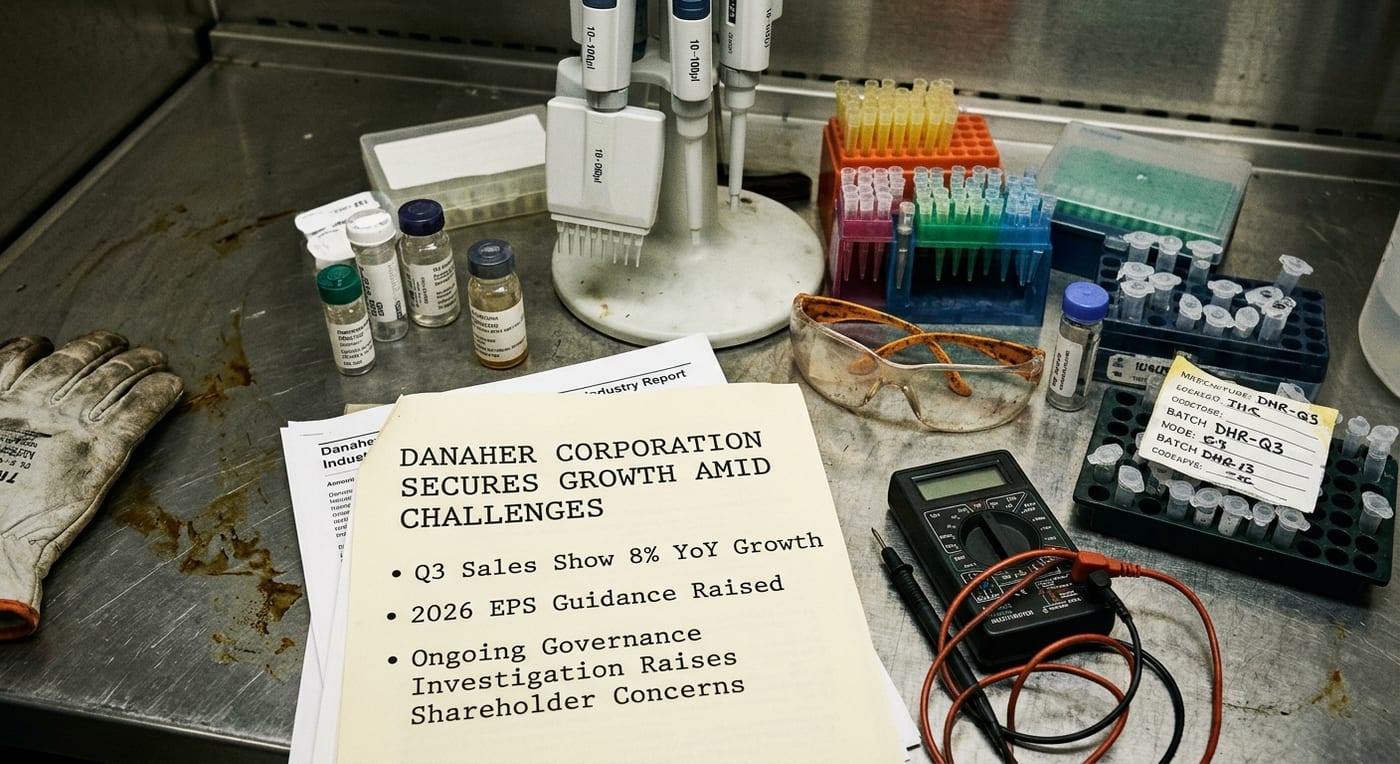
Danaher Corporation ( DHR) has recently showcased its operational resilience and growth potential despite facing various macroeconomic challenges. Through strategic shifts and significant financial moves, Danaher continues to solidify its position as a leader in the life sciences and diagnostics domains. This article delves into the company’s latest quarterly performance, strategic focus on growth, and the implications of ongoing governance concerns that could impact investor sentiment.
Third-Quarter Performance Surprises Analysts
In the recently released third-quarter earnings report, Danaher outperformed Wall Street estimates, achieving total sales of $6.55 billion, which marked an 8% increase year-over-year. This notable growth can largely be attributed to the robust performance across its core businesses, highlighting a recovery in demand, particularly for bioprocessing and clinical diagnostics. More significantly, net income surged by an impressive 36% to over $1.2 billion, facilitated by a favorable tax settlement and operational efficiencies.
As noted in a recent article, the earnings results were buoyed by a tariff refund that contributed to adjusted profitability, indicating that Danaher not only benefits from operational improvements but also strategically navigates external cost factors. These results inevitably led to an uptick of over 4% in the company's stock price following the announcement.
Adjusted Guidance Reflects Strategic Resilience
In conjunction with the strong performance, Danaher raised its full-year guidance for adjusted earnings per share to a range of $8.57 to $8.62, up from a previous estimate of $8.45 to $8.60. This upward revision underscores management's confidence in sustained core revenue growth, which is expected to remain around 4% to 5% into 2027. This forecast correlates with a significant strategic shift within the company as it transitions focus from portfolio restructuring to enhancing organic growth throughout its existing lines.
Julie Sawyer Montgomery, Danaher’s CEO, highlighted that the focus is now aligned on capitalizing on the current portfolio rather than altering it. This approach signals a commitment to deepen market penetration and enhance sales across established operating units, which may yield long-term dividends in terms of market share and profitability.
Bioprocessing and Diagnostics: Engine of Growth
A key driver of Danaher’s recent success has been the accelerating demand for its bioprocessing products, as highlighted in both the third-quarter news and previous insights from management. With biopharma companies expanding production due to progressing new therapies, Danaher has witnessed a notable uptick in orders, particularly related to upstream consumables and scientific reagents. The company reported double-digit order acceleration in bioprocessing, indicative of a solid recovery trajectory post-pandemic.
In particular, the resilience displayed in Danaher’s diagnostics and life sciences divisions illustrates the company's strategic positioning to capitalize on market trends. As noted, the growing integration of artificial intelligence into lab workflows is set to enhance efficiency and accuracy, indicating a forward-looking approach that could empower Danaher to translate operational capabilities into competitive advantages.
Governance Concerns Cast Shadows
Despite the optimistic financial outlook, Danaher faces challenges on the governance front. A pending investigation into potential fiduciary breaches by members of its executive team has raised eyebrows among shareholders, prompting calls for greater transparency and accountability. The investigation, initiated by Halper Sadeh LLC, emphasizes the need for precautionary measures to reinforce investor confidence amidst these uncertainties.
Such leadership and governance questions can have implications for stock performance and market perception, potentially overshadowing the company’s strong operational results. Shareholders are encouraged to engage with the law firm to explore their rights, with the hope that improving governance practices could safeguard their interests and elevate Danaher’s corporate management standards.
Future Outlook: Balancing Opportunities and Risks
As Danaher navigates its future, the balance of opportunities and risks will be pivotal. The company’s strategic focus on enhancing organic growth while navigating governance concerns is expected to be a defining aspect of its trajectory. Long-term shareholders might find solace in the company’s proactive measures to integrate leading technologies and enhance operational efficiency within its primary business units.
The emphasis on maintaining robust investment criteria during potential acquisitions aligns with a disciplined approach that can further solidify Danaher’s competitive positioning. The commitment to manage its portfolio effectively and leverage synergies within its operating segments reflects a coherent strategy aimed at fostering sustainable growth even in a volatile market.
Moreover, Danaher’s positioning as a crucial provider of essential life sciences tools and diagnostics places it in a unique role benefiting from ongoing healthcare demands. As global health challenges continue to evolve, the company’s extensive research and development initiatives could pave the way for innovative solutions, thereby enhancing its market relevance.
In conclusion, Danaher Corporation's recent performance articulates a narrative of resilience and strategic execution, bolstered by strong revenue growth and an adaptive business model focusing on empowering existing assets. However, the underlying governance scrutiny presents a potential risk that requires vigilant attention from both management and investors. The path forward will necessitate a keen balance between seizing growth opportunities while addressing governance frameworks that uphold stakeholder trust.