

CVS Health's Strategic Separation Explained
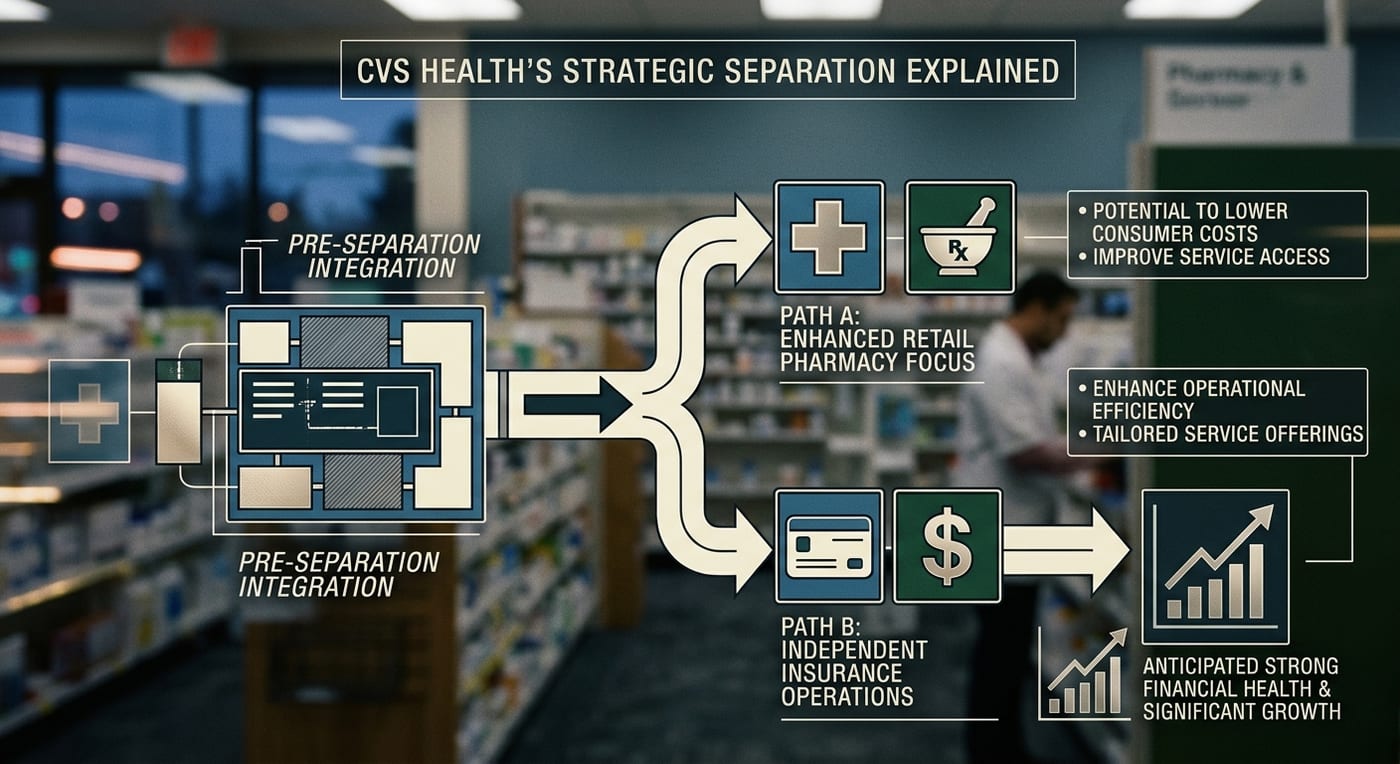
- CVS Health plans to separate its retail pharmacy and insurance businesses to enhance operational focus.
- The split is expected to potentially lower consumer costs and improve service access.
- CVS anticipates significant growth and strong financial health following the separation.
CVS Health Corp. (CVS) is set to embark on a significant transformation as it prepares to split its operations into two distinct entities by 2028. This strategic move aims to separate its retail pharmacy operations from its insurance and pharmacy-benefit management services, a step that is expected to reshape the company’s business model while potentially lowering costs for consumers. With rising pressures from regulatory scrutiny, evolving market dynamics, and a growing emphasis on health care affordability, the decision represents a pivotal moment in CVS's ongoing journey toward improved financial stability and operational focus.
As the company advances toward this ambitious separation, we delve into the rationale behind it, the implications for consumers and stakeholders, and the potential impact on the broader healthcare landscape.
Responding to Market Pressures
CVS Health's decision to break apart its retail pharmacy business from its health insurance operations stems from ongoing market pressures and challenges the company has faced in recent years. The retail division, which encompasses about 9,000 CVS pharmacies, has been hindered by increasing competition, evolving consumer preferences, and regulatory hurdles surrounding pharmacy benefit managers (PBMs). By reallocating resources and restructuring operations, CVS aims to navigate these challenges more effectively.
David Joyner, CVS's CEO, has articulated that the split will enable each entity to thrive independently, focusing on their specific market segments and alleviating operational complexities associated with being an integrated healthcare provider. With this separation, CVS Health aims to pivot its growth trajectory, placing greater emphasis on consumer engagement and cost efficiency. Another advantage of this structural change is anticipated improved competition in the pharmaceutical space, as independent pharmacies voiced concerns about CVS’s previous monopolistic practices related to pharmacy benefit management.