

CoreWeave's Competitive Journey in AI Infrastructure
ED
Editorial
Cashu Finance·5 min read
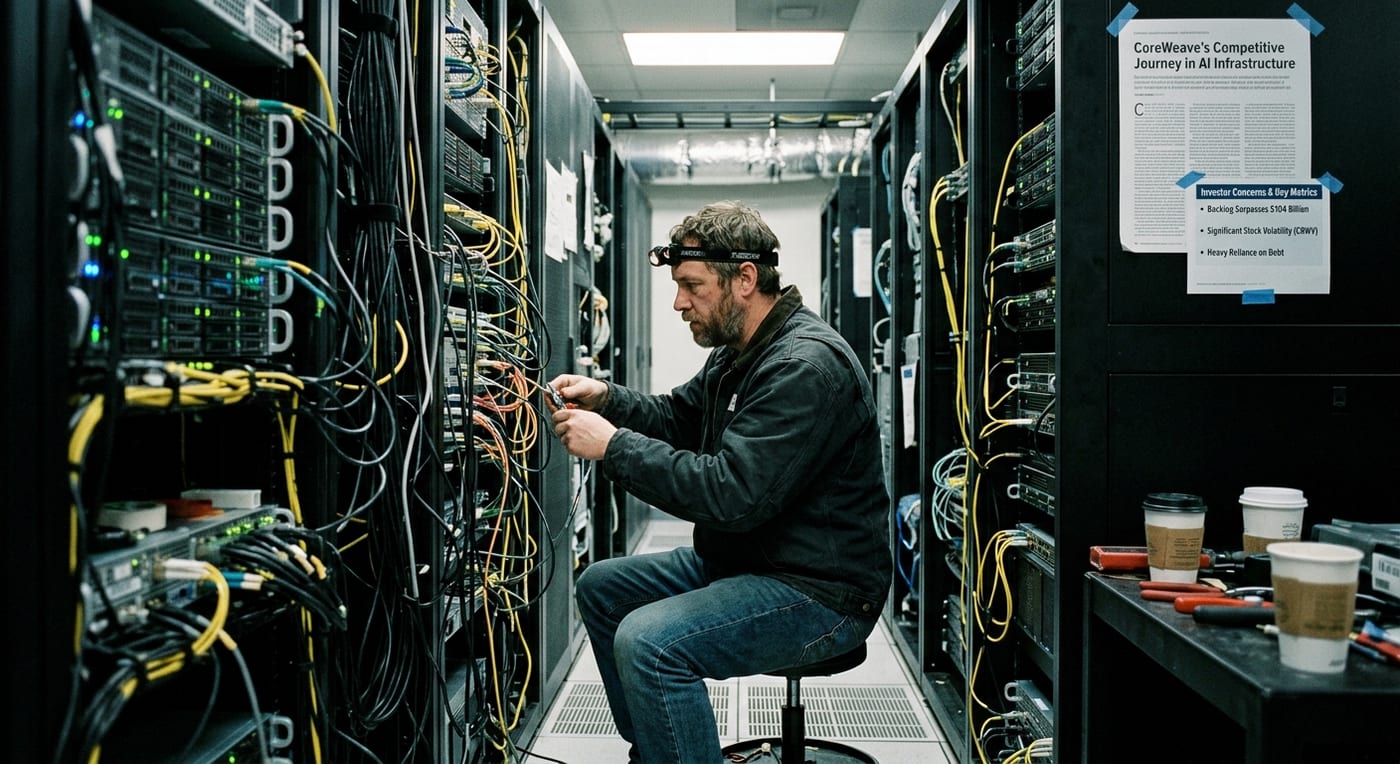
TL;DR
- CoreWeave's backlog surpasses $104 billion.
- Recent stock performance reveals significant volatility.
- Heavy reliance on debt raises investor concerns.
CoreWeave, Inc. Class A Common Stock (CRWV) has become synonymous with the evolving landscape of artificial intelligence (AI) infrastructure. As AI continues to dominate the technological narrative, companies like CoreWeave that specialize in high-performance cloud computing solutions are experiencing both remarkable growth and significant challenges. This article delves into the company’s recent trajectory, exploring its transformation, competitive positioning, and the implications for investors.
Transformation from Crypto to AI
Initially known for its Ethereum mining operations, CoreWeave has undergone a pivotal transformation that has seen it emerge as a crucial player in the AI infrastructure market. The need for robust computing power demanded by AI applications drove the company's strategic shift towards providing specialized cloud solutions equipped with powerful GPU and CPU resources. This pivot aligns with a broader market trend as enterprises increasingly require scalable computing capabilities to support machine learning and data-heavy usages.
For CoreWeave, this shift is not only a response to mounting demand but also a tactical maneuver to mitigate competitive pressures from established tech giants. It is in this context that the company's strategic moves and stock dynamics have become particularly relevant. CoreWeave enjoyed a remarkable growth trajectory, reflected in its burgeoning backlog, reportedly exceeding $104 billion at the end of Q2 of 2026, bolstered by a $25 billion deal inked early in Q3. Yet, as noted in previous discussions about CoreWeave's positioning, this fruitful growth comes amid rising challenges, particularly concerning its financial obligations and the competitive AI landscape.
Financial Dynamics and Market Position
Cloud computing has become the backbone of modern AI development, and CoreWeave is attempting to capitalize on this burgeoning sector. However, while the company has shown impressive revenue growth—over $2.58 billion last quarter alone, a staggering 112% increase from the same period last year—it continues to grapple with significant debt levels. In a recent article, CoreWeave's capital expenditures for the first half of 2026 reached over $14 billion, contributing to a total debt that has swelled to more than $35 billion. This debt highlights the precarious balance the company must maintain as it seeks to fund its aggressive expansion.
As CoreWeave navigates this turbulent financial landscape, its stock performance has reflected volatility, drawing scrutiny from investors and analysts alike. Recent fluctuations have raised concerns about investor sentiment, especially in the wake of executive share sales that suggest a lack of confidence in the company’s long-term outlook. Such events underscore the necessity for CoreWeave to demonstrate a clear path toward profitability and debt management, especially amid rising interest rates that could compound its financial challenges.
Competitive Landscape and Strategic Challenges
CoreWeave operates within a fiercely competitive environment dominated by tech giants heavily investing in AI infrastructure. Notably, partnerships with major players like Nvidia enhance CoreWeave's status but also place tremendous pressure on the company. The competitive dynamics of the AI infrastructure market not only challenge CoreWeave's growth story but also dictate the stakes for its continued relevance in the sector.
In comparison to firms like Nebius Group, CoreWeave's reliance on leasing data center space rather than owning it presents operational challenges. Nebius, for instance, owns the majority of its data centers, which positions it strategically to control costs and ensure profitability. As both companies contend for a share of the lucrative AI market, CoreWeave’s model, leveraging significant leased infrastructure, may limit its competitive edge in the long run. The financial intricacies associated with leasing and debt financing introduce both risk and complexity to CoreWeave’s operational strategy.
The Road Ahead for Investors
Evaluating the investment potential of CoreWeave requires a nuanced understanding of its current financial metrics alongside macroeconomic indicators that could influence industry performance. With a price-to-sales (P/S) ratio substantially below competitors, one could argue that CoreWeave's stock is undervalued given its growth prospects. As noted in recent analyses, the stock is currently trading at approximately six times sales, which presents an attractive entry point for risk-tolerant investors.
However, this bargain comes with inherent risks. Investors must consider the possibility of an AI market downturn, especially as rising interest rates could stifle growth and compel firms like CoreWeave to divert revenue towards servicing debt rather than pursuing expansion or innovation.
Conclusion
In summary, CoreWeave, Inc. Class A Common Stock (CRWV) represents a compelling narrative amidst the complexities of the AI infrastructure landscape. While the company has demonstrated rapid growth and solid partnership synergies, it faces critical challenges regarding financial management and competitive positioning. As it steadies its course amid these oscillating market conditions, CoreWeave's ability to navigate its debt and prove its operational model will be pivotal in shaping both its future and investor sentiment. The same pressure is reflected in recent reporting on the issue, which helps explain why the company's pricing decisions remain under scrutiny.