

Cogent Communications: Legal Turmoil and Its Impacts
ED
Editorial
Cashu Finance·5 min read
TL;DR
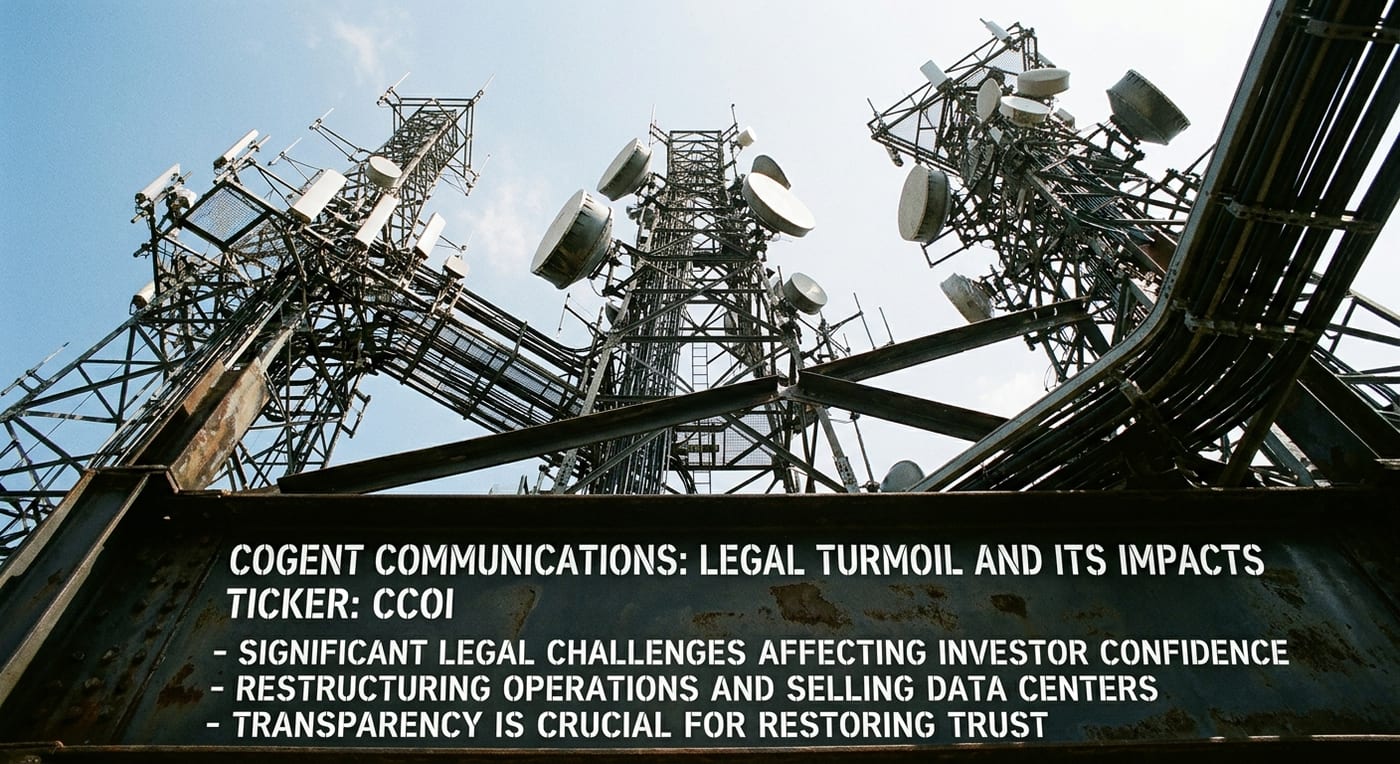
- Cogent faces significant legal challenges affecting investor confidence.
- The company is restructuring operations and selling data centers.
- Transparency is crucial for restoring investor trust.
Cogent Communications Holdings, Inc. (CCOI) is drawing attention as the latest developments come into focus. Cogent Communications Holdings, Inc. (CCOI) finds itself at a critical juncture, wrestling with escalating legal challenges and a need for operational restructuring. Established in 1999, Cogent has become a prominent player in the telecommunications sector, providing high-speed internet access and Ethernet services primarily targeted at businesses. Nevertheless, its recent legal troubles have cast a shadow over its reputation and financial health, compelling the company to adapt swiftly to regain trust and stabilize its market position.
Navigating Legal Challenges
At the forefront of Cogent's current struggles are serious legal issues stemming from class-action lawsuits that claim the company engaged in securities fraud. Allegations have surfaced that Cogent misrepresented its optical wavelength backlog, suggesting a fabricated impression of robust demand for its services. In May 2026, the CEO, David Schaeffer, acknowledged significant delays in customer acceptance of their optical wavelength services. This revelation resulted in a drastic drop of 29% in the stock price—from approximately $23 to $16.37—indicating a steep loss of investor confidence.
These legal challenges are not merely procedural inconveniences; they pose a significant threat to Cogent's long-term viability as they potentially undermine the trust of investors and clients alike. Transparency amid these challenges is crucial for the company to rebuild its reputation. Previous incidents of miscommunication and perceived dishonesty have made this task even more daunting for Cogent.
Operational Restructuring
In response to these mounting pressures, Cogent is reorganizing its operational framework to improve efficiency and align with actual market demands. The company has opted to sell data centers as part of this restructuring strategy, aiming to streamline operations and focus on its core competencies in providing high-speed internet services. This strategic pivot is not only a way to cut costs but also an effort to realign its business model post-legal scrutiny.
The decision to sell data centers, while a significant shift, highlights Cogent's commitment to its original vision of becoming a leading provider of high-speed data services. The company's extensive fiber optic network continues to be a valuable asset, facilitating reliable data communication that businesses greatly depend on. While restructuring, maintaining high service standards is critical, as the telecommunications sector remains highly competitive. Cogent's ability to deliver quality services will play a pivotal role in attracting and retaining clients.
The Importance of Transparency
The recent legal battles highlight a broader industry trend where transparency in business operations has become paramount. Investors are increasingly wary of companies that fail to provide clear and honest communication about their financial metrics and forecasted growth. This is particularly true for Cogent, which has previously faced scrutiny over its business practices. To regain investor trust, the company must prioritize transparent communication across all levels of operation.
With legal representatives actively reaching out to investors harmed by the company's prior misleading statements, it has become essential for Cognent to engage proactively with its stakeholders. Firms like Kaplan Fox and the DJS Law Group have been vocal about the need for investor awareness in light of these legal challenges, urging those who have experienced losses to contact them for potential recovery avenues. For a detailed overview of the situation, investors can refer to Kaplan Fox's advisory and the DJS Law Group's insights, which provide vital information for affected shareholders.
Regaining Investor Trust
In a climate where investor trust is verging on precarious, Cogent must execute its restructuring plan effectively while maintaining open lines of communication. The significance of this dual approach cannot be understated. As outlined in a prior article on Cogent's challenges, improving operational efficiency while emphasizing transparency is instrumental for the company to navigate through this precarious phase successfully. Any missteps in either domain could further alienate a skeptical investor base already reeling from perceived mismanagement.
Market Position and Future Outlook
Cogent's position as a provider of high-speed internet and Ethernet services remains relatively strong, bolstered by its extensive fiber network and the ongoing demand for these services. However, without the ability to rebuild trust with its investors and clients, this position could weaken significantly. The company is at a pivotal point where its next strategic moves will shape its trajectory in the industry for years to come.
As the telecommunications landscape evolves, with continuous technological advancements and increasing competition, Cogent must remain vigilant and adaptable. The intersection of its operational restructuring and ongoing legal trials will determine whether the company can emerge from this turmoil stronger than before or falter under the weight of its challenges. How well Cogent manages this process in the forthcoming months will be closely watched by investors and industry observers alike.
In summary, Cogent Communications Holdings, Inc. is facing a tumultuous environment marked by legal scrutiny and the urgent need for operational adjustments. The company's ability to respond effectively to these challenges will play a crucial role in its recovery and future success in the competitive telecommunications market.