

Coastal Financial's Path to Recovery: Challenges Ahead
ED
Editorial
Cashu Finance·5 min read
TL;DR
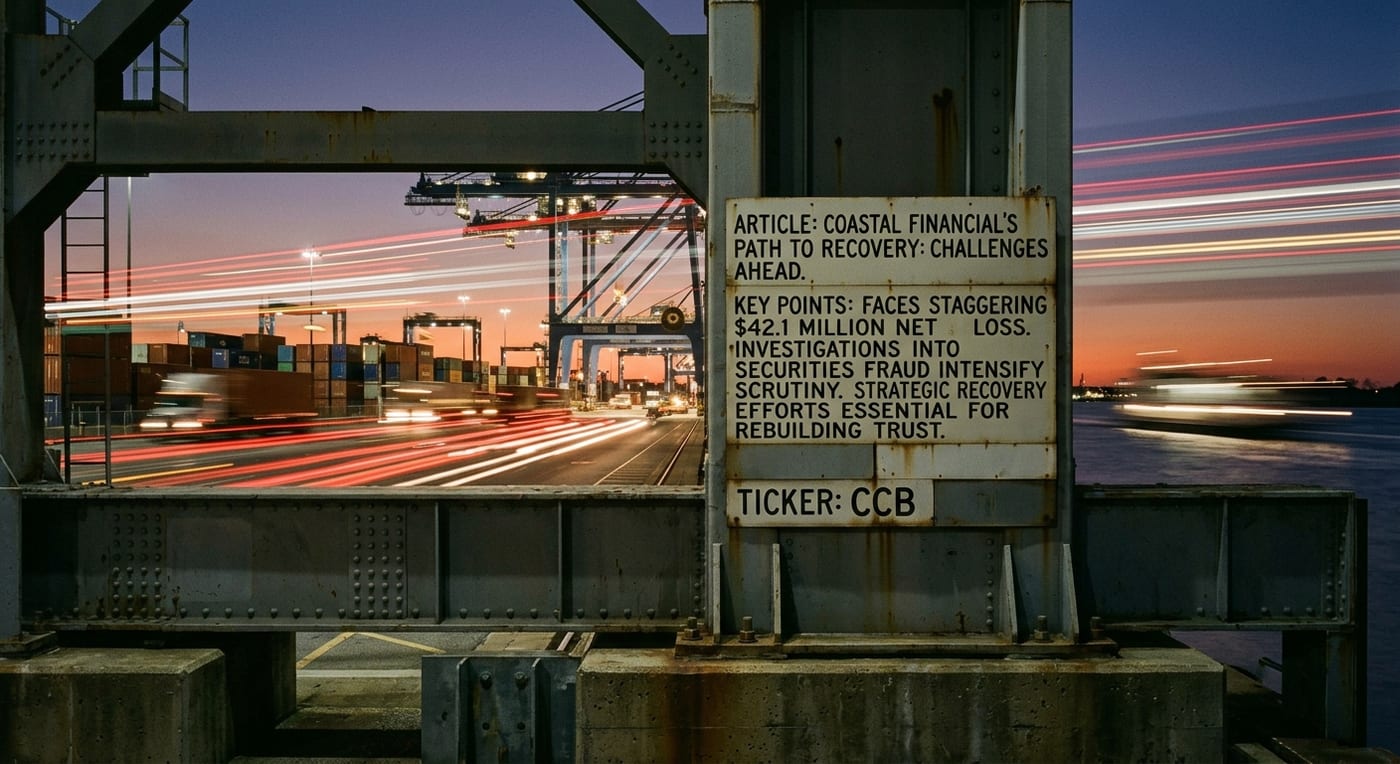
- Coastal Financial faces a staggering $42.1 million net loss.
- Investigations into potential securities fraud have intensified scrutiny.
- Strategic recovery efforts are essential for rebuilding investor trust.
Coastal Financial Corporation (CCB) is currently grappling with significant financial challenges that have eroded investor confidence and created a precarious situation for the company. The financial landscape for Coastal has shifted dramatically following a massive net loss of $42.1 million reported for the second quarter of 2026. This stark downturn from a year earlier has shaken the foundations of the company, bringing to light investigations into potential securities fraud and raising questions about its future viability.
Unraveling the Financial Crisis
The catalyst for Coastal Financial's downturn can primarily be attributed to a staggering $68.8 million credit expense linked to a partner relationship within its CCBX segment, which specializes in providing banking services to digital finance providers. This exorbitant expense had a pronounced impact on the company's performance, contributing to a notable ratio of loss per share at $(2.76) for the quarter. In stark contrast, Coastal had previously reported a net income of $12 million, or $0.78 per share, in the same quarter of the prior year. The monumental swing from profit to loss has left stakeholders reeling and prompted increased scrutiny from regulatory bodies.
In the wake of this decline, Coastal’s share price suffered a dramatic fall, plummeting by 43.5%, a clear reflection of dwindling investor trust. On July 30, 2026, following the financial report, the stock closed at $39.91, significantly down from earlier trading values. This devastating loss not only signals concerns over Coastal's operational health but also raises alarming questions regarding its management strategies and risk assessment capabilities.
Investigations and Legal Scrutiny
Compounding the company's financial woes, Coastal is under investigation for potential securities law violations. Kaplan Fox & Kilsheimer LLP has stepped in to encourage impacted investors to come forward, emphasizing the need for accountability amidst the chaos. The firm aims to uncover any potential breaches that might have contributed to the recent downturn. In light of these developments, the implications for company leadership could be severe, with possible legal repercussions awaiting them if negligence is established.
This legal scrutiny brings further uncertainty to Coastal’s recovery efforts. The ongoing investigations threaten to overshadow any steps the company might take to reassure investors and stabilize its operations. Transparency and clear communication from Coastal Financial's management will be paramount moving forward if they hope to mend their relationship with investors and restore confidence in the brand.
Strategic Shifts and Recovery Efforts
As Coastal Financial seeks to navigate through this turbulent period, the implementation of effective recovery strategies will be vital. The company will need to reassess its credit risk management and potentially rethink its partnerships within the CCBX segment to avoid similar debacles in the future. This involves exploring new partnerships, diversifying its client base, and implementing stricter risk assessment protocols to safeguard against unexpected credit exposures.
Innovating its offerings could also play a crucial role in attracting a renewed investor interest. Enhancing technological capabilities within digital finance through investments in technology and customer service could help differentiate Coastal in a competitive market. Such strategic pivots are essential for positioning the company for long-term stability and growth.
Moreover, Coastal may explore the potential for going beyond traditional banking services by integrating more robust financial technology solutions. Leveraging advancements such as AI and data analytics could enhance its service offerings to digital finance providers, possibly leading to improved margins and customer retention in the long run. That backdrop echoes earlier coverage of the issue, especially around how pricing, strategy, and demand feed into the current story.
Implications for Investors
The road to recovery for Coastal Financial Corporation is fraught with challenges, but it also presents opportunities for transformation. Investors will need to closely monitor how the company navigates its current obstacles and whether management can execute effective recovery strategies without further stumble points. The next few quarters will be critical in determining the trajectory of Coastal's stability and investor trust.
Furthermore, understanding the broader macroeconomic environment will be crucial as Coastal maneuvers through potential industry shifts. Factors such as changing regulations in the financial sector, interest rate fluctuations, and evolving consumer demands in digital finance will impact Coastal's strategy and overall stability.
Investors can glean insights from previous discussions highlighting the significance of accountability and innovative growth strategies amidst such turmoil. The conversation surrounding Coastal's future will likely revolve around their ability to rebound after this crisis, making stakeholder engagement and transparency vital in the recovery process.
Conclusion
Coastal Financial Corporation's journey ahead is one laden with obstacles, yet also filled with potential for a transformed business model that emphasizes accountability, innovation, and resilience. How well Coastal performs in the coming months will determine not just the future of the company but also the confidence that investors and stakeholders place in its leadership. The proactive steps taken now will be critical in steering Coastal Financial toward long-term health and sustainability, and the involvement of legal bodies only underscores the seriousness of these efforts. The same pressure is reflected in recent reporting on the issue, which helps explain why the company's pricing decisions remain under scrutiny.