

Chevron's Strategic Vision in Venezuela
ED
Editorial
Cashu Finance·5 min read
TL;DR
- Chevron invests $7 billion to boost oil production in Venezuela.
- Company reports record earnings of $12.1 billion amid market volatility.
- Chevron’s strategic partnerships enhance operational efficiency and growth potential.
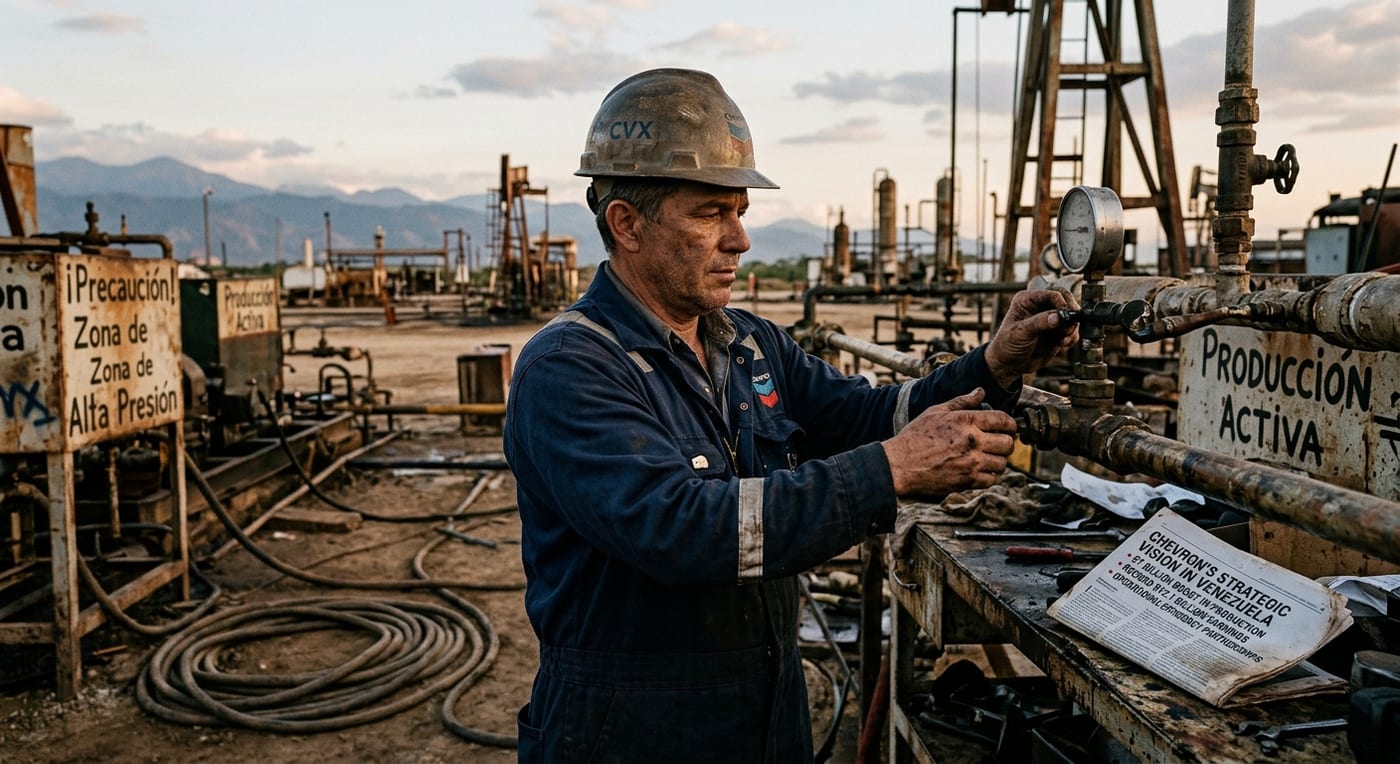
Chevron Corporation (CVX) is asserting its dominance in the oil market through critical investments and strategic positioning, particularly in Venezuela. This South American nation, rich in oil reserves, presents a unique opportunity for Chevron, allowing it to expand its operations while navigating a complex geopolitical landscape. As other major companies retreat, Chevron’s earlier commitment to Venezuela is proving to be a lucrative strategy. The company's move to invest $7 billion to more than double its production capacity in the country signals a bold approach to future growth amid fluctuating oil prices and ongoing geopolitical tensions.
Chevron's Expansion Strategy
On September 2, 2026, Chevron confirmed plans for an expansive investment in Venezuela that aims to increase its oil output significantly. By enhancing its capabilities within the Orinoco Belt, Chevron expects to ramp up production from current levels of approximately 280,000 barrels per day to around 600,000 barrels per day within the next five years. This decision comes on the back of a careful and patient strategy where Chevron has maintained a presence in Venezuela during a time when other oil giants like ExxonMobil and ConocoPhillips exited due to challenging political conditions. CEO Mike Wirth articulated this strategy, emphasizing that "you have to hang in there until all the conditions come together."
The geopolitical landscape has undoubtedly influenced the dynamics of oil prices globally. With the price of Brent crude having seen significant fluctuations—from approximately $60 to nearly $140 a barrel and resting around $95 currently—the market's volatility often presents both challenges and opportunities for oil companies. Chevron's established position in Venezuela, coupled with its operational strategies, positions it favorably to capitalize on these market conditions.
Record Earnings Amid Market Volatility
Chevron's financial performance has mirrored the volatility of the oil market. In the second quarter of 2026, the company reported a staggering net income of $12.1 billion, marking a remarkable 446% increase from the previous quarter and a 385% jump year-over-year. This surge can be tied to both enhanced operational efficiencies and favorable crude prices, which are affected by geopolitical uncertainties, particularly in the Middle East. Chevron’s ability to navigate these challenges reflects its resilience and adaptive strategies.
The strategic partnership with Microsoft is also noteworthy as it enhances Chevron's operational efficiencies through innovative technologies and projects. This cooperation exemplifies how Chevron is not only focusing on traditional oil extraction but is also investing in technology to streamline its processes—an essential move as the energy sector faces growing scrutiny over its environmental impact.
The negotiations surrounding Chevron's Venezuelan operations and an upcoming potential windfall can be seen as vindicating its long-term strategy.
The Competitive Advantage of Patience
Chevron's intimate knowledge of the Venezuelan oil sector is a critical competitive advantage. During the past two decades, it endured substantial operational hurdles—including hyperinflation, power outages, and civil unrest—while other major players like ExxonMobil withdrew from the market. This has enabled Chevron to cultivate relationships and develop an operational framework that allows it to emerge as the dominant player in the region when conditions improved.
With recent developments granting Chevron enhanced legal and fiscal terms for its operations, the company is poised to significantly boost its production capabilities. The strengthened relationships established over years of persistence are beginning to pay dividends. The company’s operational capacity is also complimented by its low production costs, anticipated to be less than $20 a barrel, which could result in substantial cash flow growth for the firm in the coming years.
Macroeconomic Considerations
As energy demand fluctuates amid ongoing international conflicts, Chevron's operations are intricately linked to macroeconomic trends. The recent geopolitical conflict in the Middle East has already reshaped oil price expectations and consumer behavior. Companies like Chevron and ExxonMobil have publicly expressed concerns that oil prices may not fully reflect the underpinning realities in the energy market, signaling that there may be further price increases ahead.
Writing with a focus on longstanding operational strengths and innovative technologies, Chevron stands to benefit from worldwide economic shifts. The consistency in dividend payments for 39 consecutive years speaks to Chevron's financial stability, a critical asset in times of market unpredictability. With the company's solid balance sheet, it can weather downturns while continuing to reinvest in growth initiatives like its planned investment in Venezuela.
Moreover, Chevron’s robust market position allows it to navigate uncertainties while still pushing forward on its ambitious exploration and production goals. The focus on venturing into high-potential areas, such as its recent expeditions in the Orinoco Belt, showcases a proactive approach towards capitalizing on volatile oil markets.
In closing, Chevron Corporation is redefining its future through strategic investments in Venezuela, an approach supported by its historical commitment to the region even during tumultuous times. The company’s ability to capitalize on renewed geopolitical conditions, combined with its operational efficiencies and innovation-driven partnerships, positions it favorably for continued success in the dynamic global oil market. As Chevron continues to strengthen its foothold in Venezuela, it not only reinforces its status as an industry leader but also sets the stage for sustained growth in an ever-evolving energy landscape. The same pressure is reflected in recent reporting on the issue, which helps explain why the company's pricing decisions remain under scrutiny.