

Chevron's Strategic Resilience in a Turbulent Market
ED
Editorial
Cashu Finance·4 min read
TL;DR
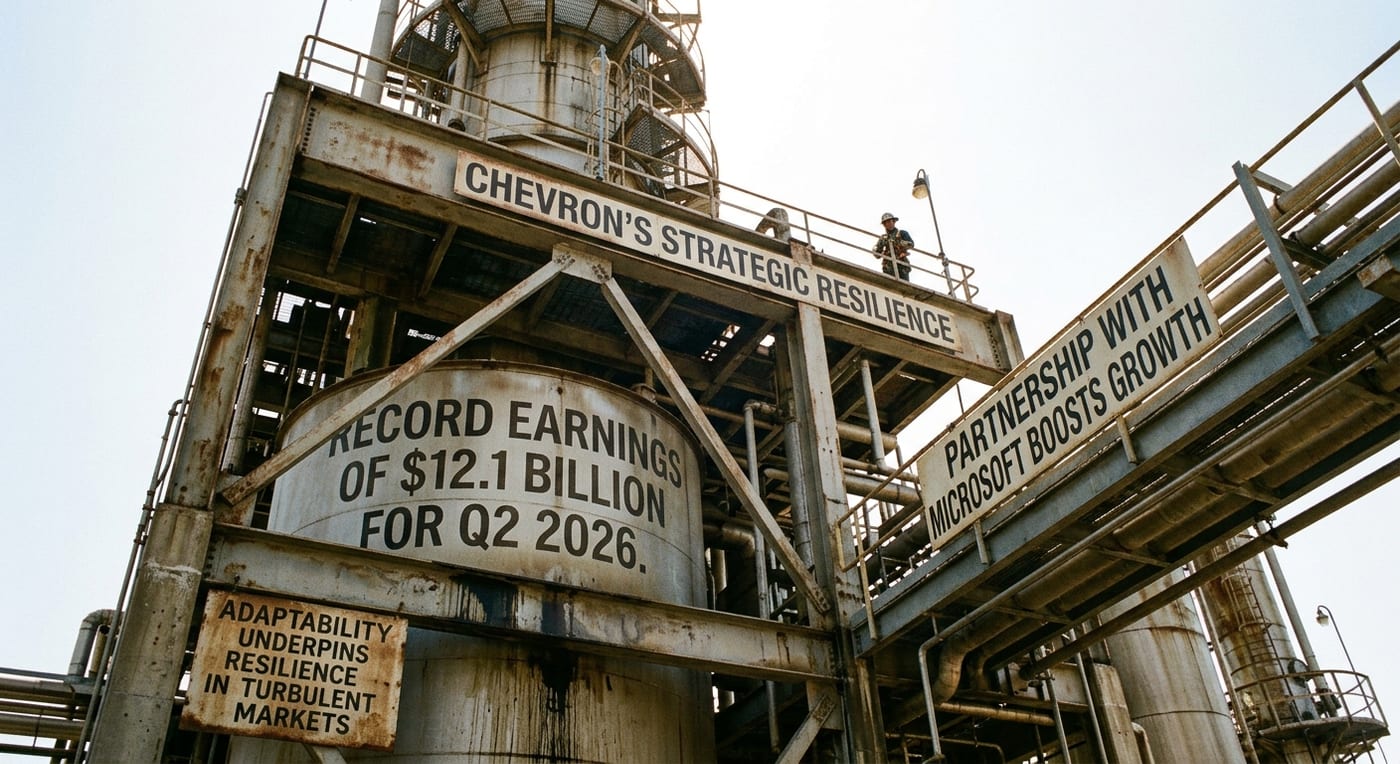
- Chevron reports record earnings of $12.1 billion for Q2 2026.
- Strategic partnership with Microsoft boosts growth prospects.
- Chevron’s ability to adapt to geopolitical tensions underpins resilience.
Chevron Corporation (CVX) is drawing attention as the latest developments come into focus. Chevron Corporation (CVX) has remarkably navigated the tumultuous conditions of the energy market and emerged stronger than ever.
Record Financial Performance
Chevron's growth trajectory remains robust, as evidenced by its latest financial results. For the second quarter, the company reported an astounding net income of $12.1 billion, representing a staggering 446% increase compared to the prior quarter and a 385% rise year-over-year. Such figures were bolstered by strong operational efficiencies and an average Brent crude price of around $104 per barrel during the quarter.
The surge in earnings was complemented by unparalleled cash flow, which reached $22.6 billion from operations—an increase of over $20 billion from the previous quarter. Additionally, with free cash flow at $15.4 billion, Chevron not only covered its $3.5 billion dividend payout but also allocated $3.1 billion for share repurchases, displaying a commitment to returning value to shareholders while strategically reducing debt by $8.4 billion.
Adapting to Geopolitical Changes
The backdrop for Chevron's success is a complicated and volatile geopolitical landscape, particularly revolving around tensions in the Middle East. The Iranian conflict and the closure of the Strait of Hormuz have caused significant fluctuations in oil prices, which have historically impacted drilling companies like Chevron.
Despite these challenges, Chevron's ability to capitalize on high prices has become evident, presenting a sharp contrast to the worries surrounding potential market disruptors.
Berkshire Hathaway's recent reduction of its stake in Chevron signals a mix of market sentiment and operational acknowledgment of the current climate. Greg Abel, Buffett's successor, slashed Chevron shares by 35% as part of a profit-taking strategy amid Chevron's soaring stock prices, which have surged from $152 to $207 between early 2026 to late in the first quarter. This reduction, while notable, also reflects Chevron's heightened valuation, with a forward P/E ratio approaching 18, which may appear inflated compared to its historical averages of around 11 and 10 in previous years.
Strategic Energy Partnerships
Amidst these financial triumphs, Chevron's partnerships signify its forward-thinking approach. A groundbreaking 20-year agreement with Microsoft to supply natural gas for its new data centers underscores Chevron’s pivot towards meeting the growing energy demands driven by technological advancements.
This collaboration also showcases Chevron's strategic shift towards integrating renewable energy solutions, which is pivotal as the world leans towards cleaner energy sources.
This partnership with Microsoft is a testament to Chevron's commitment to innovation. It not only helps fortify the company’s position in the rapidly evolving energy landscape but also highlights a critical avenue for future growth, particularly as demand for power in data centers increases in tandem with the rise of artificial intelligence and cloud computing.
Implications of Market Dynamics
While Chevron has excelled in penetrating new markets through strategic partnerships, it must also navigate the implications of existing market dynamics. Demand trends indicate a persistent appetite for energy, especially from rapidly growing sectors like technology.
According to Chevron's trajectory, the increasing reliance on energy from these sectors reinforces the company's strategic positioning as a vital energy supplier.
Chevron's adaptability is bolstered by its rigorous approach to sustainability and talent in creating efficient operational frameworks. As a result of proactive management and a knack for adapting to market volatility, Chevron is well-positioned to leverage arising opportunities while mitigating risks associated with geopolitical tensions.
Long-Term Investor Sentiment
For investors, Chevron’s impressive operational and financial metrics establish it as a resilient choice in the energy sector. With a commitment to maintain or increase dividends—39 consecutive years of dividend increases speak to this consistency—investors can expect steady returns bolstered by Chevron's robust cash flow and profitability.
As the oil market braces itself for fluctuations, Chevron's enduring revenue streams, driven by its strategic positions and partnerships, reflect a resilient and ambitious company. For those seeking reliable dividend stocks and future growth potential, Chevron stands out as a leading contender due to its adaptable strategies in a complex market landscape.
In conclusion, Chevron Corporation's proactive approach to strategic partnerships, diversification, and operational effectiveness amid a turbulent market climate illustrates its significant resilience. As energy demands evolve and geopolitical landscapes fluctuate, Chevron continues to pave the way as a formidable player in the energy sector.