

Chevron's Strategic Moves for Future Profitability
ED
Editorial
Cashu Finance·4 min read
TL;DR
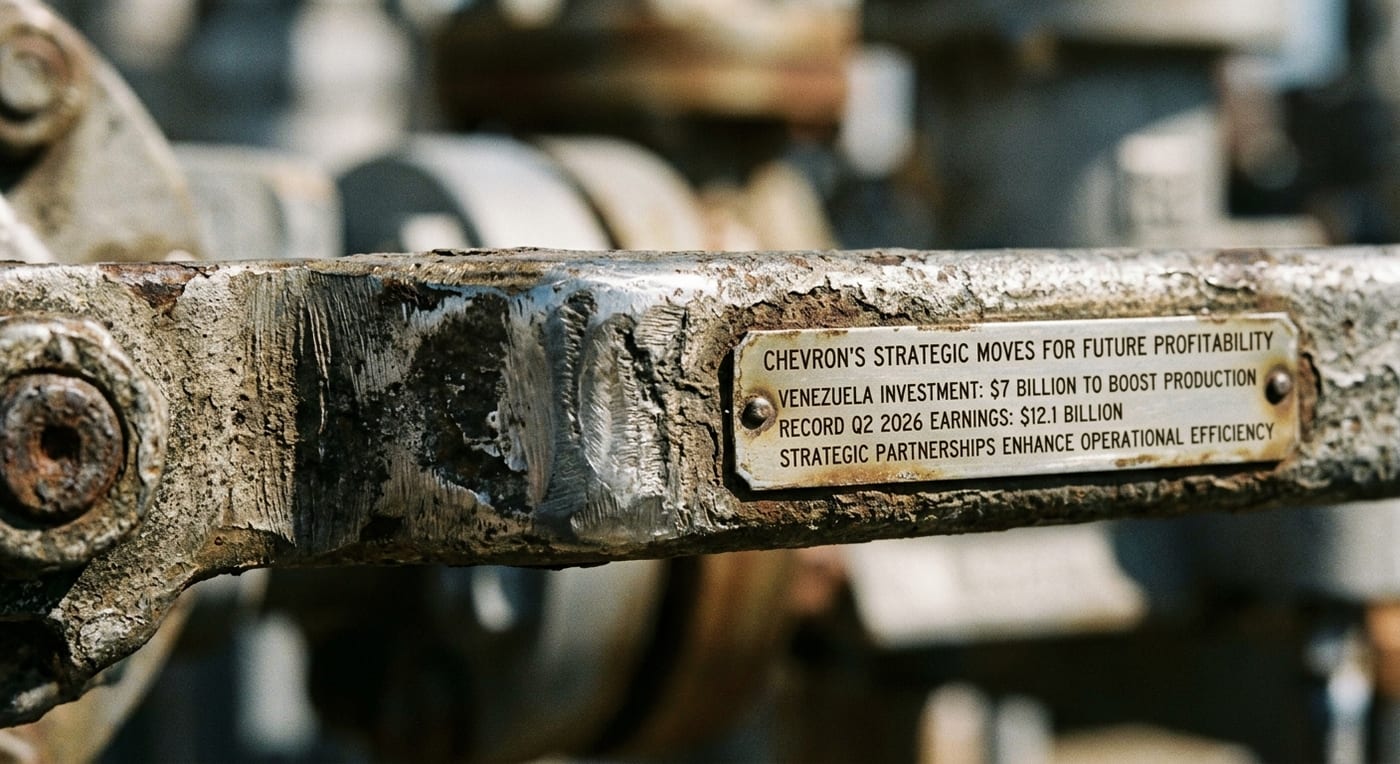
- Chevron invests $7 billion in Venezuela to boost production.
- Reports record Q2 2026 earnings of $12.1 billion.
- Strategic partnerships enhance operational efficiency and positioning.
Chevron Corporation ( CVX) continues to assert itself as a formidable player in the global oil market, capitalizing on strategic investments and resilient operational performance amid fluctuating market conditions. With a track record of adaptability and foresight, Chevron's recent endeavors highlight its commitment to maintaining leadership within the sector while navigating the complexities of geopolitical dynamics. At the forefront of these efforts is Chevron's $7 billion investment in Venezuela, poised to double its production capacity. This initiative, complemented by advancements in refining capabilities and strategic partnerships, positions Chevron for sustained growth and profitability.
Understanding Chevron's Recent Financial Performance
Amidst the ongoing challenges in the oil industry, Chevron has reported remarkable financial outcomes, notably a staggering net income of $12.1 billion for the second quarter of 2026. This figure represents an impressive 446% increase from the previous quarter and a remarkable 385% year-over-year growth. With operational efficiencies and increasing crude oil prices as significant drivers of this success, Chevron is celebrating its highest quarterly profit in the last six years. Chevron Just Hit a Record High. Is the Stock Still a Buy?
suggests that these outstanding financial metrics can be attributed not only to market volatility but also to Chevron's hands-on involvement in high-reward markets, primarily in Venezuela.
Chevron's Expansion and Investment in Venezuela
The commitment to investing in Venezuela's oil sector comes at a critical time for Chevron. The company has announced plans to channel $7 billion into boosting its oil output significantly. Particularly noteworthy is Chevron's operation in the Orinoco Belt, which is expected to escalate production from its current 280,000 barrels per day to nearly 600,000 barrels per day within five years. As geopolitical tensions grow, with rivals retreating from Venezuelan operations, Chevron's strategy not only mitigates risks but also sets the stage for potential dominance in a market rich with opportunity. Previous collaborations and Chevron's gradual expansion in Latin America further bolster its position, as noted in Chevron's Strategic Vision in Venezuela.
Navigating Geopolitical Challenges
Geopolitical conditions have invariably impacted the oil market, particularly following recent escalations in the Middle East. While oil prices soared to peak levels due to these tensions, Chevron's strategic advancements have ensured robust performance metrics. The company has adeptly maneuvered through these fluctuations, leveraging its expansive global reach. The transition to a refined production strategy, particularly in response to increasing diesel prices, is a testament to Chevron's operational flexibility. With limited competition in some regions, Chevron's ability to adjust to market demands sets it apart from others in the industry. As illustrated in a recent article, What High Diesel Prices Mean for These 5 Energy Stocks, the rise in diesel prices arguably positions integrated oil majors like Chevron and ExxonMobil to benefit directly from improved refining margins.
Integrated Operations Enhance Profitability
Chevron’s status as an integrated major allows it to leverage strengths across its upstream and downstream activities. Refining operations, while just a fraction of the overall business, have contributed significantly to Chevron's second-quarter earnings. The company's downstream segment reported profits soaring to $4.9 billion, an increase from $737 million year-over-year. This sharp rise can be attributed to stronger gasoline and diesel margins, a trend driven by both increased global oil consumption and refining capacity demands. As diesel availability continues to tighten, Chevron's integrated operations grant it a competitive edge. In contrast to Marathon Petroleum, which is solely reliant on refining profits, Chevron's diversified model insulates it from volatile swings in any single market segment. This integration fortifies Chevron's position during periods of price fluctuation while allowing the company to innovate and invest across various sectors.
Future Outlook and Strategic Partnerships
Looking ahead, Chevron's investment strategy appears well-aligned with the evolving energy landscape. Chevron’s public stance on fostering partnerships, such as its collaboration with Microsoft, highlights its commitment to innovation and operational efficiency. In striving to enhance overall performance, these partnerships set the groundwork for finding solutions in a time when sustainability and technological advancements are at the forefront of industry discussions. The company continues to prioritize its core focus while adapting swiftly to market demands, ensuring a future that aligns with investor expectations.
Conclusion: A Positive Trajectory for Chevron
In summary, Chevron’s multifaceted approach to enhancing production and refining capacity positions it neatly for continued success in the volatile energy market. The ambitious investment in Venezuela, impressive financial results, and strategic partnerships reinforce the company's reputation as a resilient industry leader. As Chevron navigates through geopolitical challenges and capitalizes on operational synergies, its outlook remains positive. The trajectory of enhanced profits, together with an unwavering commitment to innovation and investment, ensures Chevron's place at the helm of the oil and energy sector for years to come.