

Challenges Facing The Simply Good Foods Company
ED
Editorial
Cashu Finance·5 min read
TL;DR
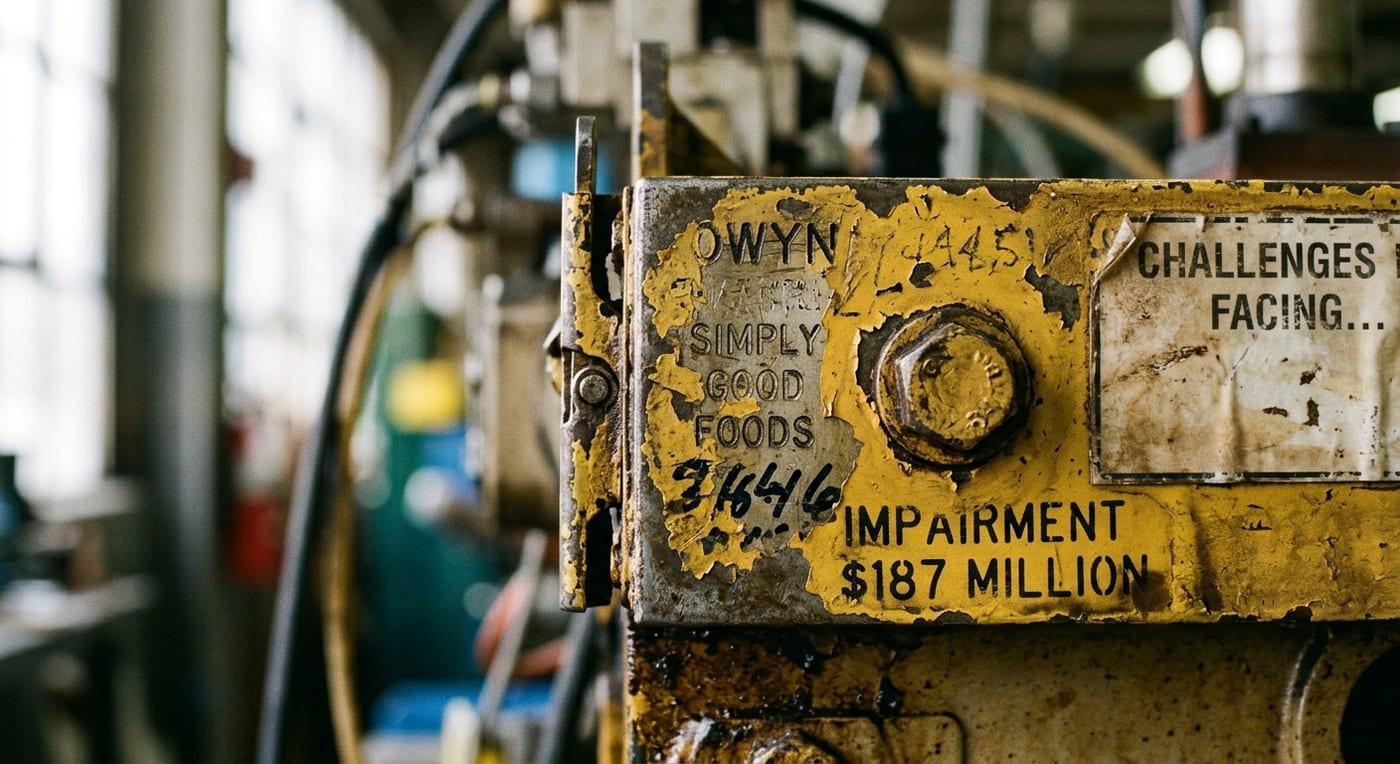
- Simply Good Foods faces operational challenges with its OWYN brand.
- A $187 million impairment charge raises investor concerns.
- Legal scrutiny follows declining consumer demand for health-oriented products.
The Simply Good Foods Company SMPL is encountering significant hurdles as operational challenges mount, primarily tied to its OWYN brand. Recent quality issues have raised concerns about the future of the brand, investor sentiment, and the company’s overall market performance, leading to a substantial $187 million impairment charge. This situation illuminates the intrinsic difficulties in integrating new product lines within a competitive landscape, particularly in a sector driven by consumer health trends.
Overview of OWYN and Its Acquisition
The OWYN brand, short for "Only What You Need," was intended to enhance Simply Good Foods' portfolio by providing nutritious options tailored to health-conscious consumers. The acquisition, completed in mid-2024 for $280 million, aimed to capture the growing demand for healthy snacks and meal replacements. However, the integration has revealed substantial operational concerns that are now jeopardizing that original vision.
Recent Problems with Product Quality
The crux of the current troubles centers around quality issues with OWYN's pea protein sourcing. Reports indicate that changes made in the raw materials have negatively influenced the brand’s products, leading to diminished taste, texture, and shelf-life. Consumers have responded unfavorably, which has significantly impacted sales growth. Notably, the first signs of this decline emerged during the fourth quarter of fiscal year 2025 when Simply Good disclosed a contraction in sales growth shortly after the acquisition.
This downturn has not only affected consumer ratings but also eroded distributor relationships that are crucial for market presence. Such quality setbacks prompted the aforementioned impairment charge, raising immediate concerns among investors and analysts. As highlighted in a recent article, “Simply Good Foods Navigates Quality Challenges,” these challenges are compounded by decreased consumer demand for OWYN products, leading to increased scrutiny from both regulators and investors.
Investor Sentiment and Stock Performance
The immediate consequence of these issues has been a marked decline in investor sentiment. Following the revelation of the impairment charge and declining sales, shares of Simply Good Foods fell substantially over a two-day span, reflecting the market's reaction to the firm’s weakened outlook. It is alarming that a once-promising acquisition meant to leverage a strong growth sector has instead become a key liability for SMPL. Investor confidence has been shaken to the core, as reflected in the more than 27% drop in the company’s stock price in the wake of these announcements.
Legal Repercussions
The fallout from the OWYN brand's struggles has led to legal challenges as well. Investors are now considering potential securities class action lawsuits against Simply Good Foods, citing undisclosed product quality problems and management's alleged failure to communicate significant operational risks. According to a detailed report, Kahn Swick & Foti, LLC has been involved in alerting investors to their rights regarding this potential litigation. Stakeholders who acquired shares during the problematic period from October 2024 to April 2026 may find themselves seeking restitution for losses incurred amid these significant challenges.
The Market Dynamics
The market for health-oriented food products continues to grow, bolstered by shifting consumer preferences towards healthier and nutritious options. Analysts indicate that despite the current challenges, Simply Good Foods could still recover if it can address the quality issues effectively and reinforce its brand reputation. This dynamic represents a dual-edged sword for the firm: while there is ample room for growth in the sector, operational effectiveness will be crucial for regaining consumer trust.
Strategic Recovery Initiatives
To mitigate the damage caused by the OWYN brand's difficulties, Simply Good Foods will need to implement strategic recovery initiatives. This may involve revisiting supplier agreements and product formulations to ensure that quality and taste meet consumer expectations. Additionally, enhancing marketing support for the brand could be necessary to re-establish its position in a competitive marketplace. Many analysts emphasized that improvement in product quality and consumer perception will be central to the company's recovery plan as they navigate these tumultuous waters.
The Importance of Consumer Trust
For Simply Good Foods, regaining consumer trust will be pivotal to reversing the negative trends that have emerged. The OWYN brand, which was poised to capture an important market segment, could serve as a cautionary tale of how mismanagement of product quality can affect broader operational goals. The focus must return to ensuring that product specifications not only meet consumer expectations but also align with the brand’s health-oriented image.
Conclusion
The Simply Good Foods Company SMPL stands at a critical juncture as it confronts significant operational challenges primarily tied to its OWYN brand's quality issues. The current landscape poses a tough road ahead, necessitating focused strategies to address quality concerns, restore investor confidence, and ultimately reposition the company for future growth. As they traverse this challenging phase, stakeholders will closely monitor how management responds to the mounting pressures. Effective recovery strategies will be essential to navigate the complexities at hand and restore the company to its growth trajectory. The same pressure is reflected in recent reporting on the issue, which helps explain why the company's pricing decisions remain under scrutiny.