

Carpenter Technology's Market Resilience Under Pressure
Cashu Finance·4 min read
TL;DR
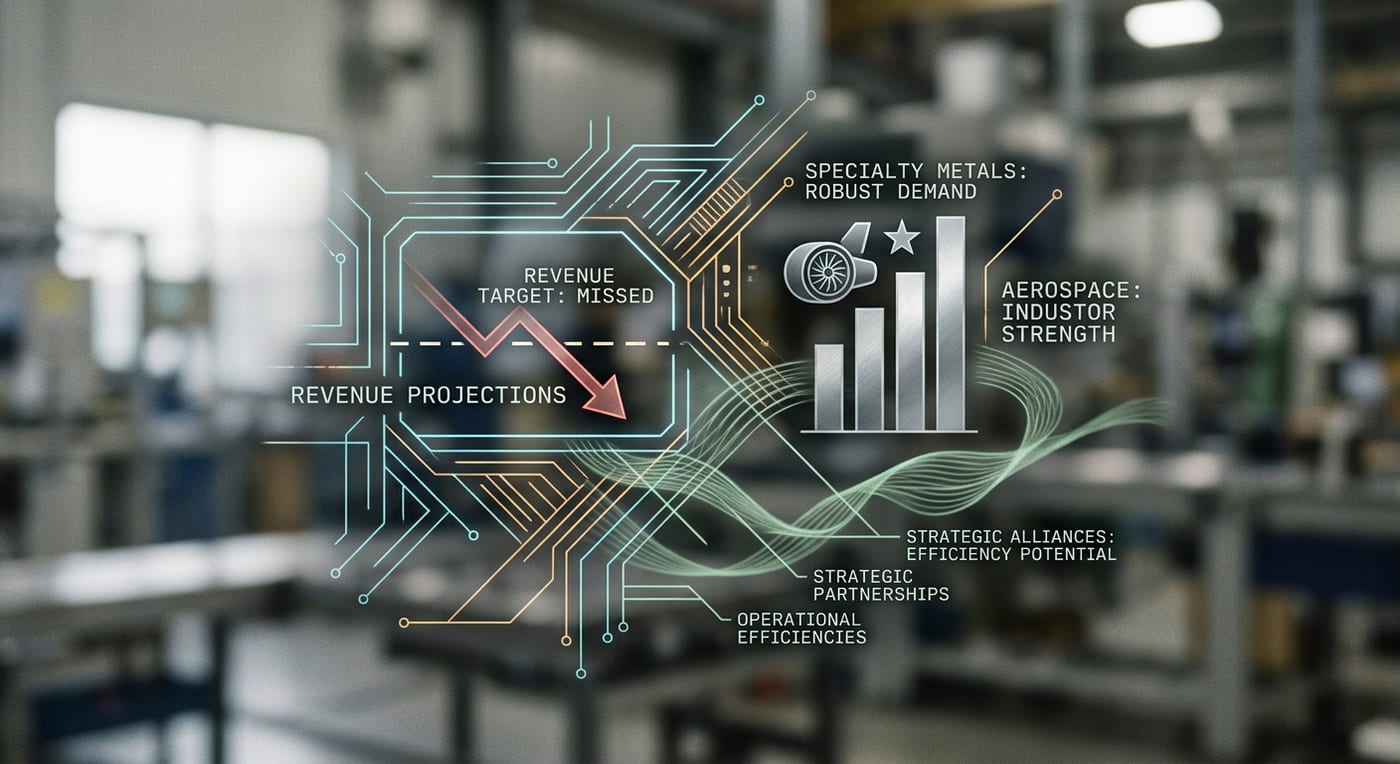
- Revenue missed Wall Street expectations significantly.
- Demand for specialty metals remains robust, particularly in aerospace.
- Strategic partnerships may enhance operational efficiencies moving forward.
Carpenter Technology Corporation ( CRS) has recently encountered significant challenges that have tested its market position. Despite a notable earnings beat, the company's stock experienced a dramatic decline of 24.5% following a quarterly revenue report that fell short of analysts' expectations. This article delves into the intricacies of Carpenter Technology's performance, strategic maneuvers, and how it aims to navigate the turbulent waters of the specialty metals industry.
A Mixed Bag: Earnings Report Overview
In the latest earnings report for the first quarter of fiscal 2027, Carpenter Technology posted sales of $798.2 million, marking an 8.8% increase from $733.7 million a year earlier. However, this figure missed the Wall Street consensus of $830.8 million, triggering a steep sell-off in the company’s stock. Although diluted earnings per share came in at $3.25—exceeding analyst projections of $3.04—the revenue miss overshadowed this achievement. The CEO, Tony R. Thene, attributed the sequential sales decline to planned maintenance outages, indicating operational challenges that impacted overall performance. Despite this backdrop, order bookings surged by 49% year-over-year in key sectors such as aerospace, highlighting robust demand for Carpenter's products.
The Current Market Landscape
Carpenter Technology operates within the specialty metals sector, supplying high-performance materials to aerospace, defense, and medical customers requiring materials capable of withstanding extreme conditions. The company's commitment to innovation is essential, particularly as it continues to face pressures from rising costs and competitive dynamics. Moreover, macroeconomic factors like inflation and shifting global demand patterns are impacting materials production. Despite these pressures, the demand trajectory remains positive in core markets, noted by the strong uptick in order bookings.