

Boeing's Strategic Shift Amid Production Challenges
Cashu Finance·4 min read
TL;DR
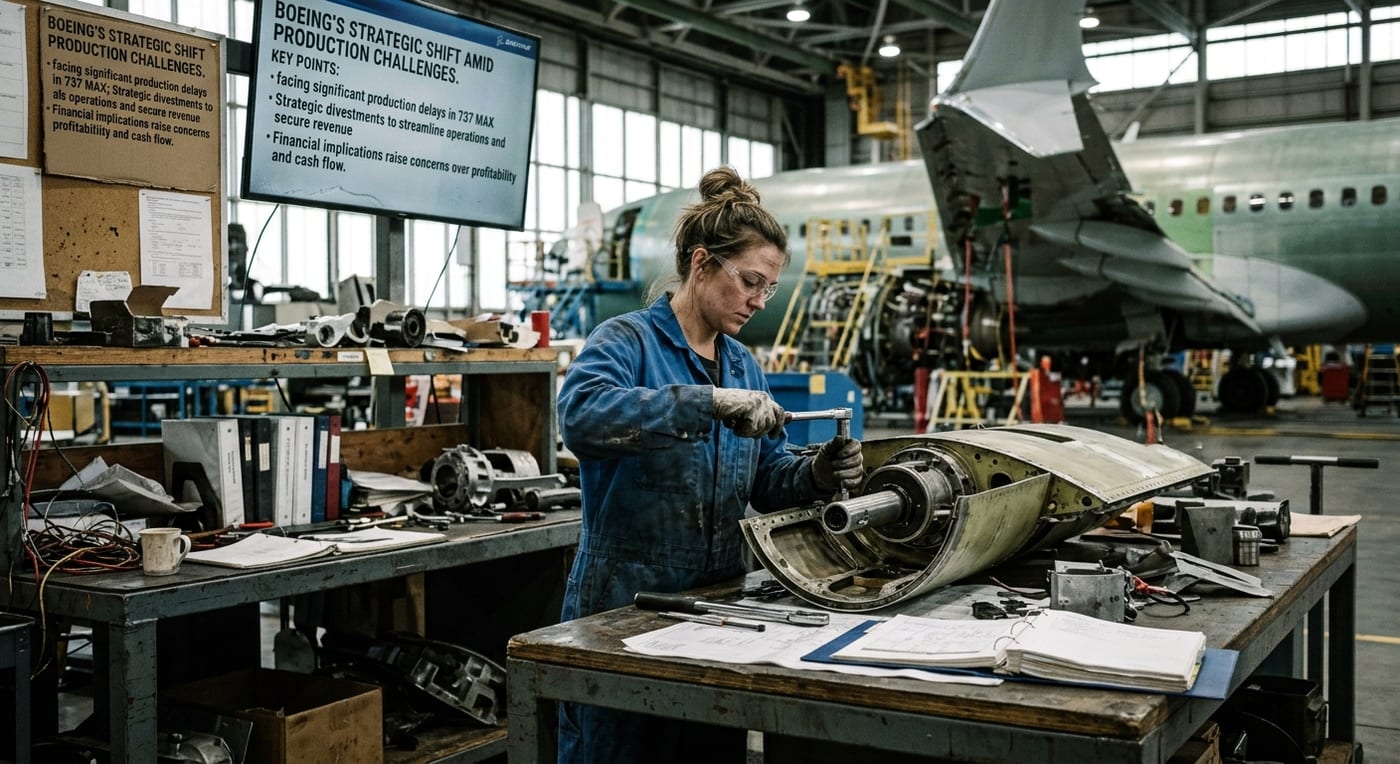
- Boeing facing significant production delays in 737 MAX - Strategic divestments to streamline operations and secure revenue - Financial implications raise concerns over profitability and cash flow
The Boeing Company ( BA) is currently navigating turbulent waters marked by significant production challenges and strategic shifts that may reshape its future. As the aerospace giant grapples with delays in its 737 MAX production line, it also seeks to realign its business focus, including recent significant divestments to sustain its competitive edge. This article delves into Boeing's recent setbacks, its strategic initiatives including workforce adjustments and planned sales, and the implications on its financial outlook and market positioning.
The Production Quagmire
Boeing has been facing mounting production difficulties, particularly with its 737 MAX aircraft. Initial projections aimed to increase the production rate from 42 to 47 aircraft per month by mid-2027. However, it has become increasingly apparent that these targets may be postponed by nearly a year due to ongoing problems, especially surrounding wing fabrication processes and supply chain issues. The company's leadership, including CEO Kelly Ortberg, has acknowledged these setbacks, raising alarms among investors who are concerned about Boeing's ability to meet backlog orders which currently surpass 6,200 aircraft, valued at more than $715 billion.
The situation is compounded by the company's decision to reduce its workforce by 5% as it seeks to eliminate overstaffing in light of the slower-than-anticipated production timeline. Such measures aim to streamline operations and reduce operational costs, vital for navigating through these challenges while maintaining profitability.
Significant production delays like these have critical implications not only for Boeing's operational capacity but also for its financial forecasts. Following the recent announcements regarding production slowdowns, analysts now project downward revisions in Boeing's free cash flow, initially expected to rise to $2 billion by 2026 and $10 billion by 2029. These projections are crucial as they reflect how production inefficiencies can severely impact the company’s liquidity and overall market trust.