

Boeing's Path to Recovery and Growth
Cashu Finance·5 min read
TL;DR
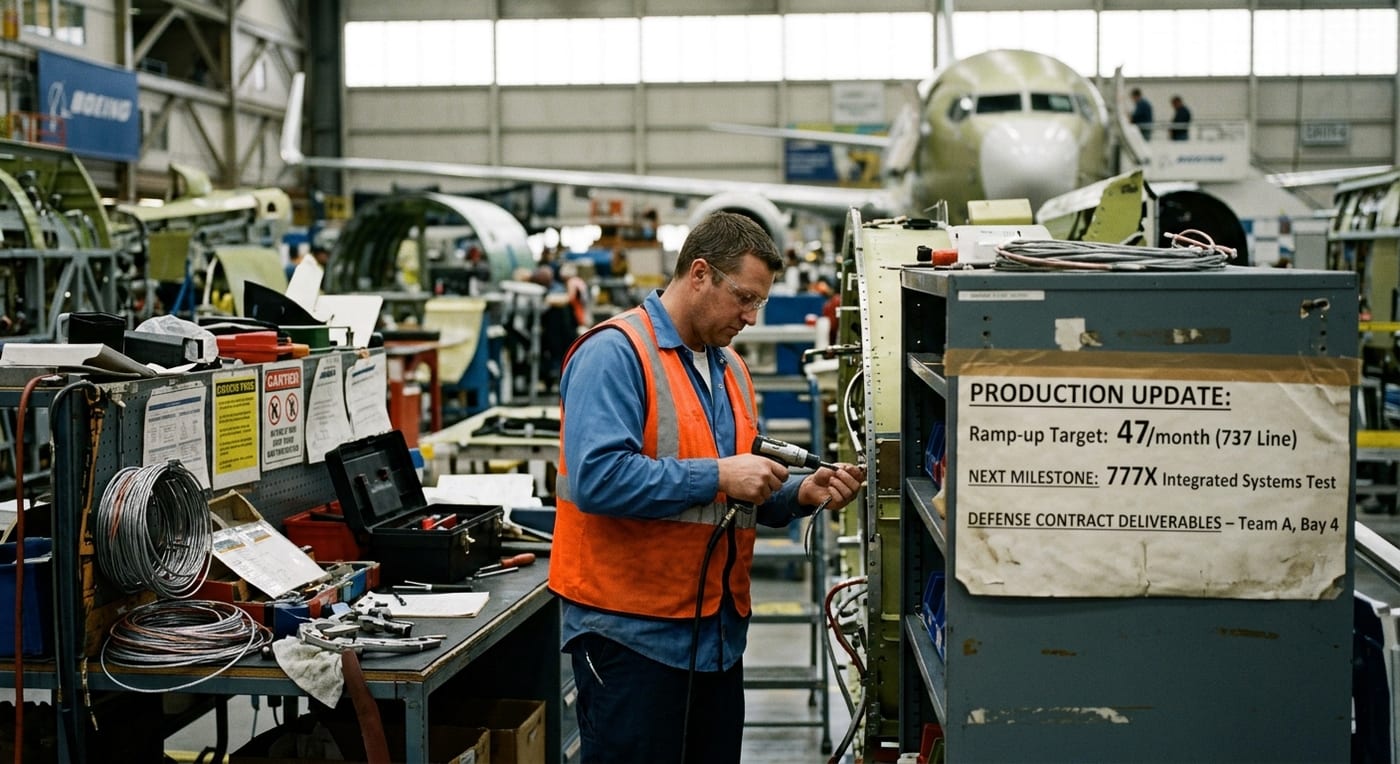
- Boeing ramps up 737 aircraft production to 47 monthly.
- Upcoming 777X jet symbolizes commitment to premium market.
- Strategic defense contracts diversify and strengthen Boeing's portfolio.
The Boeing Company (BA) is currently undergoing a transformative phase, marked by a series of strategic reforms and technological innovations. After enduring significant setbacks and operational challenges over the past few years, Boeing is now focusing on revamping its production capabilities and enhancing its product offerings in response to a booming aviation market.
Production Recovery and Order Backlog
Boeing's recent decision to ramp up the production of its popular 737 aircraft serves as a critical indicator of the company's recovery trajectory. The aerospace manufacturer increased its production rate to 47 aircraft per month, a notable rise from earlier restrictions that had limited output to 38 planes. This surge comes alongside an impressive backlog of orders, currently totaling approximately $715 billion and comprising over 6,200 commercial aircraft. The strong demand encapsulated in this backlog not only signals recovery but also highlights the trust that customers have in Boeing's operational improvements. This improvement in production aligns with recent articles discussing the overall recovery in Boeing’s activities, such as the one detailing their newfound production momentum.
While the overall delivery numbers saw a slight dip in August, with 51 aircraft delivered—down 10.5% from the prior year—Boeing's year-to-date performance remains its strongest since 2018. The company recorded $24.5 billion in revenue for the second quarter, representing 8% growth compared to last year, alongside a positive adjusted free cash flow of $631 million. These figures underscore that despite momentary setbacks, the larger, long-term trajectory for Boeing appears to be on an upward trend. CEO Kelly Ortberg emphasized that rebuilding trust among customers, regulators, and suppliers remains pivotal as the company gradually stabilizes its operations.