

Boeing's 737 MAX 10 Certification: A New Era
Cashu Finance·5 min read
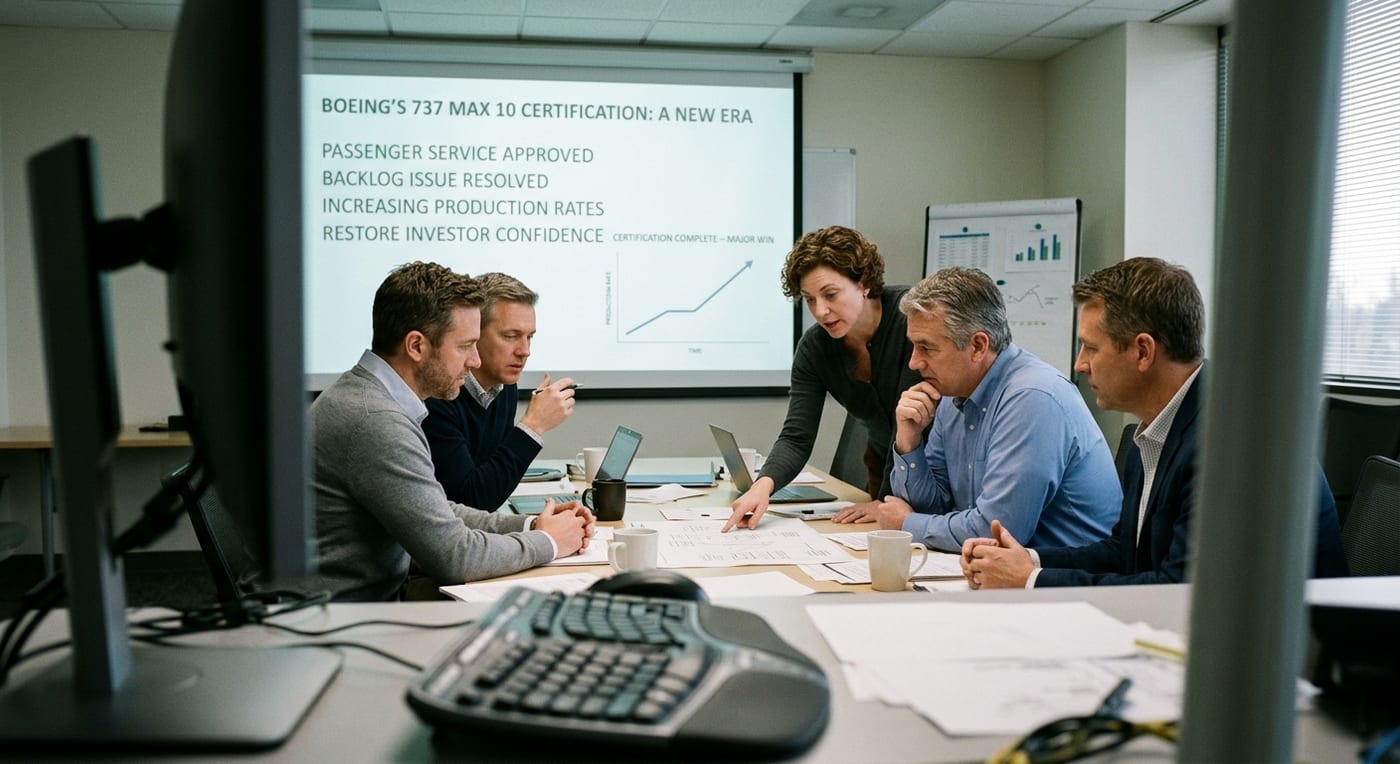
TL;DR
- Boeing's 737 MAX 10 has been certified for passenger service.
- The approval solves a significant backlog issue and represents a major win for the company.
- Increasing production rates aim to restore investor confidence and enhance fleet capabilities.
The Boeing Company BA has recently achieved a significant milestone with the certification of the 737 MAX 10 for passenger service. After years of delays due to safety and regulatory issues, this approval by the Federal Aviation Administration (FAA) marks a vital step in Boeing's recovery and strategic realignment in the aerospace industry. This article explores the implications of the 737 MAX 10's certification, the broader context of Boeing's production strategies, and how these developments impact its market position and investor outlook.
A Milestone Achievement: 737 MAX 10 Certification
The FAA’s approval of the Boeing 737 MAX 10 is a watershed moment not only for the company but for the entire aviation sector. The 737 MAX 10, the largest variant in Boeing's best-selling 737 family, is expected to play a crucial role in reshaping the narrow-body aircraft market. With this certification, Boeing can now commence sales and deliveries, with initial deliveries slated for 2027.
Transportation Secretary Sean Duffy emphasized the significance of this approval, stating, “This is a major win for American manufacturing and our nation’s status as a global aviation powerhouse.” The 737 MAX 10 has accounted for approximately 30% of Boeing’s backlog, representing a backlog critical to the company's financial health after its recent tumultuous years.
Addressing Backlog and Production Rates
Boeing's recent production strategy has been largely focused on addressing its immense backlog of over 6,200 aircraft orders, equivalent to approximately $715 billion. The company has ramped up the production rate of its 737 MAX series, moving from 38 to 47 aircraft per month. This increase is essential not only to meet demand as the aviation sector rebounds post-pandemic but also to restore investor confidence after the issues surrounding the 737 MAX series in previous years.