

Bloom Energy's Road Ahead: Growth Amidst Challenges
Cashu Finance·5 min read
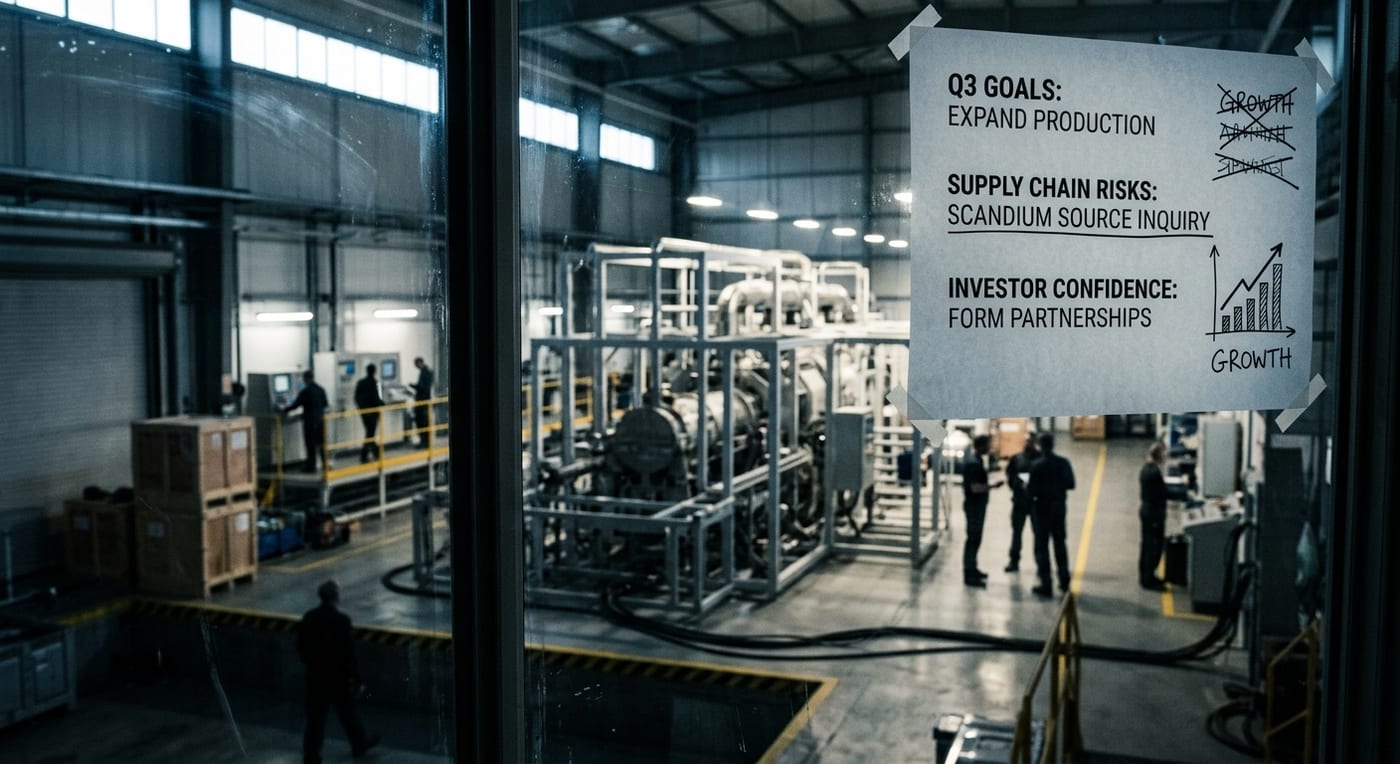
TL;DR
- Bloom Energy celebrates its first billion-dollar revenue quarter.
- Facing legal challenges over scandium sourcing, impacting investor trust.
- Strategic partnerships key to restoring investor confidence.
Bloom Energy Corporation (BE) is making headlines as it navigates through a transformative chapter marked by impressive financial successes alongside significant legal challenges that could impact its market position. As the leader in solid oxide fuel cell technology, Bloom's innovative approach has cemented its place in the clean energy sector, but recent controversies pose questions about its sustainability and operational integrity. In this article, we explore the key financial milestones that underscore the company's growth trajectory, the ongoing legal scrutiny that could undermine investor confidence, and the strategic partnerships that may enhance stability in the current landscape.
Financial Highlights: A Billion-Dollar Quarter
Bloom Energy achieved a historic milestone recently by reporting its first billion-dollar revenue quarter, confirming the rising demand for its solid oxide fuel cell (SOFC) technology. This impressive figure is not merely a reflection of operational success; it highlights an accelerated growth phase, with projections estimating a 100% year-over-year revenue increase anticipated for 2026. Much of this growth is driven by the escalating demand from sectors like artificial intelligence and data centers, which require efficient energy solutions and are keen to reduce their reliance on traditional grid infrastructures. Evidence of this market enthusiasm is reflected in Bloom’s rising backlog, purportedly swelling to an astonishing $20 billion at the close of 2025. This robust backlog indicates a promising future and is a testament to the company's early mover advantage in stationary SOFC deployments, where competitors are still vying for market share.
However, amid this financial triumph, Bloom Energy's stock is not without heavy scrutiny. The company acknowledges that it is trading at a relatively high multiple of 39 times its projected EBITDA, raising questions about its valuation in light of the legal troubles that have surfaced.