

Baidu's Future Amid Autonomous Driving Challenges
ED
Editorial
Cashu Finance·4 min read
TL;DR
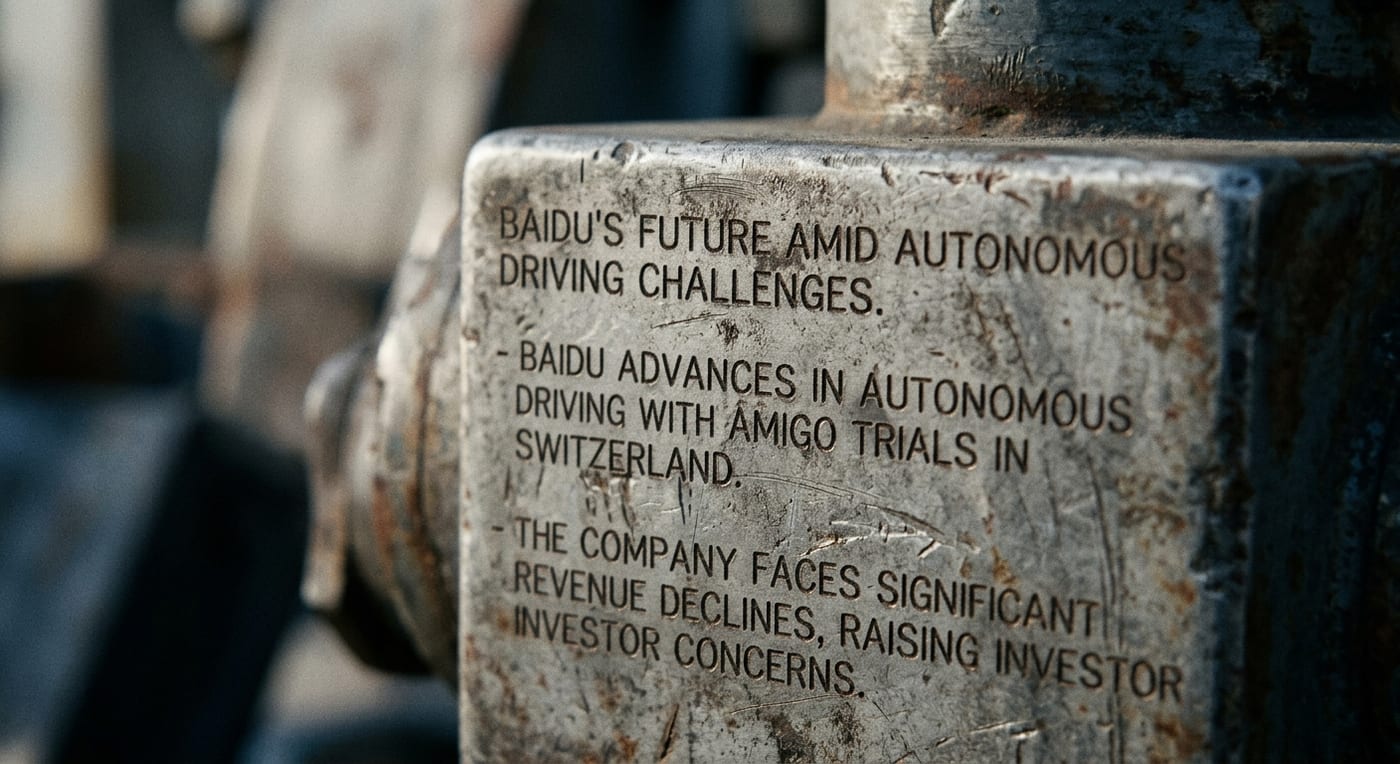
- Baidu advances in autonomous driving with AmiGo trials in Switzerland.
- The company faces significant revenue declines, raising investor concerns.
- Legal issues looming over Baidu may affect market strategies as they attempt to innovate.
Baidu, Inc. (BIDU) is at a crossroads as it navigates opportunities in autonomous driving while grappling with significant market challenges. This juxtaposition positions Baidu as a key player within the evolving landscape of artificial intelligence and transportation. As the company takes bold steps in its ambition to lead the autonomous driving sector, investors are left to weigh these advancements against the backdrop of declining revenues and increasing scrutiny over its business strategy.
Baidu's Ambitious Moves in Autonomous Driving
Baidu’s recent initiatives in the autonomous sector are noteworthy. The company has launched its AmiGo service in Eastern Switzerland, securing approval for Level 4 autonomous driving trials from the Swiss Federal Roads Office. This move signifies Baidu's entrance into the European market, where it seeks to capitalize on the rising interest in self-driving technology. With a partnership with Swiss Post's PostBus, Baidu is positioned to enhance the acceptance of autonomous vehicles across urban Europe, offering invaluable real-world testing data that could fortify its autonomous driving technology against rivals. These advancements have been discussed in prior articles about Baidu's strategies, especially regarding its expansion in autonomous driving, a theme focused on the growing regulatory acceptance in Europe for such technologies.
Financial Challenges Amid Growth Aspirations
However, Baidu's successes come amid a storm of financial challenges. Recent financial reports indicated that revenue within Baidu's core businesses, specifically its online marketing services, has taken a sharp downturn. A notable decline of 23% year-over-year in its legacy business and a 4% decrease in overall revenue raises concerns about the sustainability of these growth initiatives. The substantial decline in AI Cloud Infrastructure revenue, falling 17% quarter-over-quarter, particularly points to difficulties in maintaining market share in its foundational business segments. Following the announcement of these results, Baidu's share price plummeted, revealing investor anxieties surrounding whether the company's foray into innovative technology can counteract declines in its traditional revenue streams.
Balancing Innovation and Legacy Businesses
The duality of Baidu's current situation highlights both potential and peril in its strategic approach. As it prioritizes advancements in autonomous driving, the company must ensure that the potential revenue generated from such innovations can offset declines in its legacy business. Investors are keenly analyzing these developments, particularly regarding how effective Baidu can be in reshaping its business model to adapt to the market’s increasing demand for AI-powered solutions. Previous discussions about Baidu’s struggles with revenue stagnation focus on the disconnect between its ambitious initiatives and the harsh realities faced by its legacy offerings.
Legal Pressures and Investor Scrutiny
To further illustrate, Baidu’s rapid advancements in AI and autonomous capabilities must be met with equally aggressive measures to stabilize or revive its fading online marketing services. Analysts speculate that the decline in legacy business could lead Baidu to either pivot drastically or double down on investments in innovation. These pressures compel Baidu to showcase its readiness to navigate emerging markets, particularly in Europe where the regulatory environment is becoming more favorable for self-driving technology. The groundwork laid with partnerships like that of Swiss Post and the successful trials for the AmiGo service reflect a crucial step towards achieving its goals.
Conclusion: A Pivotal Moment for Baidu
As Baidu engages with these overseas markets, investor sentiment remains a significant factor. The upcoming November 13, 2026 deadline for a potential securities class action lawsuit underscores investors' concerns regarding the company's disclosures about its operational risk and revenue fluctuations. Previous allegations indicate that Baidu may have overstated the extent to which its AI innovations could counterbalance the rapidly declining revenues from its traditional marketing business. As such, this may affect potential investments and strategizations by Baidu. Through navigating these legal challenges alongside its strategic endeavors in autonomous driving, Baidu must work diligently to rebuild investor confidence.
In conclusion, Baidu, Inc. stands at a pivotal point in its corporate trajectory. Its focus on autonomous driving technology presents a forward-looking strategy in a rapidly advancing sector. Still, the struggles of legacy revenue streams loom large and could hinder the company's potential for sustainable growth. Observers note that successful transitions into new markets and technologies will hinge on Baidu’s ability to convincingly demonstrate that its ambitious innovation strategies can bear financial fruit in the long run. Moving forward, maintaining strong communication with investors and an eye on enhancing operational performance will be critical as Baidu endeavors to solidify its place as a leader in the tech industry. The same pressure is reflected in recent reporting on the issue, which helps explain why the company's pricing decisions remain under scrutiny.