

Baidu's Bold Move Towards Autonomous Driving
ED
Editorial
Cashu Finance·4 min read
TL;DR
- Baidu faces declining revenue pressures from legacy operations.
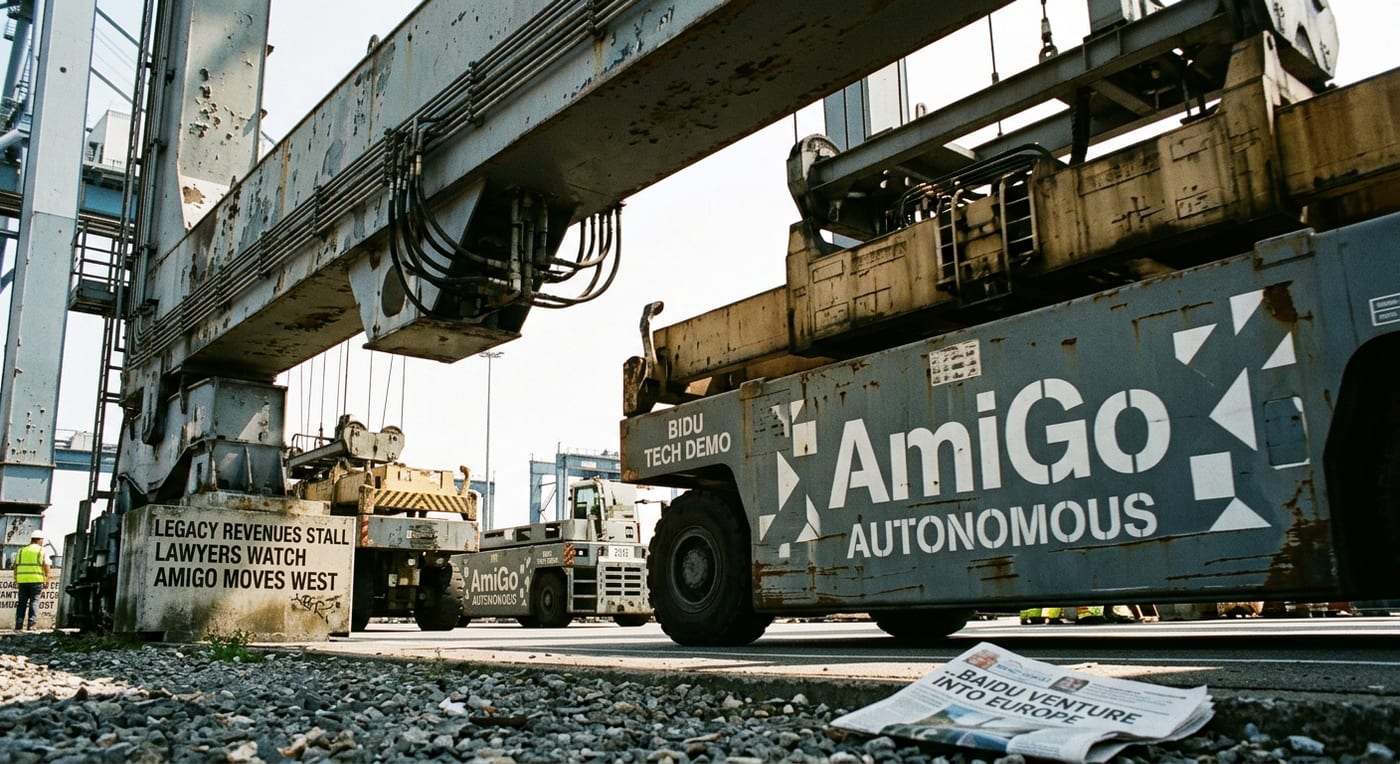
- The launch of AmiGo marks Baidu's venture into European autonomous driving.
- Investor concerns rise amid ongoing legal scrutiny and class action lawsuits.
Baidu, Inc. BIDU is presently navigating through a myriad of challenges while simultaneously embarking on an ambitious journey into autonomous driving technology. The company, once heralded as China's answer to Google, is grappling with declining revenues from its core online marketing business, which fell by an alarming 23% year-over-year. Amidst these financial pressures, Baidu is emphasizing its foray into the European autonomous driving market with the launch of its AmiGo service, a critical move aiming to diversify and rejuvenate its operations.
The State of Baidu's Revenue
Baidu's online marketing sector has historically been the backbone of its revenue generation, accounting for a significant portion of its income. Recent trends, however, indicate a worrying decline, hinting at a shifting landscape in the Chinese tech market. The latest reports reveal that Baidu's General Business revenue decreased by 4% year-over-year to RMB25.2 billion (approximately $3.71 billion). More troubling is the performance of its legacy online marketing services, which shrank by 19% to RMB13.1 billion. This formidable downturn has raised eyebrows among investors, questioning Baidu's ability to pivot effectively amidst an unpredictable economic climate.
Investors' confidence is further eroded by increasing fears that Baidu's AI initiatives, which had been touted as growth drivers, were overstated. Legal actions against the company citing misleading information regarding its AI capabilities have compounded this uncertainty, thereby complicating Baidu's growth narrative significantly, as detailed in earlier analyses regarding Baidu's innovation challenges (Baidu's Dual Challenge in Innovation).
The Autonomous Journey: AmiGo's European Launch
In response to these declining revenues, Baidu is betting heavily on the future of autonomous driving. The rollout of the AmiGo service marks not only a technological leap but also a strategic entry into the European market, a territory that the company views as ripe for exploration. The Swiss Federal Roads Office has granted approval for the testing of Level 4 autonomous vehicles, affirming Baidu’s innovative capabilities through its Apollo Go technology. This strategic move aims to showcase Baidu’s prowess in a budding market while diversifying its revenue sources amidst declining earnings from its traditional business model.
The implications of this expansion are profound. By entering the European market, Baidu is positioning itself as a serious player in the global autonomous vehicle industry, competing with notable names like Tesla and Waymo. The company's investment in AMIGO and its broader autonomous strategies highlight a shift towards mobility solutions that align with global trends in transportation and sustainability.
Challenges Along the Way
Despite the optimistic outlook heralded by the AmiGo launch, Baidu's journey is fraught with obstacles. The shift toward innovation such as autonomous driving comes at a pivotal time when the company is still deeply entrenched in legal scrutiny. Investors are cautious, and the atmosphere surrounding the company's stock has become increasingly volatile. Predictions that the AI sector would counterbalance losses from traditional revenue streams are now being critically revisited, particularly after the company’s reported slower than anticipated growth in its AI divisions.
Moreover, ongoing securities class actions pose further uncertainties. Investors who acquired Baidu's stock during a specific time frame between November 18, 2025, and August 17, 2026, may be entitled to compensation following claims of misinformation about the company's financial health, including the anticipated performance of its AI business (Rosen Law Firm Advises Baidu, Inc. Investors).
The Road Ahead: Investor Sentiment
The shift towards autonomous technology exemplifies Baidu's fundamental transition as it seeks to redefine itself in a rapidly evolving industry. However, for investors, the challenge remains: how can Baidu reassure them of its vision while navigating through the harsh realities of declining legacy revenues and legal complications?
As Baidu continues to prioritize innovation in its operations, its journey into the European markets with AmiGo signifies a potential renaissance. Still, the company must manage investor sentiments by delivering tangible results to restore confidence. The juxtaposition of exciting ventures and sobering financial reports creates a narrative that requires adept management and strategic clarity from Baidu’s leadership.
Conclusion
Baidu, Inc.'s foray into autonomous driving could be a groundbreaking move or a risky gamble, deeply tied to the company's ability to address and mitigate financial instability and navigate legal waters amicably. Investors looking for clues on Baidu's viability as a tech leader should keep a close eye on performance metrics in the coming quarters, as they will undoubtedly hold the key to understanding whether the innovative strides taken will translate into robust financial recovery. The stakes are high as Baidu attempts to secure its place in an increasingly competitive market, with its future hinging on the delicate balance of innovation, operational realities, and investor trust. The same pressure is reflected in recent reporting on the issue, which helps explain why the company's pricing decisions remain under scrutiny.