

Baidu's Bold Move in Autonomous Driving
ED
Editorial
Cashu Finance·5 min read
TL;DR
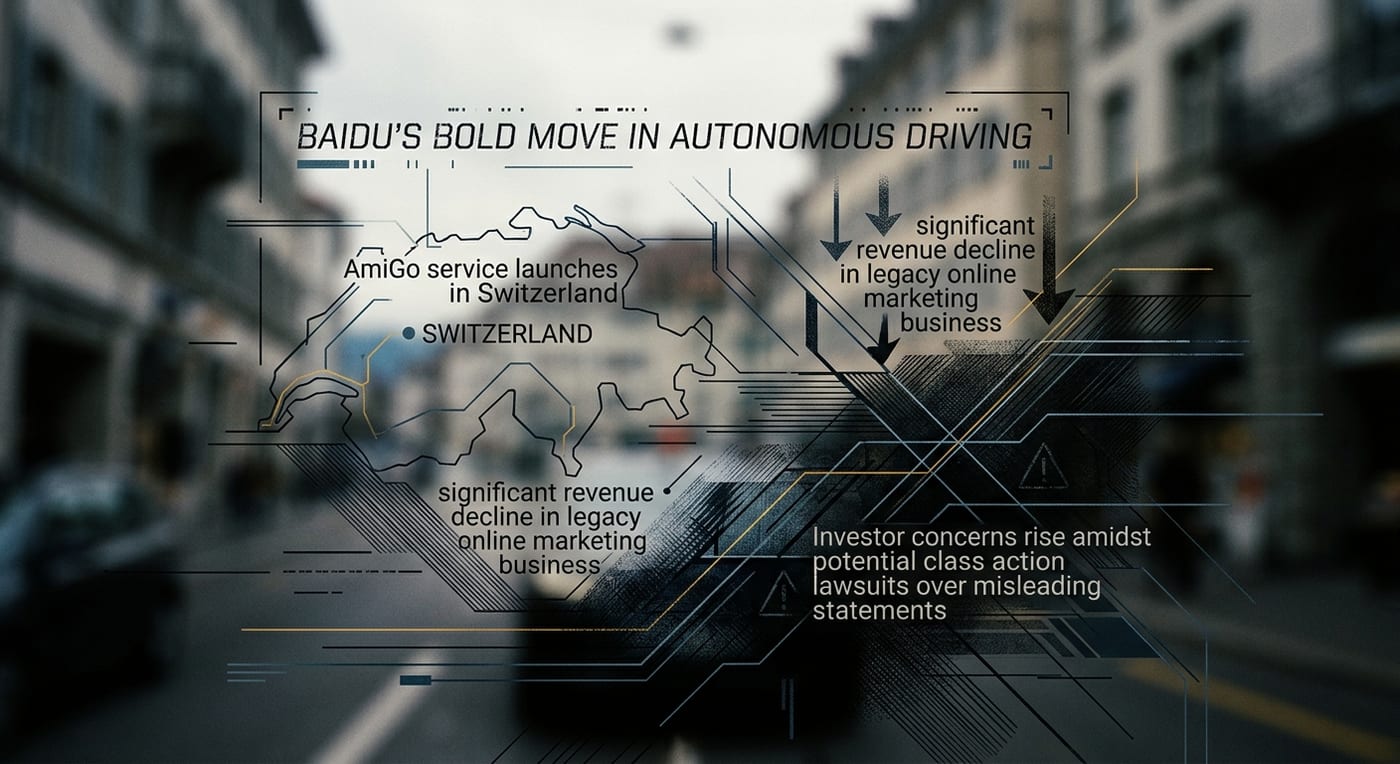
- Baidu launches AmiGo service in Switzerland to enter European autonomous market.
- Company faces significant revenue decline in legacy online marketing business.
- Investor concerns rise amidst potential class action lawsuits over misleading statements.
Baidu, Inc. ( BIDU) is set to make waves in the autonomous driving sector as it unveils its latest initiative, the AmiGo service, in Switzerland. This venture represents a significant step for the Chinese tech giant as it seeks to expand its influence globally, particularly in the European market, where the demand for autonomous vehicles is rapidly growing. However, this ambitious move comes at a time when the company faces mounting challenges in its core online marketing business, raising questions about the sustainability of its growth and long-term strategy.
Expansion into the European Market
Baidu's AmiGo service officially launched trials in Eastern Switzerland, marking the company's entry into the European autonomous public transport arena. This groundbreaking service utilizes Baidu's Apollo Go technology, which has already made significant inroads in the autonomous driving sector within China. The Swiss Federal Roads Office (FEDRO) has granted approval for Level 4 autonomous driving trials, allowing for self-driving vehicles to operate without human intervention in designated areas. This validation showcases Baidu's commitment to advancing autonomous transportation solutions in a regulated environment.
Baidu's partnership with Swiss Post's PostBus is particularly noteworthy. The collaboration aims to not only enhance the acceptance of autonomous vehicles but also to refine the technology through real-time testing in urban settings. As Baidu adapts to the regulatory landscape in Europe, it seeks to position itself as a leader in the evolving field of autonomous mobility. The insights gained from these trials will be invaluable in scaling its operations and aligning better with market demands amidst a cautious regulatory environment.
Financial Pressures and Market Dynamics
While Baidu charts a course toward innovation in the autonomous driving market, it concurrently navigates challenging financial waters. The company has reported fluctuating revenues, with its legacy online marketing segment experiencing a significant downturn. In its recent financial report, Baidu revealed a 23% decline in legacy business revenue year-over-year, prompting investor concern over its long-term viability and growth strategy.
This downward trend in revenue directly correlates with increasing scrutiny over Baidu's strategic decisions. The company previously assured investors that its Core AI-powered business would counteract declines in traditional revenue streams; however, the decrease in year-over-year growth rates has raised alarm bells. Following disappointing earnings, Baidu's stock saw a substantial drop, indicating investor unease about the future of its business model specifically concerning its ability to sustain growth amid declining revenues from its core operations. This tension between ambitious projects and financial reality is central to understanding Baidu's current predicament.
In light of the ongoing financial challenges, the company is doubling down on artificial intelligence innovations and partnerships while hoping that these ventures will buffer against the revenue falling off from its legacy segments. As Baidu continues to invest in its AI initiatives, it remains to be seen whether these efforts will yield the desired results or further strain its financial position.
Investor Sentiment and Class Action Concerns
Concerns surrounding Baidu's financial integrity have led to a wave of investor skepticism, culminating in potential class action lawsuits due to allegations of misleading statements about its AI business. Legal scrutiny highlights growing frustrations among stakeholders who feel the company has overstated the performance of its AI solutions relative to its depreciating core business. Notably, Baidu's failure to adequately disclose risks associated with revenue declines and the operational sustainability of its AI strategies could have long-lasting implications on investor confidence. Recent reports indicate that Baidu's stock price dropped sharply following its second-quarter financial results announcement, further intensifying investor worries about the company's revenue projections.
In light of these challenges, market participants are keenly observing how Baidu's strategic pivot toward autonomous driving will materialize in terms of financial performance. If the company can effectively leverage its innovative capabilities in the AI and autonomous sectors, it may just counteract the decline currently facing its legacy business. However, any setbacks in these efforts could exacerbate existing market concerns and lead to further stock volatility.
The Road Ahead for Baidu
Baidu’s commitment to expanding its autonomous driving initiatives via the AmiGo project is ambitious and reflects its broader strategy of positioning itself at the forefront of the autonomous vehicle revolution. As trials progress in Switzerland, the insights gained can catalyze enhancements in its technology, aligning Baidu closer to market needs. Additionally, how Baidu navigates the interplay between innovation and its current financial pressures will be crucial in reassuring investors.
With the European market offering both unprecedented opportunities and unique regulatory hurdles, Baidu’s future growth will likely depend on its ability to manage these dynamics effectively. The road ahead may be fraught with challenges, yet it also promises substantial rewards for those willing to innovate and adapt in this burgeoning sector. As developments unfold, investors and analysts will be closely watching how Baidu unveils its strategic roadmap amidst these complexities. In conclusion, Baidu, Inc.’s journey into autonomous driving is filled with promise but shadowed by operational and market hurdles that demand careful navigation. As such, its trajectory will play a pivotal role in shaping the company's legacy in one of the most exciting sectors of modern technology. The same pressure is reflected in recent reporting on the issue, which helps explain why the company's pricing decisions remain under scrutiny.