

Apple's Strategic Growth and Resilience
ED
Editorial
Cashu Finance·4 min read
TL;DR
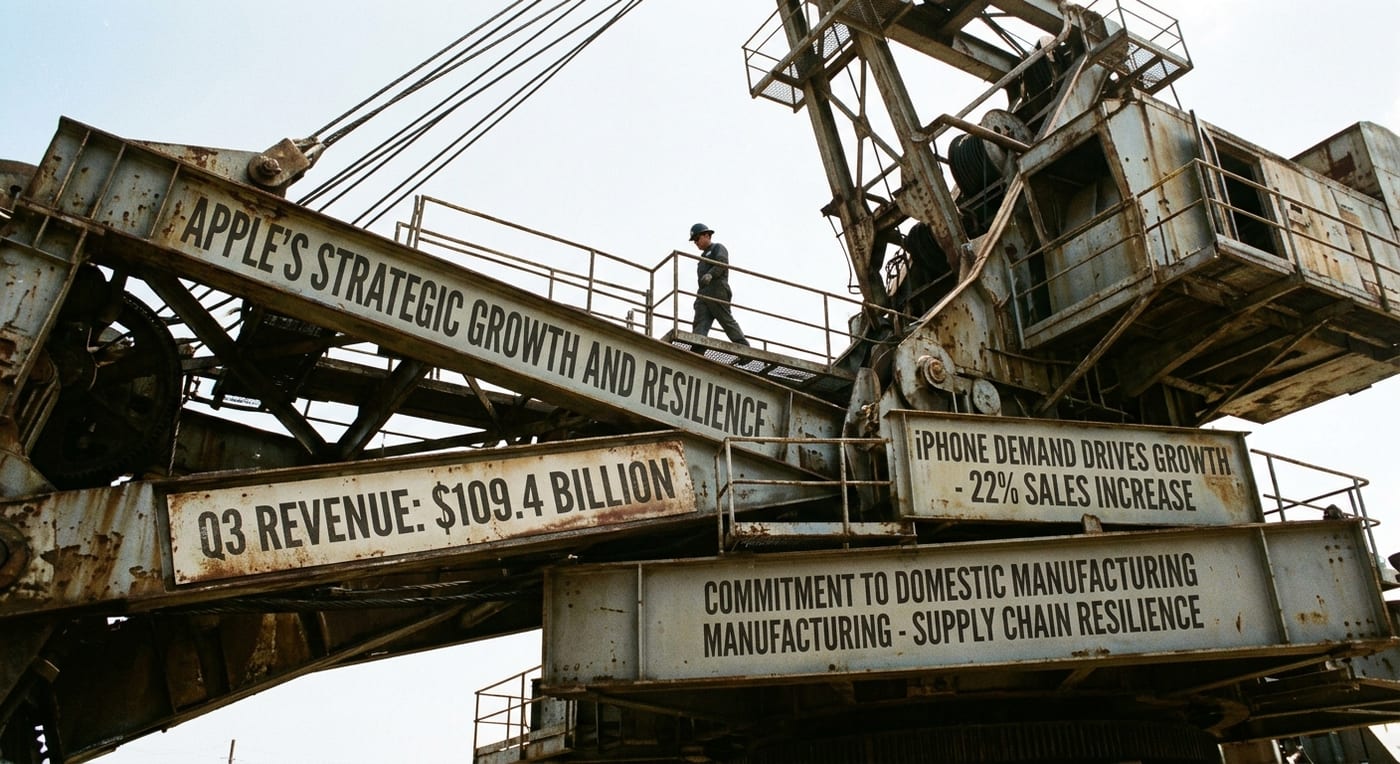
- Apple reported $109.4 billion in Q3 revenue.
- iPhone demand drives growth with a 22% sales increase.
- Commitment to domestic manufacturing aims at enhancing supply chain resilience.
The resilience of Apple’s flagship device, the iPhone, particularly in emerging markets such as India, has become a defining characteristic of the company’s growth strategy. As Apple adapts to consumer preferences shifting towards premium devices, it reflects a strategic alignment with a lucrative market segment.
Manufacturing Commitment and Supply Chain Strategy
Under the outgoing CEO Tim Cook, Apple has committed $60 billion to enhance its domestic manufacturing capabilities in Texas, part of a broader $600 billion investment in U.S. manufacturing over the next four years. Although Apple will not manufacture iPhones domestically, the push to produce the Mac mini and advanced AI servers in Houston is significant. This move aims to mitigate risks associated with tariffs and boosts the stability of Apple's margin and earnings path. Cook noted that this investment marks Apple's largest American manufacturing commitment to date, reinforcing a supply chain that can withstand future trade policy changes. Such endeavors are likely to insulate Apple from supply chain disruptions while facilitating a more robust earnings outlook, even amidst rising production costs. For more details on this pivotal investment, refer to an article discussing Apple's recent manufacturing developments, highlighting their strategic foresight in this challenging landscape.
This shift not only enhances manufacturing resilience but also allows for continuous reinvestment in proprietary technology. With new agreements in place, including those with Broadcom for custom silicon components, Apple is effectively poised to strengthen its technological advantage further and secure its market position.
Strategic Pricing and Consumer Demand
Apple's ability to adapt its pricing strategy is also a crucial aspect of its resilience. Recently, the company raised the prices of its Apple TV and Apple One subscription services, which are now $14.99 and $21.95 respectively. This strategic hike follows a broader industry trend where several streaming platforms, including competitors like Netflix and Hulu, have also adjusted their pricing upwards. Such moves are indicative of Apple's confidence in its customer base’s willingness to pay for premium services, as evidenced by the robust revenue generated from iPhone sales. The price adjustments support not only the immediate revenue gains but also play a role in sustaining its profit margins, especially during times of increased operational costs.
The previous success of iPhone models, now approaching their anticipated launches, is expected to bolster Apple's services revenue even further while enhancing the overall ecosystem's attractiveness. As consumers lean toward premium products, Apple's structural changes and strategic pricing adjustments position it favorably against macroeconomic challenges.
Leadership Transition and Future Outlook
The upcoming transition to John Ternus as CEO marks a significant chapter for Apple. With over 25 years at the company and as the head of hardware engineering, Ternus steps into a role at a time when Apple is experiencing both record revenues and a notable stock price nearing all-time highs. Historical context reveals that transitions in tech leadership often lead to varying stock performances based on the inherited conditions, rather than the leadership itself. Apple's stock is currently priced at significantly higher earnings multiples than when Cook took over, indicating that Ternus's ability to manage expectations will be critical. The market will be watching closely as new products, particularly the anticipated new iPhone and advancements in AI features, are likely to shape investor sentiment moving forward.
As Ternus prepares to guide the company into this new era, the focus will remain on sustaining growth through innovation, strategic supply chain enhancement, and leveraging consumer loyalty. This resilience reflects an enduring response to competitive pressures and shifts within the global economy, embodying Apple's strategic foresight to remain a leader in the tech industry. The same pressure is reflected in recent reporting on the issue, which helps explain why the company's pricing decisions remain under scrutiny.