

AMD's Bold Shift Towards AI Dominance
ED
Editorial
Cashu Finance·4 min read
TL;DR
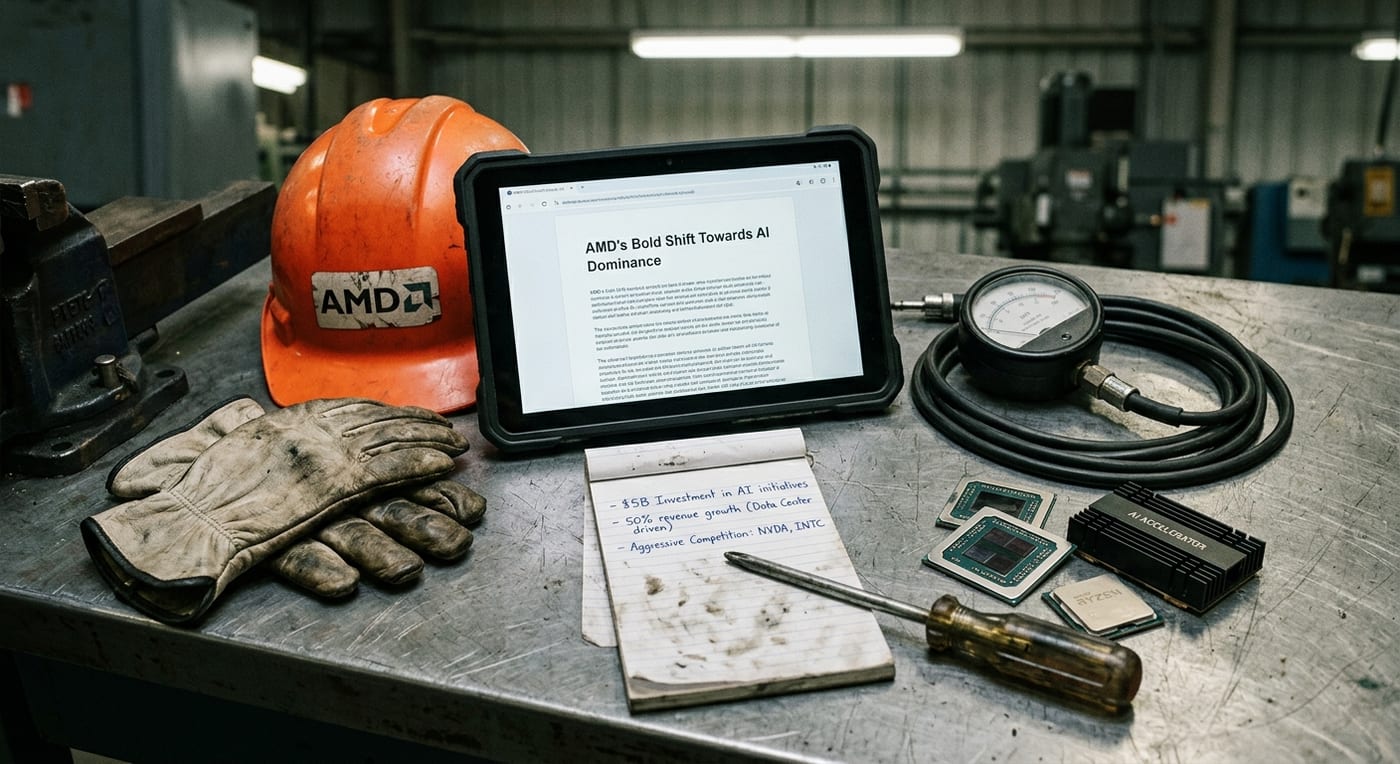
- AMD invests $5 billion in AI initiatives.
- Reports 50% revenue growth driven by data centers.
- Competes aggressively against Nvidia and Intel.
Advanced Micro Devices, Inc. ( AMD) is on a transformative journey, investing significantly in artificial intelligence (AI) to capture a growing segment of the semiconductor market. With a 50% rise in revenue, largely due to data center sales, AMD is positioning itself to compete vigorously against established players like Nvidia and Intel. This article explores AMD’s strategic initiatives in AI, its financial performance, and the potential challenges it may face as it pursues growth in this burgeoning sector.
Strategic Investments in AI
As demand for AI technologies escalates, AMD has committed approximately $5 billion to bolster its AI infrastructure and product development. This significant investment indicates the company's recognition of the vital role that AI will play in future computing needs. AMD’s strategy is not just reactive but also proactive as it seeks to capitalize on the revolution in AI-driven computing.
The decision to expand its AI capabilities is coupled with strong sales growth in its data center segment, which recorded an impressive 107% revenue increase, amounting to $6.7 billion. Such performance has positioned AMD as a competitive player in the semiconductor market, particularly in sectors driven by data center capacity and AI workloads.
This newfound competitiveness is highlighted in AMD's partnerships, particularly with Microsoft and Anthropic, which are expected to drive further innovations in AI infrastructure. These collaborations will not only enhance AMD's market position but also its ability to offer comprehensive AI solutions across various industries.
Strong Financial Performance Amidst Market Challenges
AMD's recent financial results illustrate a robust trajectory, reporting a remarkable 50% increase in revenue to reach $11.54 billion. This success reflects not only strong demand but also effective management during a period of heightened market volatility. The growth is substantial, especially against a backdrop of increasing competition in the semiconductor space.
However, AMD's path is not devoid of challenges. Rising costs associated with high-bandwidth memory (HBM) present a potential risk to margins. The company’s latest AI accelerator, the Instinct MI455X, features a significant increase in memory capacity, now reaching 432 gigabytes—50% more than its predecessor. As noted by industry analysts, while this enhanced capability positions AMD to rival Nvidia’s offerings, the escalating costs of memory components could impact profitability.
AMD acknowledges these cost pressures and anticipates managing them through careful pricing strategies and operational efficiencies. The company's executives expressed optimism about maintaining gross margins around 56%, even as they navigate fluctuating input costs. As highlighted, "The memory bill will show up first in gross margin," indicating close monitoring of profitability while scaling production.
Competitive Landscape and Future Outlook
As AMD embarks on this ambitious journey, it faces stiff competition from industry giants. Nvidia, in particular, remains a formidable adversary with its well-established presence in the AI and data center markets. AMD's attempts to outpace Nvidia are underscored by its development of the Helios rackscale servers, which integrate its CPUs, GPUs, and networking solutions designed to address AI workloads efficiently.
In recent analyses, it's highlighted that AMD is gaining market share against Intel in the CPU domain, positioning it to also challenge Nvidia in the GPU segment. This multi-pronged strategy might provide AMD with the leverage needed to navigate the complexities of an evolving market landscape. As revenue from its data center division continues to rise, the outlook for AMD remains positive, provided they manage their costs effectively.
With consistent quarterly earnings growth and a strong commitment to AI, AMD is well-positioned to strengthen its market presence. Nevertheless, the road ahead will require astute management of both opportunities and challenges, as the semiconductor industry adapts to the accelerating pace of technological advancement. The same pressure is reflected in recent reporting on the issue, which helps explain why the company's pricing decisions remain under scrutiny.