

AMD: Navigating AI Growth and Supply Challenges
ED
Editorial
Cashu Finance·5 min read
TL;DR
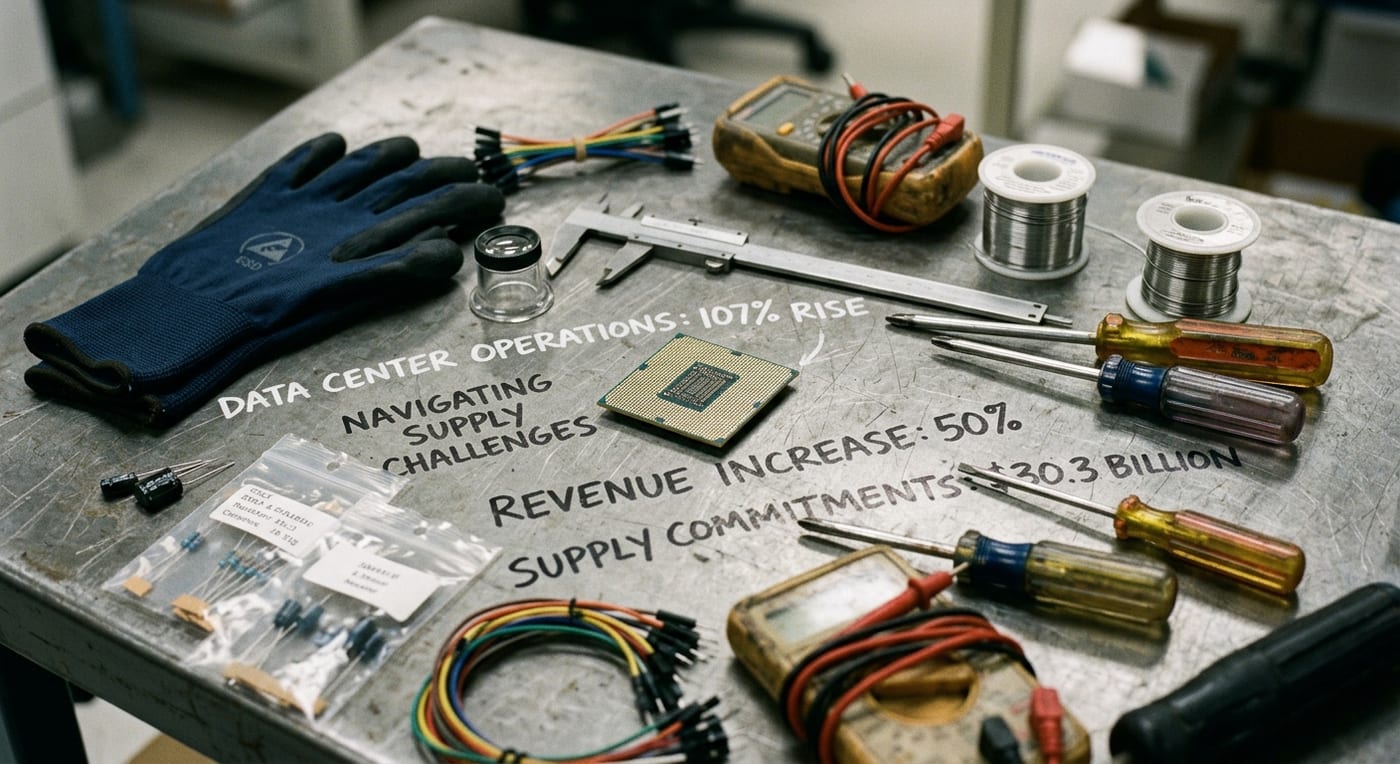
- AMD posts a 50% revenue increase.
- Data center operations fuel growth with 107% rise.
- Supply commitments surge to $30.3 billion amidst demand.
Advanced Micro Devices, Inc. ( AMD) is poised at the forefront of a technological transformation as it solidifies its position within the booming artificial intelligence (AI) and data center markets. With its robust financial performance, AMD's recent earnings report underscores significant growth, fueled by unstoppable demand for high-performance computing solutions, particularly in its data center segment. This article explores AMD's strategic response to market dynamics, the challenges it faces, and its future outlook amidst intensified competition.
Significant Financial Growth Driven by Data Centers
AMD's recent earnings highlight an impressive year-over-year revenue increase of 50%, amounting to approximately $11.54 billion. A noteworthy aspect of this surge is the company’s data center operations, which have experienced a staggering 107% growth, adding approximately $6.7 billion to total revenues. This dramatic expansion mirrors the increasing global demand for high-performance computing solutions that are critical for modern enterprises. The growing focus on AI applications is reshaping the semiconductor industry landscape, positioning AMD uniquely amidst its rivals like Nvidia and Intel.
Lisa Su, AMD's CEO, reaffirmed the company's commitment to pursue opportunities within the AI sector, which are expected to further elevate AMD’s market standing. Plans to invest $5 billion into AI initiatives underscore this strategic alignment, aimed at improving both market presence and competitive positioning against formidable competitors. Such investments are timely, given the industry's shift towards AI-driven operations and their vital role in enhancing corporate efficiency and innovation.
Market Trends: Supply Constraints Fueling Demand
Despite AMD's triumphant growth story, it faces significant challenges, primarily a supply crunch that could either constrain its capacity to meet demand or be leveraged as a strategic advantage. AMD has reported that demand has outstripped its supply capabilities, leading to increased commitments to expand production capacity. As mentioned during a recent briefing in Taipei, Su emphasized that the supply chain for server CPUs has become tight, driven by unanticipated demand. This appears less a limitation than a testament to the surging interest in AMD's products and solutions.
The company is strategically investing in expanding its advanced wafer supply agreements, intending to secure the necessary capacity to meet future demand forecasts. As revealed earlier, AMD's commitments surged dramatically, growing from $12.2 billion at the end of 2025 to an impressive $30.3 billion by mid-2026. This proactive investment strategy indicates AMD's belief in its potential for sustained growth despite current limitations, highlighting a robust focus on aligning production capabilities with market expectations.
The AI and Data Center Market: Driving Future Revenue
According to previous analyses, AMD's data center revenue is expected to more than double by 2027, driven by its server CPU offerings. This forecast stems from a remarkable acceleration in revenue growth within the last few quarters, with the data center segment itself recording continual increases of 39%, 57%, and then the aforementioned 107% (in Q2 2026). Such performance not only highlights AMD’s strategic pivot towards AI capabilities but also confirms that it is aligning well with the rapid evolution of enterprise requirements for high-performance computing.
As additional context, AMD's strategic acquisitions and partnerships, particularly with organizations like OpenAI, are likely fueling this upward trajectory. These partnerships play a crucial role in enhancing AMD's market presence and creating new revenue streams. The potential long-term gains from these collaborations underscore AMD's commitment to innovating within the AI sector, where the competition is fierce and the opportunities abundant.
Outlook: Balancing Growth with Risk
AMD's financial health remains robust, but the risks associated with increasing production capacity cannot be understated. While the growth forecast supports an ambitious trajectory, there is potential for volatility if demand dynamics shift, leading to overproduction and inventory build-up. Nevertheless, the current investor sentiment reflects optimism, with AMD's stock price significantly rising following the second-quarter results, highlighting broader confidence in its long-term growth strategy.
As AMD functions at the intersection of AI and high-performance computing markets, growth strategy perceptions will heavily influence investor outlook. The company's ability to balance supply and demand effectively while navigating macroeconomic trends and competitive pressures will determine its future success. With continued investments in production capabilities and an unwavering focus on market expansion, AMD is well-positioned for an upward trajectory despite the inherent risks.
Conclusion: A Strong Position for Future Growth
In summary, AMD’s strategic alignment toward AI and data centers, paired with its significant financial growth, presents a compelling narrative for its future. The company’s proactive commitment to expanding supply capabilities illustrates its readiness to meet the surging market demand and cope with competitive pressures effectively. As AMD extends its foothold in transforming sectors, the ongoing trends in AI will likely set the stage for continued growth, notwithstanding the challenges of navigating supply constraints. The same pressure is reflected in recent reporting on the issue, which helps explain why the company's pricing decisions remain under scrutiny.