

Amazon's Transformative Approach to AI and Logistics
ED
Editorial
Cashu Finance·5 min read
TL;DR
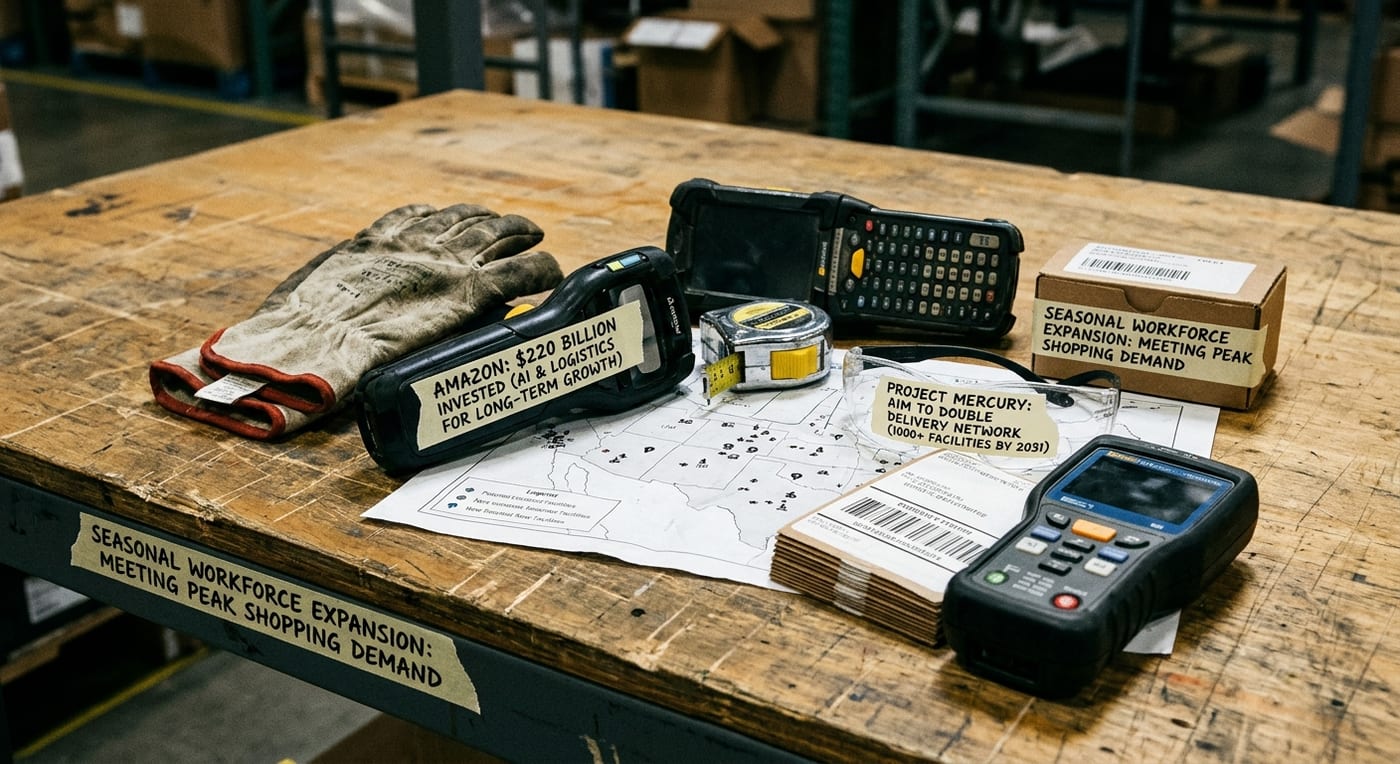
- Amazon is investing $220 billion in AI and logistics for long-term growth.
- Project Mercury aims to double Amazon's delivery network to over 1,000 facilities by 2031.
- Seasonal workforce expansion reflects Amazon's need to meet growing demand during peak shopping times.
Amazon.com, Inc. (AMZN) is redefining the landscape of e-commerce and technology with its ambitious investments in artificial intelligence and logistics. These strategic moves aim not only to enhance operational efficiency but also to bolster its competitive stance against rivals. As the company navigates a complex market filled with emerging challenges and opportunities, its focus on integrating cutting-edge technologies may prove pivotal in maintaining its market dominance.
The AI Surge: Massive Investments Ahead
One of the most significant aspects of Amazon’s strategy is its monumental commitment to AI, investing around $220 billion in 2026. This investment is set to transform the company's core operations and is grounded in the belief that AI presents a "once in a lifetime opportunity.” Amazon's CEO, Andy Jassy, has emphasized that these expenditures will secure long-term returns for the company. However, this spending frenzy comes amidst an emerging issue: the cash flow has turned negative for the first time since 2023, raising some eyebrows among investors.
The heavyweight investments in AI primarily involve expanding AWS capabilities, which includes purchasing massive amounts of Nvidia GPUs for data centers. However, these advancements are somewhat hampered by infrastructure bottlenecks — notably power shortages that can delay deployment. Some AI hardware has even been left idly in warehouses, contributing to what insiders are calling 'dark GPUs.' This terminology reflects not just the waiting hardware but also broader challenges in scaling operations effectively amid high capital expenditures. Still, internal documentation indicates strong demand predictions for AWS services, with revenue growing at 37%, its best performance in years.
Project Mercury: Redefining Logistics
At the heart of Amazon's strategy to maintain its e-commerce supremacy is Project Mercury, a sweeping initiative aimed at expanding same-day delivery capabilities across the U.S. The company plans to grow its existing logistics infrastructure from about 85 facilities to over 1,000 by 2031. This ambitious expansion is projected to enable Amazon to control nearly 90% of U.S. package deliveries, a bold vision that could significantly enhance customer satisfaction while optimizing operational efficiency.
This logistics overhaul is timely as Amazon's market share in the grocery sector is reportedly increasing, helped by the expansion of its fresh grocery delivery services. According to Nielsen IQ, Amazon's perishable sales surged, signaling a promising boost against traditional grocery retailers. Securing a larger foothold in these categories could unlock new revenue streams and strengthen overall profitability, as traditional grocers continue to feel the pressure from Amazon's growing prowess in this domain.
The Competitive Landscape and Market Perception
Despite these strides, Amazon operates in an intensely competitive environment. Walmart remains a formidable foe, leveraging a vast network of stores and gig workers to enhance its grocery delivery service. To counter this, Amazon’s planned fulfillment centers for same-day delivery aim to match Walmart’s capabilities while further enticing prime consumers who value speed and quality.
However, while competition remains fierce, investor sentiment appears largely bullish on Amazon’s long-term growth prospects due in part to its diverse revenue streams. The company's key segments — retail, AWS, and advertising — are all showing promising growth trajectories, with operating income tripling and cloud revenue growth at remarkable rates. Moreover, Amazon's initiative to integrate AI in logistics, highlighted by its $5 billion purchase of high-performance Nvidia servers, positions it well for future scalability and efficiency.
Expanding the Workforce: A Strategic Necessity
To support these ambitious initiatives, particularly during peak seasons, Amazon announced a plan to hire 300,000 seasonal workers — an increase from 250,000 in previous years. This decision not only reflects the growing demand for its services but also underscores the company’s commitment to improving employee benefits, providing health coverage from the first day of employment for many workers.
This staffing expansion is vital in enhancing logistics capabilities, particularly in the lead-up to the holiday shopping season, a period that historically carries immense sales potential. Efficient management of this workforce in tandem with expanded logistics capabilities will likely play a crucial role in optimizing operational workflows and ensuring customer satisfaction during busy times.
Challenges Ahead: Balancing Growth and Profitability
As Amazon pushes forward with this multi-faceted strategy, it must address several challenges that could impact its trajectory. The ambition of its infrastructure projects, particularly regarding AI and logistics, introduces significant financial risk, as evidenced by the negative cash flow report. The extensive investments needed to equip data centers and enhance delivery networks may take time to yield positive results, possibly testing the patience of investors during the interim.
Furthermore, as Amazon's competitors continue to innovate and improve their offerings, it remains imperative for Amazon to sustain its growth through enhancements in customer service, inventory management, and technological investments. The company is well aware that in the world of e-commerce, efficiency and speed are crucial, and it aims to leverage its investments in AI to streamline these operations.
Conclusion: A Pivotal Moment for Amazon
In conclusion, Amazon.com, Inc. is at a crucial juncture as it simultaneously navigates the complexities of massive investment in AI and a comprehensive expansion of its logistics capabilities. The company’s bold strategies aim to reshape both its operational framework and consumer interactions around speed, efficiency, and satisfaction. While challenges linger, particularly with cash flow and market competition, Amazon's commitment to evolving through innovation and strategic investment suggests strong long-term growth potential amidst a rapidly transforming market landscape. The same pressure is reflected in recent reporting on the issue, which helps explain why the company's pricing decisions remain under scrutiny.