

Amazon's Future: Logistics and Cloud Expansion
ED
Editorial
Cashu Finance·5 min read
TL;DR
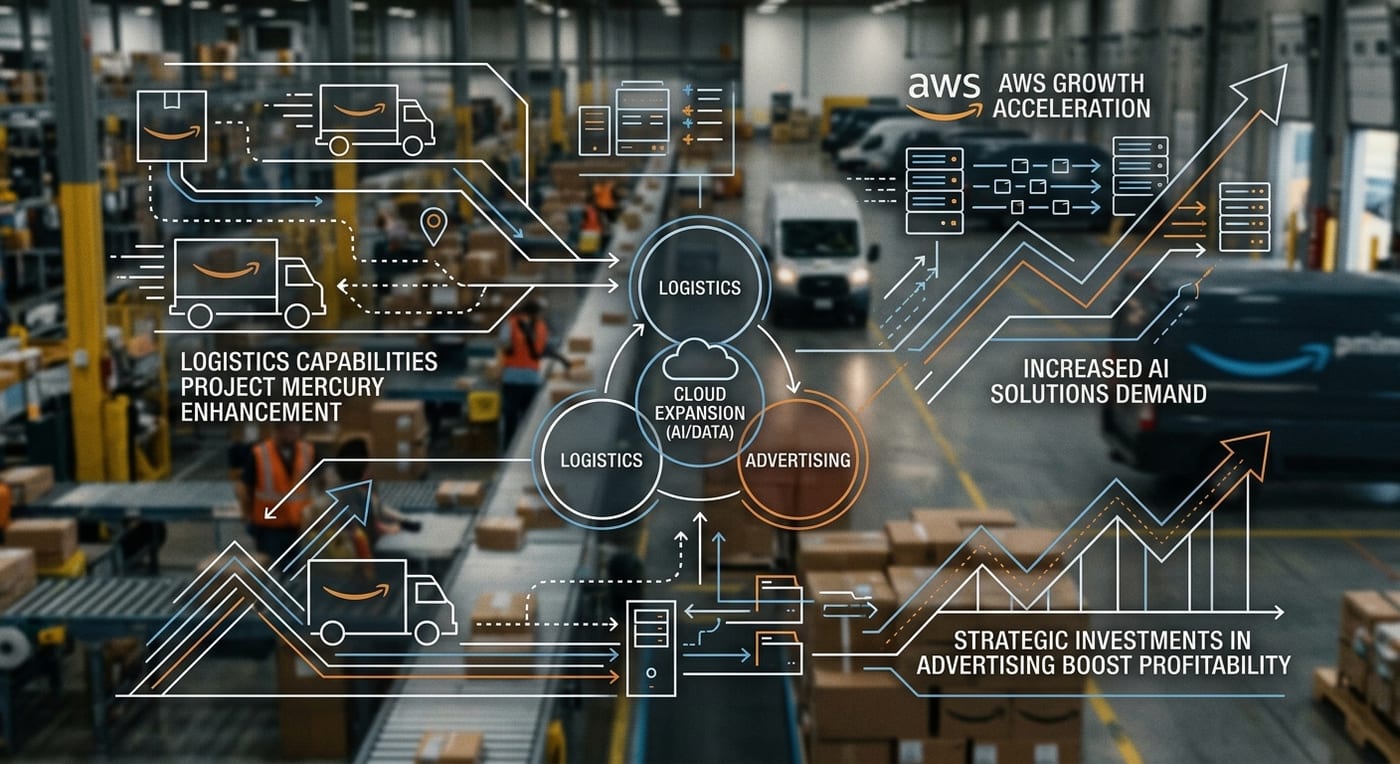
- Amazon enhances its logistics capabilities with Project Mercury.
- AWS growth accelerates amid increased demand for AI solutions.
- Strategic investments in advertising bolster overall profitability.
Amazon.com, Inc. ( AMZN) continues to redefine its operational capabilities and market presence through ambitious transformations in logistics and a robust expansion of its cloud services. With a market capital of $2.7 trillion, Amazon's strategic maneuvers not only solidify its dominant position in e-commerce but also reflect a keen adaptation to evolving technological trends and consumer demands. This article explores how Amazon's initiatives, specifically through Project Mercury and its AWS division, are setting the stage for significant future growth, impacting logistics efficiency, profit margins, and overall investor confidence. That backdrop echoes earlier coverage of the issue, especially around how pricing, strategy, and demand feed into the current story.
Strategic Logistics Overhaul
At the forefront of Amazon's operational transformation is the ambitious Project Mercury, which aims to revolutionize the company's logistics network. The goal here is to achieve self-delivery of 90% of U.S. packages by 2029, increasing the number of same-day delivery locations from a mere 85 to over 1,000 by 2031. This massive undertaking signals not only an intention to enhance delivery speed and reliability but also a calculated effort to reduce dependency on third-party logistics providers.
Maintaining control over its logistics is particularly relevant in a market where rapid delivery is paramount. Amazon's strategy to vertically integrate its delivery system will likely provide better profit margins and customer satisfaction, as faster delivery options become an increasingly critical component of consumer choice. It is a move aimed at optimizing operational efficiencies, which is visible in other areas of the business as well.
The evolution of Amazon's logistics operations directly aligns with its prior coverage, where the focus was on how the company plans to challenge traditional retailers like Walmart through enhanced delivery capabilities, embracing both robotics and automation within its supply chain. This connection illustrates the broader narrative of Amazon not merely reacting to competitive pressures but actively shaping the logistics landscape in its favor through innovation.
Cloud Growth and Artificial Intelligence
Complementary to its logistics overhaul, Amazon Web Services (AWS) is emerging as a vital revenue driver for the company, showcasing significant growth largely fueled by the accelerating demand for artificial intelligence (AI) solutions. Recent reports noted AWS's impressive revenue growth of 37%, reflecting its essential role in catering to businesses eager to leverage AI’s capabilities. With a projected trajectory that could see AWS evolve into a $1 trillion business, Amazon is strategically positioning itself to capitalize on this tech boom.
The long-term implications of AWS’s growth are profound, especially considering the division’s high profitability margins of approximately 37%. This profitability is bolstered by Amazon's investments in AI infrastructure, which provide a relatively quick return on investment. The company's strategic focus on AI can be likened to the earlier investments in cloud computing that set AWS apart from competitors like Microsoft Azure, solidifying its industry leadership.
As companies modernize their operations, Amazon’s AI-driven services are poised to maintain a critical competitive edge. According to financial assessments, Amazon's cloud business is not just a sideline but a core component of its profitability strategy, comparable to the significant financial commitments seen from hedge fund managers like David Tepper, who have invested heavily in Amazon amid its burgeoning AI initiatives. Tepper’s stakes signal confidence in Amazon's potential for continued growth, aligning closely with the innovations Amazon consistently rolls out in its technologies.
An Ecosystem Built for Growth
The interconnectedness of Amazon's logistics and cloud strategies exemplifies a comprehensive approach to expanding its market footprint. This strategy not only enhances operational efficiencies but also allows for scalability that many traditional retailers cannot match. Amazon's endeavors in warehouse automation and advanced delivery services are reflective of their ambition to sustain market dominance.
Furthermore, Amazon's forward-looking initiatives also include substantial investments in advertising, which accounted for significant revenue increases in recent quarters. As digital advertising on Amazon’s platform grows rapidly—showing a rise of 26% last quarter—this advertising business plays a pivotal role in supporting the broader e-commerce ecosystem. The combined revenue stream from retail and advertising will prove vital in counterbalancing fluctuations in other sectors of the economy.
This proactive strategy is similar to those discussed in previous analyses, where Amazon's expansion efforts were framed as a necessary evolution in a competitive marketplace. The company's emphasis on logistics and advertising not only reflects an understanding of current consumer preferences but also aligns with anticipated market trends that could drive further growth.
Investor Outlook
The future is looking bright for Amazon as it aims to double the profitability of its segments by 2028, assuming the market dynamics and consumer behaviors continue to favor rapid delivery and cloud computing. With e-commerce remaining a key pillar and the resurgence of retail confidence, investor sentiment is likely to remain optimistic. The overall growth projections suggest that Amazon's stock could benefit from its innovative positioning in both logistics and AI-driven cloud services.
In conclusion, Amazon.com, Inc. (AMZN) is at a pivotal moment in its growth trajectory, leveraging its strengths in logistics through Project Mercury and the expanding capabilities of AWS. By investing in these critical areas, Amazon is not just positioning itself for immediate returns but also for long-term sustainability and leadership in a rapidly evolving market landscape. This narrative of transformation emphasizes the importance of adaptability and strategic foresight as essential components of Amazon's future endeavors. The same pressure is reflected in recent reporting on the issue, which helps explain why the company's pricing decisions remain under scrutiny.