

Amazon's Expansive Logistics and AI Ventures
ED
Editorial
Cashu Finance·5 min read
TL;DR
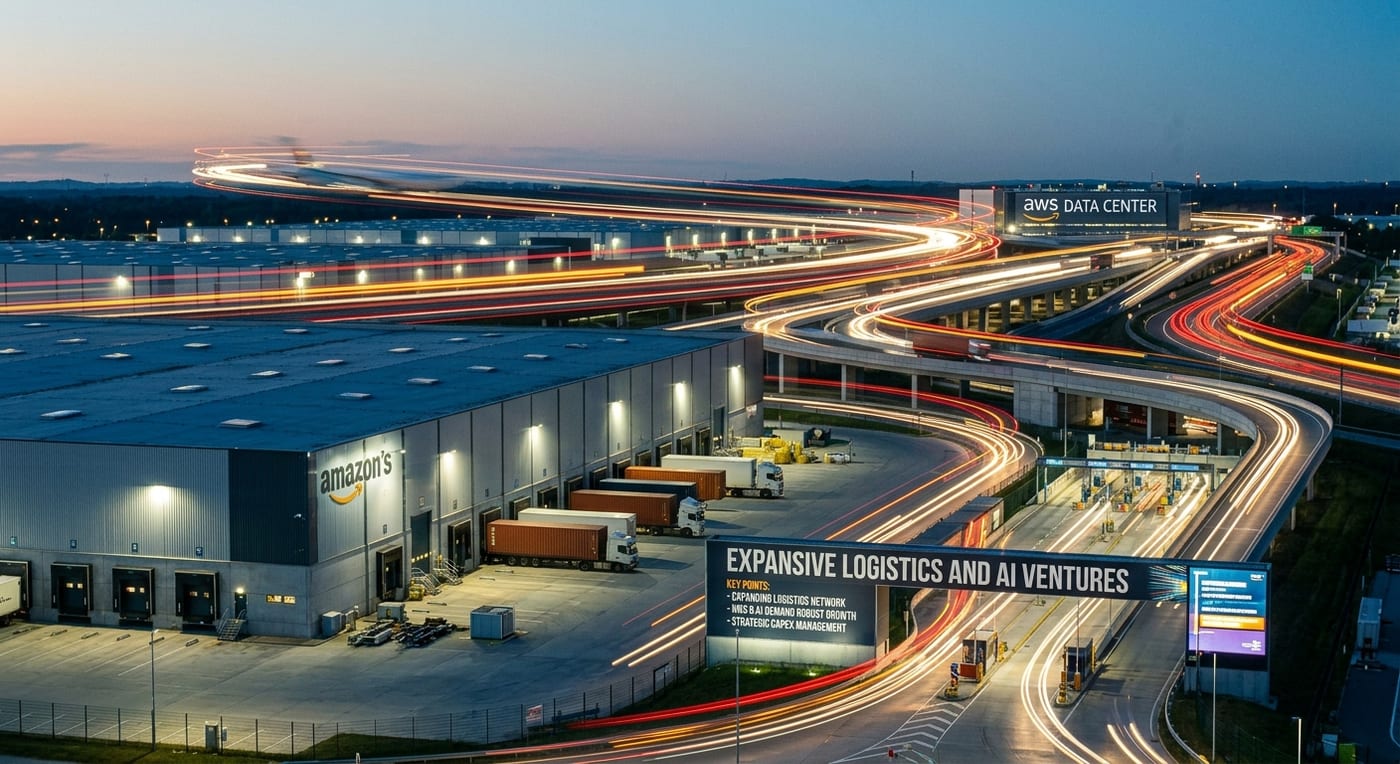
- Amazon continues to expand its logistics network significantly.
- The AWS division is experiencing robust growth amid increasing AI demand.
- Financial pressures from capital expenditures are being navigated strategically.
Amazon.com, Inc. ( AMZN) is undergoing a transformative phase that redefines not just its operational strategy but also the competitive dynamics of the e-commerce landscape. Central to this evolution is Project Mercury, a significant logistics initiative aimed at revolutionizing the company’s delivery network while embracing the burgeoning demand for cloud services through Amazon Web Services (AWS). This article explores these ambitious undertakings and how they position Amazon for future success, revealing the implications for its operations, margins, and market positioning.
Project Mercury: Logistics Overhaul
At the core of Amazon's strategy is Project Mercury, which seeks to enhance its same-day delivery capabilities dramatically. Currently, Amazon operates approximately 85 facilities dedicated to this service, yet aims to expand to over 1,000 locations by 2031. This aggressive expansion is designed to ensure that the company can handle up to 90% of U.S. package deliveries through its logistics network. Such a leap not only facilitates faster delivery times but also decreases dependency on external partners.
The initiative is especially pertinent in light of recent negotiations with the United States Postal Service (USPS), which symbolizes a structural shift in Amazon’s approach to logistics. When these negotiations became contentious, the company began formulating contingency plans under Project Aurelian, which aimed to allow Amazon to serve approximately 39,400 ZIP codes, providing redundancy and more robust delivery options should partnership agreements falter.
This transformation is echoed in Amazon's logistical commitment being further solidified by its previous strategies, particularly those outlined in earlier reports focusing on the dual coverage approach. The goal is for every addressable ZIP code in the U.S. to be served by Amazon’s network alongside third-party carriers. This dual mechanism is not just protective but strategically resonates with Amazon’s overarching ambition of greater control over its delivery ecosystem.
A key element of Project Mercury is the construction of conventional delivery stations, which will facilitate dedicated van deliveries and improve delivery efficiencies. By moving to build these infrastructures, Amazon will boost its operational capabilities without solely relying on third-party logistics providers. Additionally, the strategy expands operational reach into rural areas through partnerships with local businesses, thus minimizing capital costs while maximizing service coverage.
Evolving Cloud Services through AWS
In tandem with its logistics ambitions, Amazon is aggressively growing its AWS division, which remains a critical profit driver for the company. For instance, AWS continues to benefit immensely from the increasing demand for artificial intelligence (AI) solutions, further reinforcing its market leadership. The most recent projection indicates AWS generated substantial revenue, significantly contributing to Amazon’s overall financial health.
Moreover, the commitment from Anthropic to invest over $100 billion into AWS reflects the increasing trust and reliance large enterprises place on Amazon's cloud solutions. As significant AI demand rises, this contract stands as a pivotal endorsement of the technology that AWS provides. Such strategic agreements are not merely a revenue source; they are part of Amazon's broader vision to establish itself as the go-to cloud provider for innovative, AI-driven enterprises.
Amazon's long-term focus on cloud infrastructure has resulted in a rapidly growing segment that not only fuels its revenue but also enhances its ability to support operations like Project Mercury. The synergy between logistics and cloud services illustrates Amazon's intent to integrate technological advancements with delivery efficiencies, ensuring customers receive their products promptly and reliably.
Financial Implications
Despite robust growth, Amazon faces unique financial pressures. The current transformation has led to an increase in capital expenditures necessary for building logistics and cloud infrastructure. As projected, Amazon's spending on data centers has already surged, reaching $220 billion this year. Although this predicated capital outflow yields negative free cash flow—a sharp contrast to historical trends—it is a strategic investment aimed at securing a competitive edge.
The lack of dividend payments, as discussed in the financial community, is integral to this narrative. While some investors express frustration over the absence of dividends, the rationale for reinvesting profits into growth opportunities, especially in critical sectors such as AI and logistics, aligns with Amazon's historical performance and growth trajectory. According to recent financial analyses, despite these challenges, Amazon reported significant increases in revenue from its core business, especially within AWS.
Conclusion
In summary, Amazon.com, Inc. (AMZN) is at a critical juncture, merging ambitious logistics innovations with cloud service expansions that collectively shape its future. Project Mercury exemplifies Amazon's determination to minimize reliance on external delivery partners, reflecting an intrinsic understanding of market vulnerabilities while solidifying its dominance in e-commerce. Simultaneously, AWS's growing prominence resonates through substantial contracts, underscoring the allure and robustness of Amazon's cloud solutions.
As Amazon navigates through these transformative projects, the implications for its market share, operational efficiency, and investor expectations are profound, positioning the company not only for near-term success but also for long-term resilience in the fast-evolving digital marketplace. The same pressure is reflected in recent reporting on the issue, which helps explain why the company's pricing decisions remain under scrutiny.