

Adobe's Strategic Shift: Embracing AI Innovation
ED
Editorial
Cashu Finance·4 min read
TL;DR
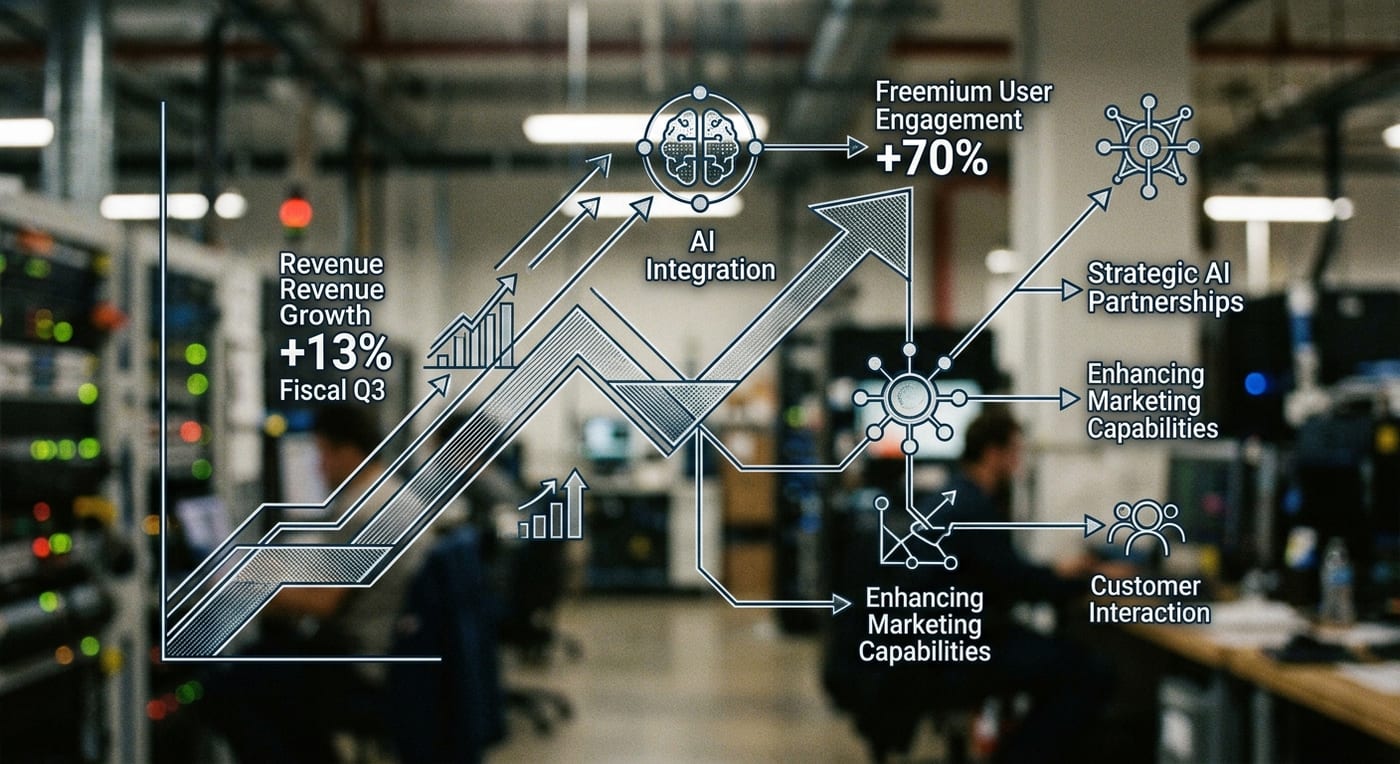
- Adobe reports strong fiscal Q3 with 13% revenue growth.
- Freemium model boosts user engagement, increasing freemium users by 70%.
- Strategic AI partnerships enhance marketing capabilities and customer interaction.
Adobe Inc. (https://cashumarkets.com/stock/adbe) continues to showcase resilience and innovation as it transitions into an AI-driven powerhouse within the creative and marketing industries. The company's latest financial performance, bolstered by strategic advancements, suggests that it is not merely surviving but thriving amidst increasing competition and market fluctuations. With new management at the helm, Adobe is intensifying efforts to adapt and expand its market presence through integrated AI technologies, aiming to attract a broader user base while ensuring strong recurring revenue streams.
Strong Financial Performance
Adobe has reported impressive financial results in its recent quarterly report, marking a pivotal moment in its ongoing transformation. The company achieved $6.76 billion in revenue for the fiscal third quarter of 2026, representing a robust 13% increase year over year. Adjusted earnings per share soared by 15% to $6.13, surpassing company expectations and setting a favorable tone for future growth. The strategic focus has been directed toward increasing its annualized recurring revenue (ARR), which rose to $27.50 billion, indicating sustained customer loyalty and effective subscription strategies.
This growth trajectory is a result of Adobe's pivot towards AI-driven products, which have shown extraordinary promise in terms of market acceptance and revenue generation. In particular, the ARR obtained from AI-centric products surged over 150% year over year, demonstrating the increasing demand for these advanced solutions within Adobe's portfolio.
Embracing the Freemium Model
In light of evolving market dynamics and competitive pressures, Adobe has adopted a freemium model designed to engage new users. The strategy is pivotal in converting casual users into committed subscribers, effectively expanding its user base while capitalizing on the growing interest in AI functionalities. This approach has already shown fruitful results, with monthly active freemium users amplifying by 70% year over year, now exceeding 100 million. Offering free access to tools like Adobe Express has opened doors for deeper engagement with Adobe’s ecosystem, potentially transitioning these users into premium subscription payers over time.
This transition aligns with Adobe's recent financial guidance, which forecasts targeted revenues of approximately $26.58 billion to $26.63 billion for fiscal 2026. The advent of new user engagement models, along with strong growth in its Creative and marketing professional segments, emphasizes the broader comprehension that investing in customer acquisition through lower initial barriers can yield long-term benefits.
Innovation Through AI Partnerships
Adobe's commitment to enhancing its AI capabilities is further reflected in its collaborations with key industry players. By integrating its technology with partners like Microsoft and renowned marketing agencies, Adobe aims to build advanced marketing ecosystems that leverage AI data to optimize customer engagement strategies. This collaborative approach provides Adobe with a strategic advantage, positioning it as a frontrunner in deploying AI solutions that drive targeted marketing efforts and enhance operational efficiencies.
The potential of AI in marketing cannot be overstated; as businesses seek to engage consumers more meaningfully, Adobe's innovations have positioned it as a critical player in the evolving landscape. Previous collaborations, as seen with the partnership established with Tesco to harness AI-driven personalized marketing, showcase how Adobe effectively utilizes customer data to foster engagement and improve sales outcomes (https://cashumarkets.com/articles/1f17b11d43ec62dd9e95a13e6ecf6a577856d879). This initiative exemplifies Adobe's capability to integrate advanced AI tools into practical applications, enhancing both consumer experiences and client satisfaction.
Leadership and Strategic Direction
With the imminent change in leadership—Anil Chakravarthy taking over the role of CEO on December 1—Adobe is positioned to pivot decisively towards its AI-driven future. While transitions in leadership can often lead to periods of uncertainty, they also present opportunities for renewed vision and strategy. Chakravarthy's expertise, especially in customer experience orchestration, is expected to fortify Adobe’s strategic initiatives, particularly in its transition to AI-based solutions across all product lines.
Conclusion: Navigating Future Challenges
In conclusion, Adobe Inc. stands at a transformative crossroads, where the convergence of AI innovation and strategic user engagement positions it favorably within a competitive landscape. The freemium model and strategic partnerships underscore a commitment to sustainable long-term growth through adaptive and user-centric practices. As the company continues to navigate challenges associated with leadership change and market pressures, its focus on technological innovation, especially through AI, will likely remain pivotal for sustaining revenue growth and enhancing user experience.
The narrative of Adobe is one of resilience, innovation, and an adaptive spirit—a company set to not only face competition but also redefine its role in the landscape of creative and marketing technologies. By leveraging its robust subscription base and investing in future-forward strategies, Adobe's outlook remains promising in the face of ongoing industry evolution. The same pressure is reflected in recent reporting on the issue, which helps explain why the company's pricing decisions remain under scrutiny.