

Aardvark Therapeutics' Ongoing Legal Battles
ED
Editorial
Cashu Finance·5 min read
TL;DR
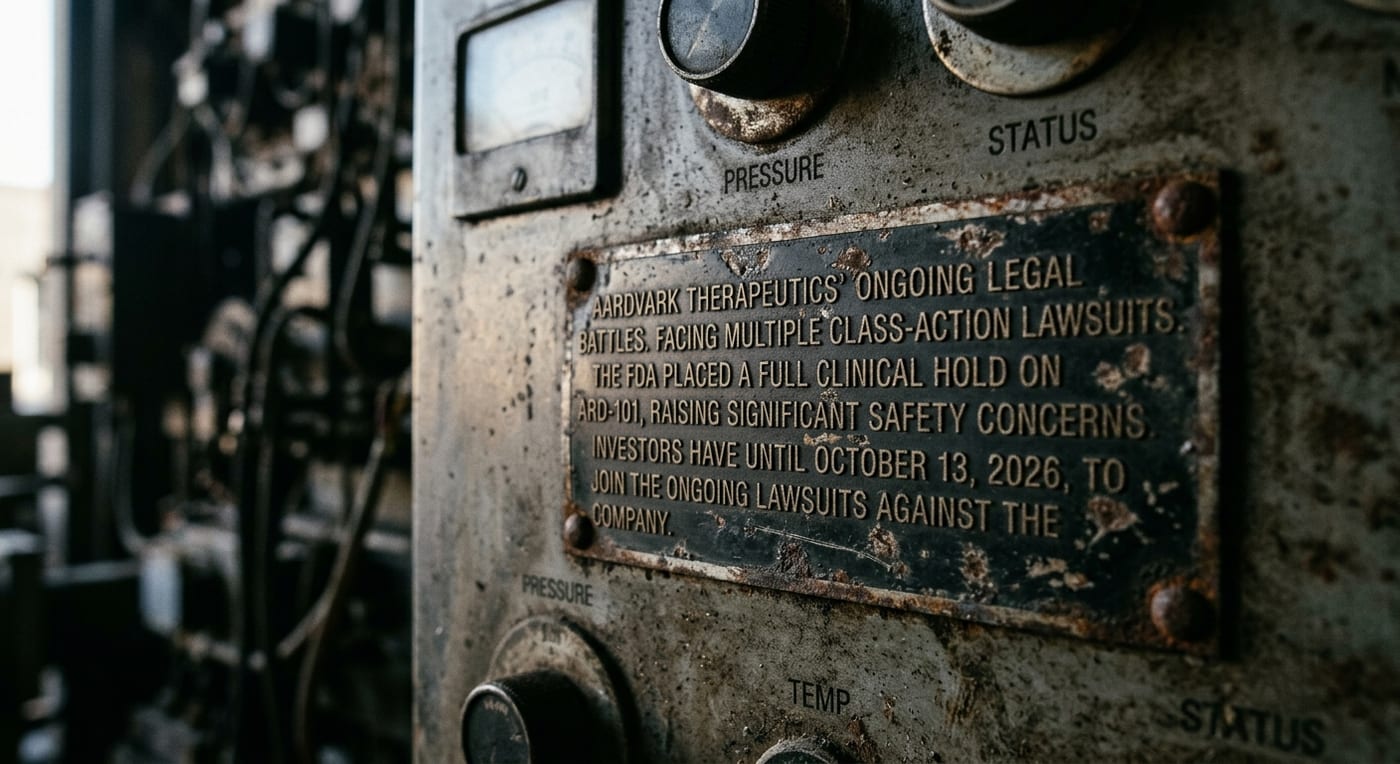
- Aardvark Therapeutics faces multiple class-action lawsuits.
- The FDA placed a full clinical hold on ARD-101, raising significant safety concerns.
- Investors have until October 13, 2026, to join the ongoing lawsuits against the company.
Aardvark Therapeutics, Inc. Common Stock (AARD) has found itself in a precarious position amid a wave of legal challenges and regulatory scrutiny that threaten to shape its future in the competitive biopharmaceutical landscape. With its lead product, ARD-101, aimed at treating hyperphagia in Prader-Willi Syndrome (PWS), the company is battling significant headwinds that have severely impacted investor confidence and stock performance. This article delves into these complex dynamics, critically analyzing Aardvark’s current legal entanglements and the potential implications for its overall strategy and market viability.
Current Legal Landscape
Aardvark Therapeutics is currently facing a myriad of legal challenges, most notably a series of class-action lawsuits that allege the company misled its investors regarding the safety and efficacy of ARD-101. This drug, which has been a focal point in the treatment of hyperphagia related to PWS, is now under intense scrutiny following alarming safety signals that have emerged during its development stage.
These lawsuits arise from concerns that Aardvark downplayed significant safety risks associated with ARD-101. Specifically, allegations indicate that the company did not thoroughly disclose that ARD-101 was less safe than they advised, leading to overstated clinical and commercial prospects of the drug. The circumstances surrounding these lawsuits reflect a broader sentiment in the investment community, which has begun to question the transparency and reliability of Aardvark’s disclosures leading up to its initial public offering (IPO) in February 2025. According to the claims, the misleading statements have led to financial losses for investors, many of whom are now seeking lead plaintiff status in ongoing class action suits, with a deadline of October 13, 2026, to join.
Impact of Regulatory Actions on Aardvark’s Stock
Compounding these legal challenges, Aardvark has recently been subjected to a full clinical hold on its investigational new drug application for ARD-101 by the U.S. Food and Drug Administration (FDA). This clinical hold was prompted by safety concerns that arose during routine monitoring—a significant setback that has led to a significant sell-off of Aardvark’s stock. The initial announcement of a voluntary pause in the Phase 3 trial of ARD-101 saw the stock price plummet over 56%. Following the FDA's decision to impose a full clinical hold, the stock hit another low with a further drop of over 32.1%. This reaction underscores the market's sensitivity to regulatory news and the perception of Aardvark's viability as a competitive player in the biotech space.
Market Reactions and Investor Sentiment
The market's response to Aardvark's ongoing challenges has not gone unnoticed. Investor sentiment has shifted dramatically, with many reconsidering their positions in light of the potential risks that these legal and regulatory issues pose. Aardvark's initial valuation, premised on its ability to bring ARD-101 to market, has been called into question, particularly as the trials associated with the product now face unforeseen delays and scrutiny. This situation is exacerbated by the fact that the company’s credibility has been diminished considerably by the controversies surrounding its disclosures, potentially alienating not only current investors but future stakeholders as well.
To further illustrate the impact of these developments, earlier discussions about Aardvark's product pipeline and regulatory status reveal how interlinked the company's operational health is with its market performance. Analyzing the details surrounding these legal challenges provides insights into the turbulent environment in which Aardvark navigates. The company’s struggles highlight a need for transparent communication with investors, emphasizing how these challenges can extend beyond immediate stock performance to influence long-term strategic goals and partnerships.
Future Prospects Amid Uncertainty
Looking ahead, the key question for Aardvark remains: Can the company regain investor trust while navigating these tumultuous waters? Aardvark is now in a critical phase of re-evaluating its approach to product development, investor relations, and compliance with regulatory standards. The necessity to restore credibility and transparency is paramount, particularly if Aardvark aims to reenter the market confidently after addressing these pressing issues.
The broader market conditions may also play a role in Aardvark's recovery. As the biopharmaceutical landscape continues to evolve, the company may need to pivot its strategy, focusing either on strengthening its drug development pipeline or exploring alternative collaborations that could enhance its standing in the industry. Any shifts or innovations in this space could provide hope for Aardvark as it seeks to mitigate current risks and reestablish its market presence. This necessity for strategic flexibility underscores the importance of careful navigation through regulatory and legal hurdles that now define Aardvark’s operational landscape.
Conclusion
Aardvark Therapeutics, Inc. Common Stock (AARD) stands at a critical juncture. The convergence of legal challenges and regulatory scrutiny presents significant headwinds that could shape its future trajectory. As the company struggles to address these multifaceted issues, the pathway forward necessitates not only a commitment to transparency but also innovative strategies to regain investor confidence. In a sector where perception can dramatically influence reality, Aardvark must act decisively to restore its reputation and reclaim its position in the marketplace. How effectively Aardvark manages these challenges will ultimately determine its fate in the highly competitive biopharmaceutical arena. The same pressure is reflected in recent reporting on the issue, which helps explain why the company's pricing decisions remain under scrutiny.